Recreational training
Drift Diver
Diving with current rather than against it — a necessary skill for many of Australia's best sites.
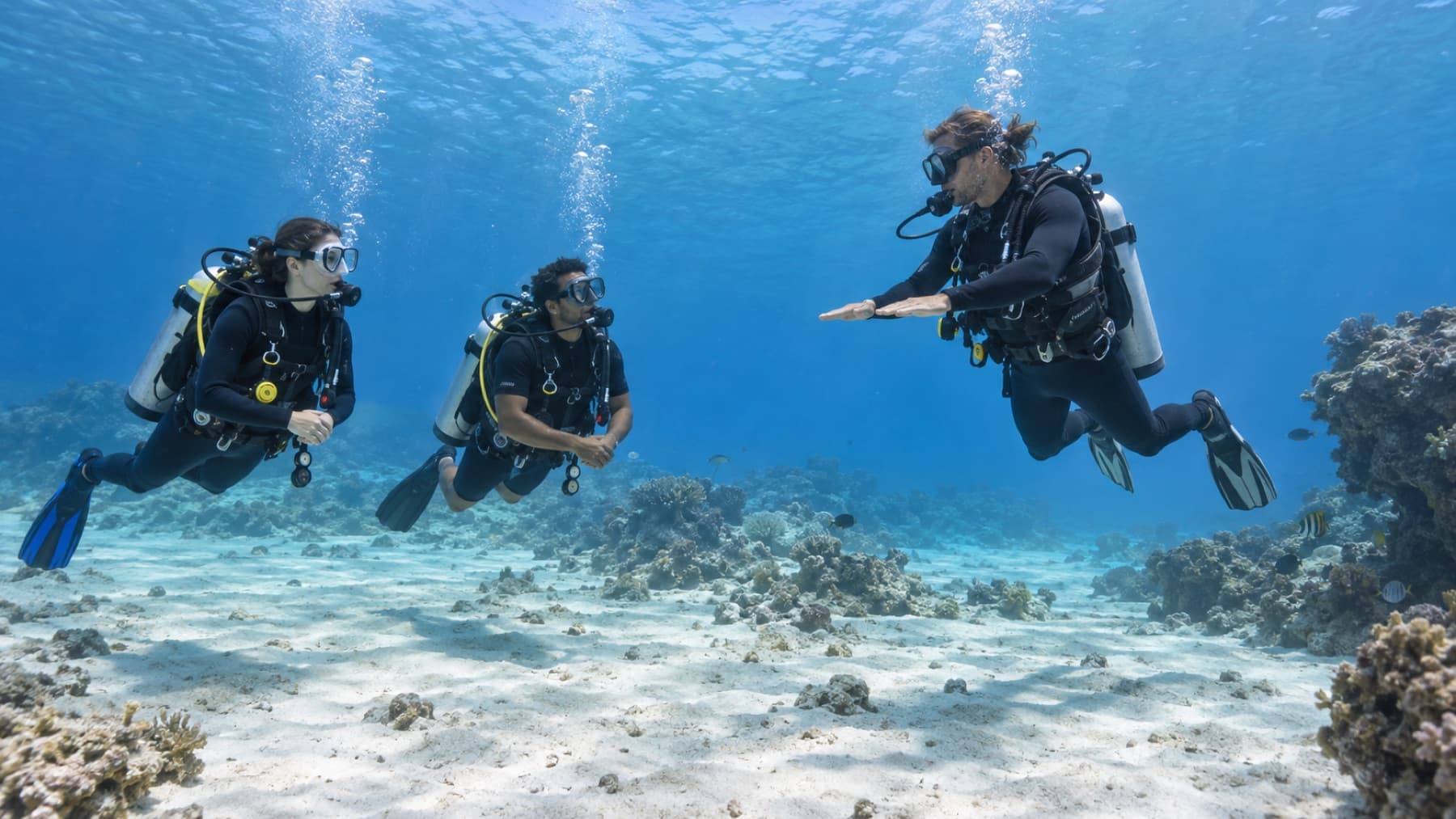
Drift diving means using current as transport rather than treating it as an obstacle, and it is how several of Australia's best sites are dived.
The techniques are specific: negative entries to get down before the current carries you off the site, staying with the group, deploying an SMB before ascending, and communicating with a boat that is following rather than anchored.
Wolf Rock, the outer Solitary Islands, Port Phillip Heads and the Ningaloo reef edge are all sites where drift technique is the normal way to dive, not an exception.
| Track | Recreational |
|---|---|
| Prerequisites | Open Water Diver certification; Advanced Open Water recommended for deeper drift sites |
| Agency equivalents | PADI: Drift Diver · SSI: Boat Diving · SDI: Drift Diver |
- negative entry technique
- staying with a group in moving water
- SMB deployment from depth
- reading current and using terrain for shelter
- boat pickup procedures for drifting divers
- conserving energy rather than fighting current
In a drift dive the boat does not know where you are until your marker appears. Deploying a delayed surface marker buoy reliably from depth, without entangling yourself or making an uncontrolled ascent, is the skill that matters most.
It is worth practising in benign conditions rather than learning it for the first time in current.
At exposed sites like Wolf Rock, divers enter with no air in the BCD and descend immediately, because a surface pause means the current carries the group past the site.
It is a simple technique that feels unnatural the first time and needs to be briefed properly.
Where this qualification matters in Australia
Sites where holding this certification genuinely changes what you can do — not a list of everywhere it is accepted.
Natural next steps
Courses that build directly on this one.
Agency versions of this course
The same qualification under different names. All are mutually recognised by operators.
Centres documented as offering this level of training
Businesses where the relevant capability is verified or advertised. Always confirm the specific course directly.
Frequently asked questions
Is drift diving harder?
It is different rather than harder. Once you stop fighting the current, drift diving is often less physically demanding than a normal dive.
What if I get separated from the group?
Standard procedure is to deploy an SMB and ascend. This is precisely why SMB deployment is the core skill of the specialty.