Australian diving guide
Cold-Water Diving in Australia
Why a diver certified in 27°C water needs more than a thicker suit to dive Victoria or Tasmania.
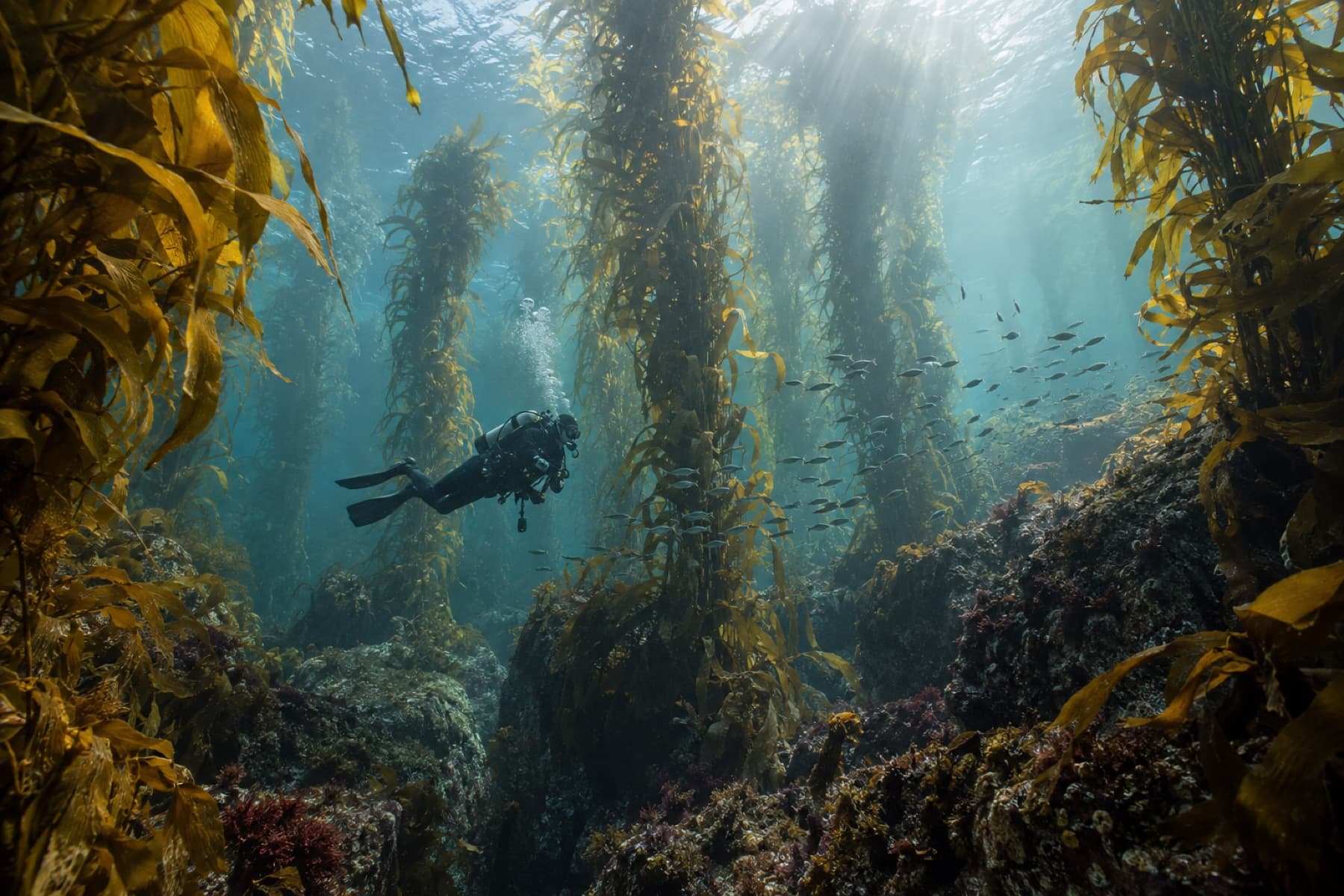
Australia is widely imagined as a warm-water diving destination, and roughly half of it is. The other half is genuinely cold, and the equipment, planning and skills required are closer to northern European diving than to the Great Barrier Reef.
A Queensland-trained diver moving to Melbourne, Hobart or Adelaide will need to adapt, and "buy a thicker wetsuit" is only the first part of that.
This guide covers what actually changes, and why an orientation dive with a local instructor is a reasonable thing to do rather than an upsell.
A thick wetsuit or drysuit does not simply keep you warmer. It changes weighting, buoyancy, trim, mobility, gas consumption and task loading simultaneously.
Each of those is manageable individually. Encountering all six on the same dive, alone, at an unfamiliar site, is how warm-water divers have uncomfortable first experiences in southern Australia.
- weighting, which increases substantially with a thicker suit
- buoyancy control, as neoprene compresses with depth
- trim, affected by where the extra weight sits
- mobility and reach, restricted by suit, hood and gloves
- gas consumption, which rises when you are cold
- task loading from gloves and restricted movement
Water temperature varies enormously across Australia, and the practical equipment threshold shifts with it.
- Tropical Queensland, Ningaloo, Darwin: 3 mm suit or shorty; stinger suits in season
- Southeast Queensland, northern NSW: 3–5 mm, warmer in winter
- Sydney and central NSW: 5 mm most of the year, 7 mm in winter
- Southern NSW, Perth: 5–7 mm with hood
- Victoria, Tasmania, South Australia: 7 mm semi-dry or drysuit, hood and gloves year-round
Neither is wrong. Many regular Victorian and Tasmanian divers use 7 mm wetsuits or semi-dry suits successfully all year.
Drysuits become more attractive for winter diving, for doing more than one dive in a day, and for technical profiles with significant decompression time. They also require training, because a drysuit is a second buoyancy system.
A diver certified entirely in warm water may benefit from an orientation dive before independently diving Tasmania, Victoria or South Australia.
This is not about the diving being dangerous. It is that managing several new variables is easier the first time with someone who knows the site.
Cold water in Australia buys things warm water does not: weedy and leafy seadragons, giant cuttlefish aggregations, sponge gardens of extraordinary colour, giant kelp, sea caves, historic wrecks and seal encounters.
It is also generally uncrowded. Sites that would have fifty divers on them in the tropics frequently have none.
Frequently asked questions
How cold does Australian diving actually get?
Winter water temperatures around 11–14°C are normal in Victoria and Tasmania, and 13–16°C in South Australia. That is cold enough to shorten dives and increase gas consumption noticeably.
Do I need to redo any training?
No, but a drysuit course is worthwhile if you plan to use one, and an orientation dive with a local instructor is a sensible first step regardless.
Can I hire a drysuit?
Usually, though sizing availability varies — particularly in Tasmania and remote destinations. Confirm before travelling.