Australian diving guide
Shark Diving in Australia
A practical guide to grey nurse sharks, whale sharks, wobbegongs and leopard sharks — including the regions, seasons and encounter styles that differ.
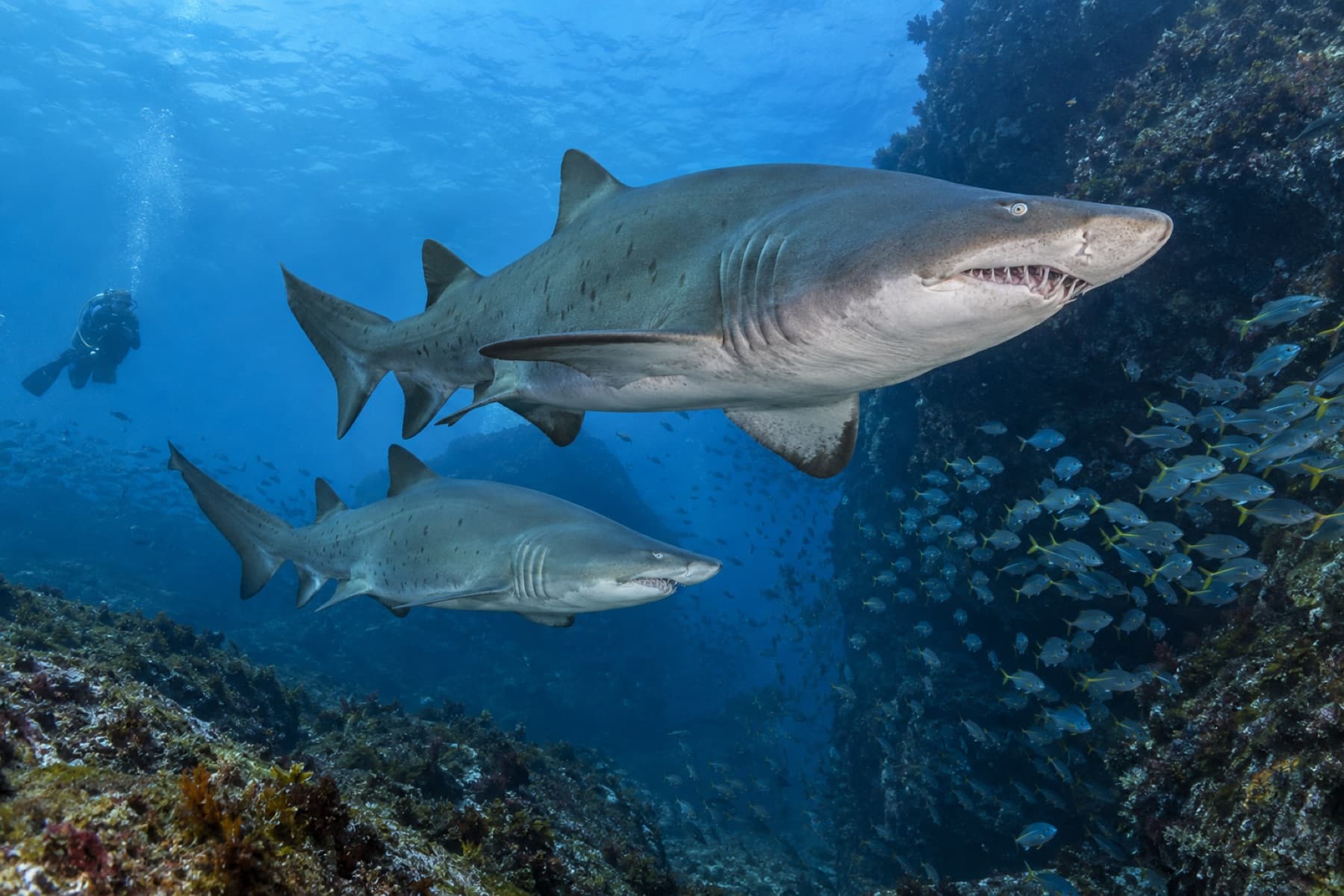
Australia's shark diving is not one experience. A stationary grey nurse shark aggregation, a Ningaloo whale shark swim and a reef dive with resting wobbegongs require different destinations, seasons and expectations.
Choose the species first, then the region and month. Operators cannot guarantee wildlife, but a well-timed trip to a known aggregation site changes the odds considerably.
Grey nurse sharks gather at rocky gutters, islands and cave entrances along New South Wales and southeast Queensland. The animals are generally observed by settling near established routes rather than swimming after them.
- Fish Rock at South West Rocks
- Wolf Rock near Rainbow Beach
- Julian Rocks at Byron Bay
- sites around North Stradbroke Island and southern New South Wales
Ningaloo's whale shark encounters are usually surface swimming rather than scuba diving. That distinction matters when comparing products, equipment and the amount of actual diving included in a trip.
- the main season generally begins in autumn
- encounters are managed under operator and wildlife rules
- build spare days into a trip centred on one animal encounter
- combine the swim with reef or Navy Pier diving where logistics allow
Leopard sharks follow warm seasonal water around locations such as Julian Rocks, while several wobbegong species occur year-round on rocky reefs. Both reward calm observation and good buoyancy more than an aggressive approach.
Stay off the bottom unless the site and operator explicitly direct otherwise, keep clear of an animal's path and let the shark choose the distance. Chasing an animal shortens the encounter for everyone.
- follow the local briefing even if you have dived with the species elsewhere
- avoid blocking gutters and cave entrances
- secure gauges and cameras before approaching
- never touch, feed or corner wildlife
Some aggregation sites involve current, depth, exposed boat travel or negative entries. The presence of a famous animal does not make the underlying site beginner-friendly. Read the site profile and discuss recent diving honestly with the operator.
Frequently asked questions
Where is the best shark diving in Australia?
For scuba encounters with grey nurse sharks, the New South Wales coast and southeast Queensland are the strongest choices. Ningaloo is the headline destination for whale shark surface encounters.
When is shark season in Australia?
It depends on the species and region. Grey nurse sharks, leopard sharks and whale sharks follow different seasonal patterns, so use the individual species and month guides rather than one national season.
Is shark diving suitable for beginners?
Some sites are; others involve current, depth or exposed entries. Suitability is determined by the site and conditions, not the animal.