Australian diving guide
Wreck Diving in Australia
From the SS Yongala and HMAS Brisbane to Port Phillip's ships' graveyard: how Australia's wreck regions differ and what training each kind of dive requires.
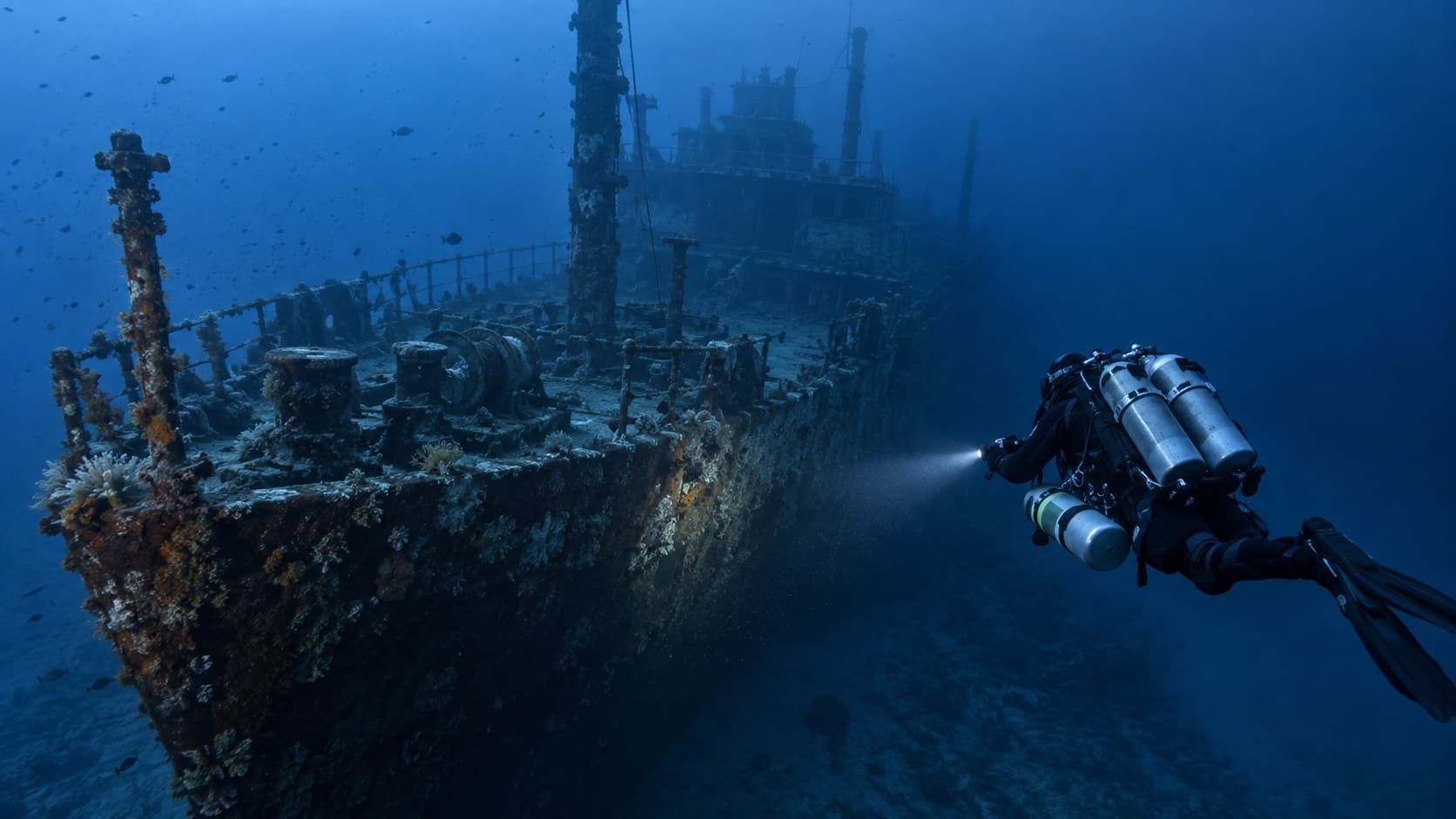
Australian wreck diving spans shallow artificial reefs, intact historic vessels, deep technical targets and archaeological sites protected by law. Calling all of it 'wreck diving' hides the differences that matter.
The key distinction is between swimming around a wreck, entering a daylight zone and making a true overhead penetration. Each step changes the hazards, equipment and training required.
The SS Yongala is famous less for penetration than for the density of marine life covering and surrounding the vessel. HMAS Brisbane is a deliberately prepared artificial reef with routes for different experience levels.
- SS Yongala: exposed boat diving, current and extraordinary marine life
- HMAS Brisbane: large artificial reef with external and limited penetration options
- Tangalooma wrecks: shallow snorkelling and diving environment with very different conditions
Port Phillip and the water outside the Heads contain an exceptional concentration of wrecks. Depth, current, shipping traffic and exposure mean the appropriate operator and qualification depend on the specific target.
- HMAS Canberra for an accessible major artificial reef
- Ships' Graveyard targets across recreational and technical depth
- deeper wrecks requiring decompression and appropriate gas planning
Tasmania combines cool water, dramatic underwater terrain and selected deep wrecks. Exposure protection and the logistics of repeated cold-water dives are part of the plan, not an afterthought.
A wreck does not require penetration to be worthwhile. External structure, marine growth, fish life and the story of the vessel can support an excellent dive without entering an overhead.
- never follow another diver inside without a shared plan
- use a route appropriate to training and equipment
- preserve historic fabric and do not remove artefacts
- maintain a direct ascent unless trained and equipped for overhead diving
Entry-level wreck courses generally focus on hazards, navigation and external touring. True penetration, decompression or mixed-gas diving requires additional training rather than a more adventurous interpretation of the same card.
Frequently asked questions
What is Australia's best wreck dive?
The SS Yongala is the best-known and strongest for marine life. Divers prioritising wreck structure, variety or technical depth may prefer HMAS Brisbane, HMAS Canberra or Victoria's Ships' Graveyard.
Can an Open Water diver visit a wreck?
Yes, when depth, conditions and the planned external route are appropriate. Penetration and deeper profiles require training beyond an entry-level certification.
Is wreck penetration always technical diving?
Limited daylight-zone routes may sit within recreational wreck training, but any route that removes straightforward access to open water demands specific overhead skills, equipment and planning.