Australian diving guide
Best Shore Diving in Australia
Australia's most accessible diving includes Sydney reefs, Victorian piers, South Australian jetties and sheltered sites with exceptional macro life.
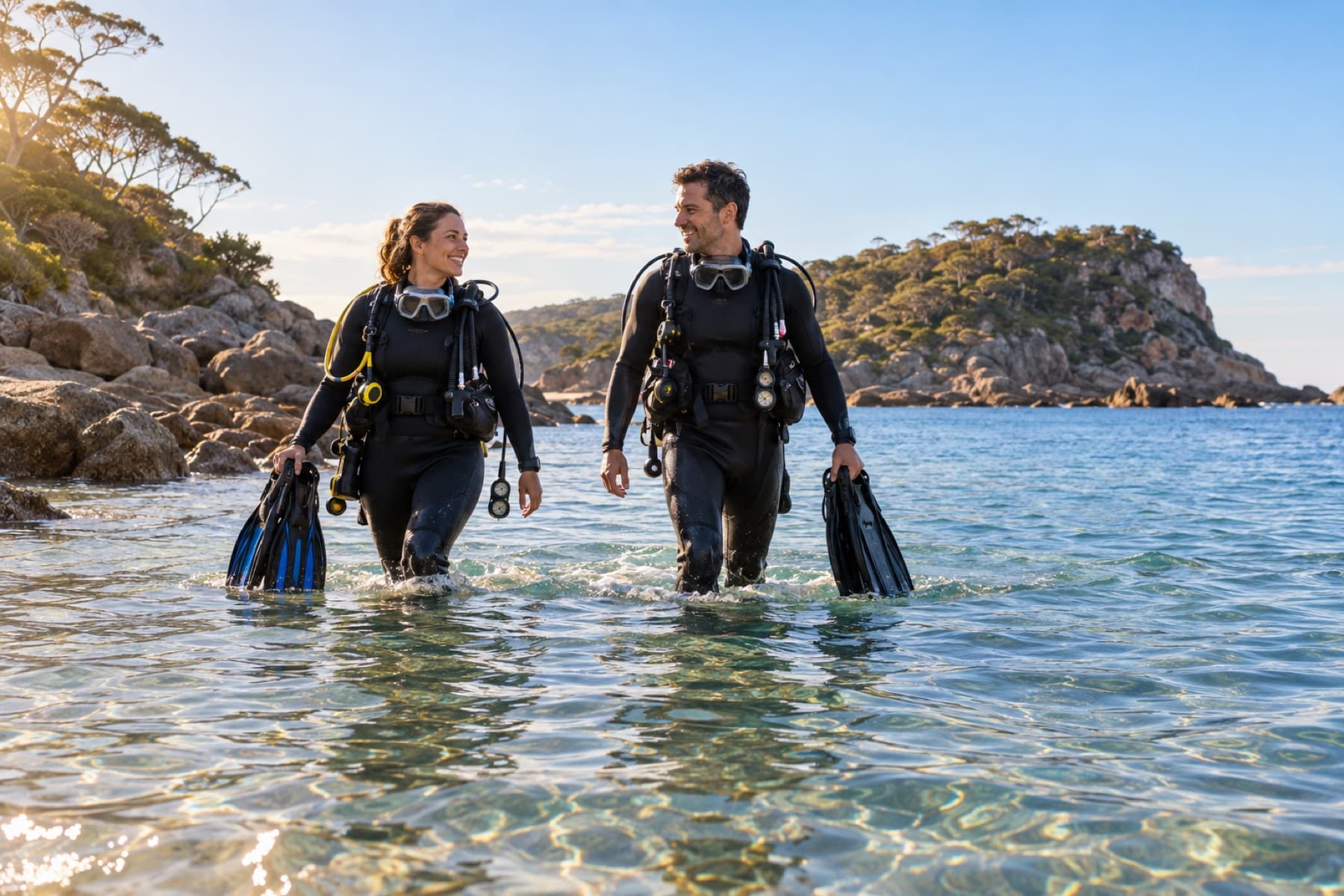
Shore diving is one of the best ways to understand Australia's local dive culture. It removes the boat schedule, lowers the cost per dive and makes slow macro-focused dives practical.
It is not automatically easier than boat diving. Entries, exits, swell, tides, surface swims and navigation can turn an apparently simple site into a demanding one. Local advice matters, especially on a first visit.
Sydney has an unusually strong shore-diving culture for a major city. Bare Island, Shelly Beach, Clifton Gardens and Kurnell offer very different environments within the same urban coastline.
- Bare Island for route variety and macro life
- Shelly Beach for protected beginner-friendly conditions
- Kurnell for seadragons and Botany Bay reef
- Clifton Gardens for muck and night diving
Victorian pier diving rewards slow observation. Many sites are shallow, but cold water, weather, boat traffic and long entries still require preparation.
- Blairgowrie and Rye piers for macro life
- Portsea and Queenscliff for more exposed conditions
- Flinders Pier for seadragons when access and conditions allow
South Australia's jetties can hold dense sponge growth, seadragons, cephalopods and schooling fish. Entry rules and local access conditions change, so check before travelling.
- Rapid Bay for jetty structure and leafy seadragons
- Edithburgh for one of the country's richest jetty dives
- Whyalla during the winter cuttlefish aggregation
Check swell direction, tide, exit options, surface traffic, parking restrictions and whether a float or dive flag is required. Identify a backup exit before entering.
- walk the entry and exit without equipment
- confirm the turn pressure before the swim
- carry an SMB where boat traffic is possible
- avoid unfamiliar exposed entries without local guidance
Shore diving often means carrying equipment further, managing sand or rocks, and navigating without a boat crew. A simple equipment choice can materially improve the day.
- boots with a supportive sole
- a compass you can read easily
- a surface marker buoy
- thermal protection appropriate to the second dive, not only the first
Frequently asked questions
Where is the best shore diving in Australia?
Sydney offers the widest concentration near a major city. Victoria and South Australia are particularly strong for piers, jetties, macro life and seadragons.
Is shore diving suitable for beginners?
Sheltered sites can be excellent for beginners, but shore access alone does not make a site easy. Surge, navigation, entry conditions and surface swims still matter.
Do I need a dive flag?
Requirements and local practice vary. Ask a local centre, and use a clearly visible surface marker wherever boats or other water users may be present.