New South Wales dive centres
One of Australia's strongest year-round local diving cultures, with shore diving, shark aggregations and a deep technical training market in Sydney.
New South Wales has one of Australia's strongest year-round local diving cultures. It is a state where a large number of people dive regularly, close to home, without booking a holiday to do it.
Its coastline covers a wide climatic range, so northern NSW can feel almost subtropical while the far south coast is distinctly temperate. Julian Rocks and Merimbula are in the same state and are not remotely the same kind of diving.
The East Australian Current adds a second layer of variation. It pushes warm water south in summer, which is why tropical species turn up at latitudes that are otherwise temperate, and why the "best season" for a NSW site depends entirely on what you are hoping to see.
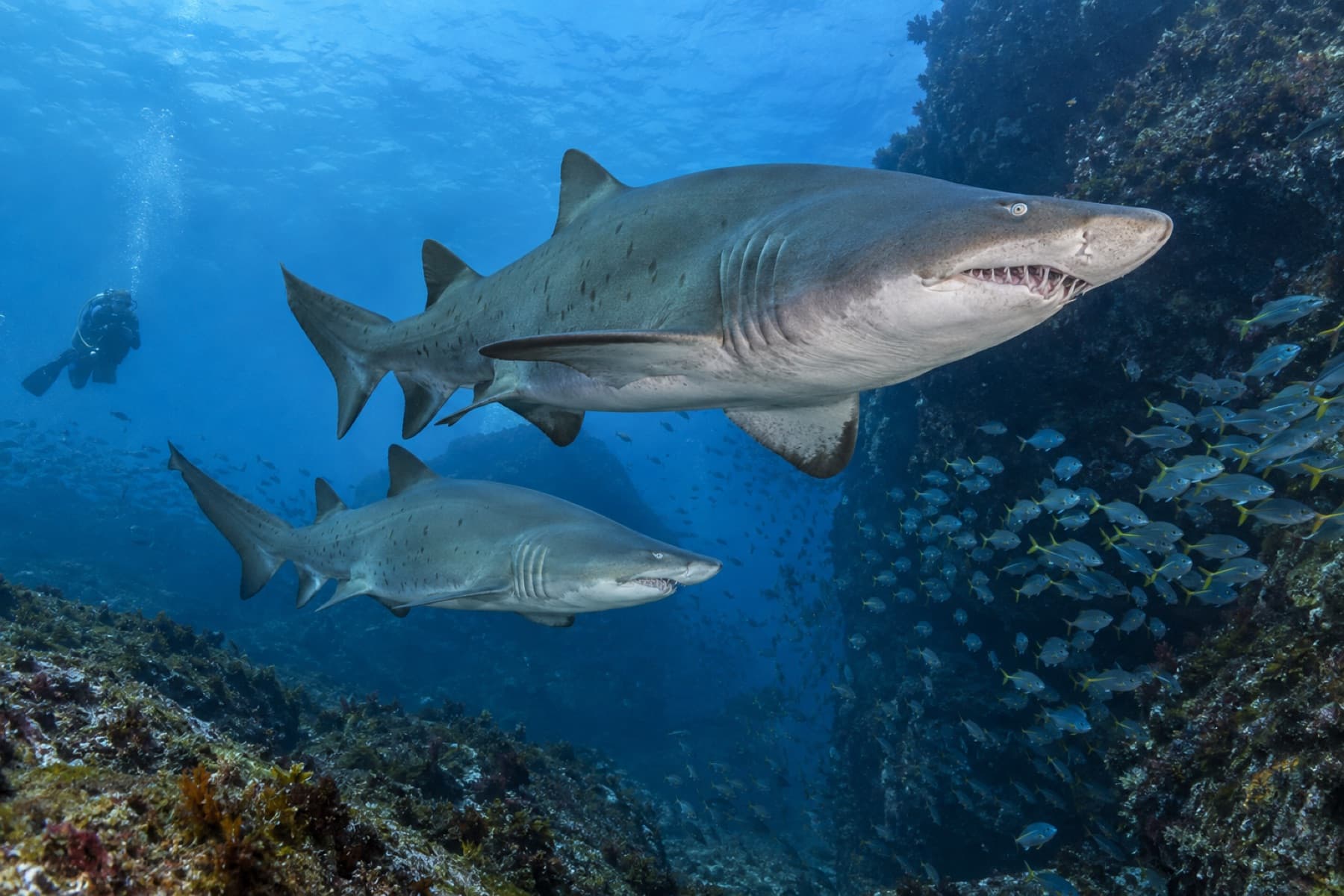
The state also holds an unusual concentration of shark-aggregation sites. Grey nurse sharks in particular are a defining feature of NSW diving, and several of the country's best-known encounters are here.
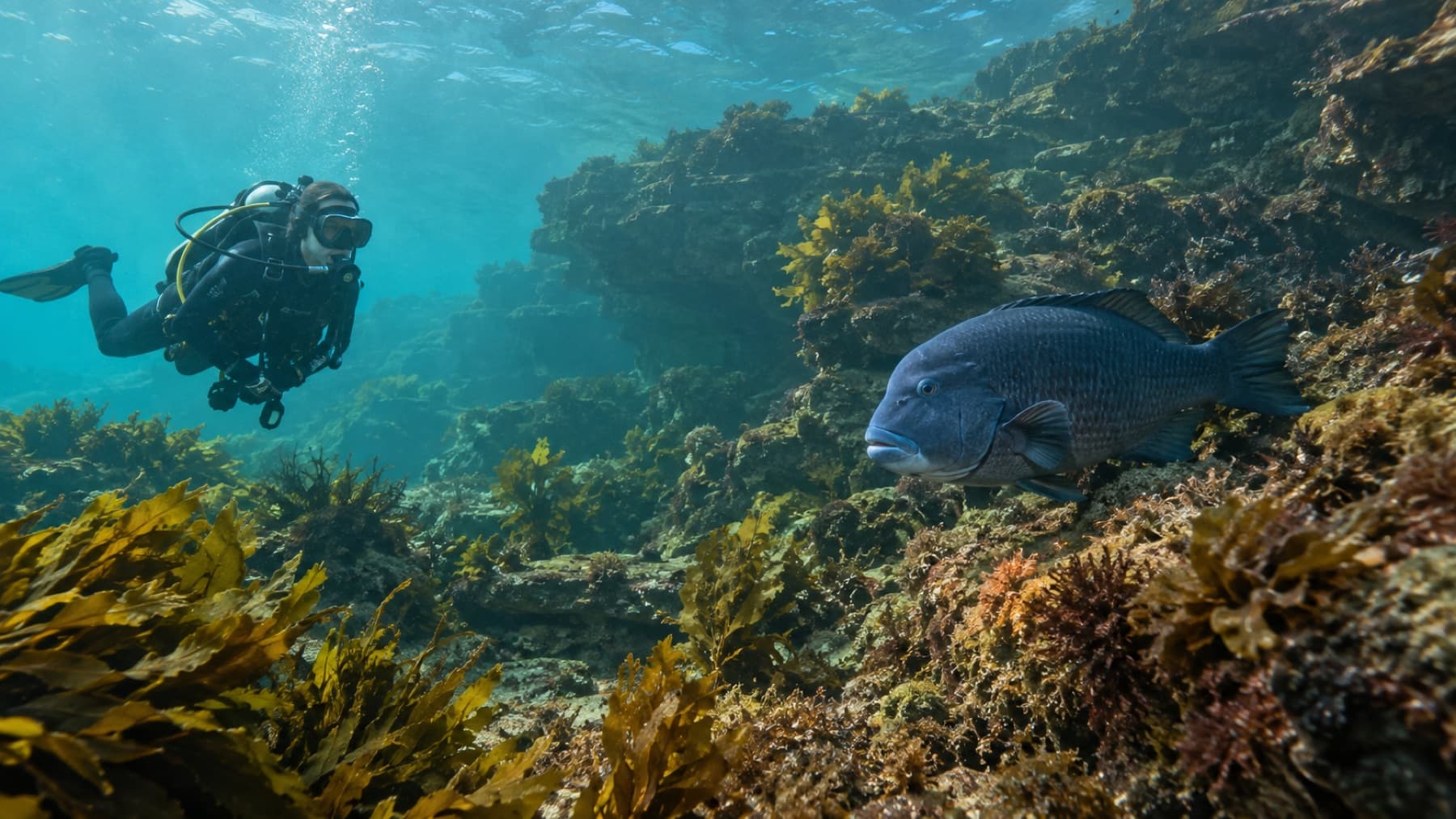
New South Wales is organised by region because conditions, marine life and the kind of business that survives locally vary enormously within the state.
Byron BayJulian Rocks — a tropical-temperate crossover site with more than 20 recorded shark and ray species.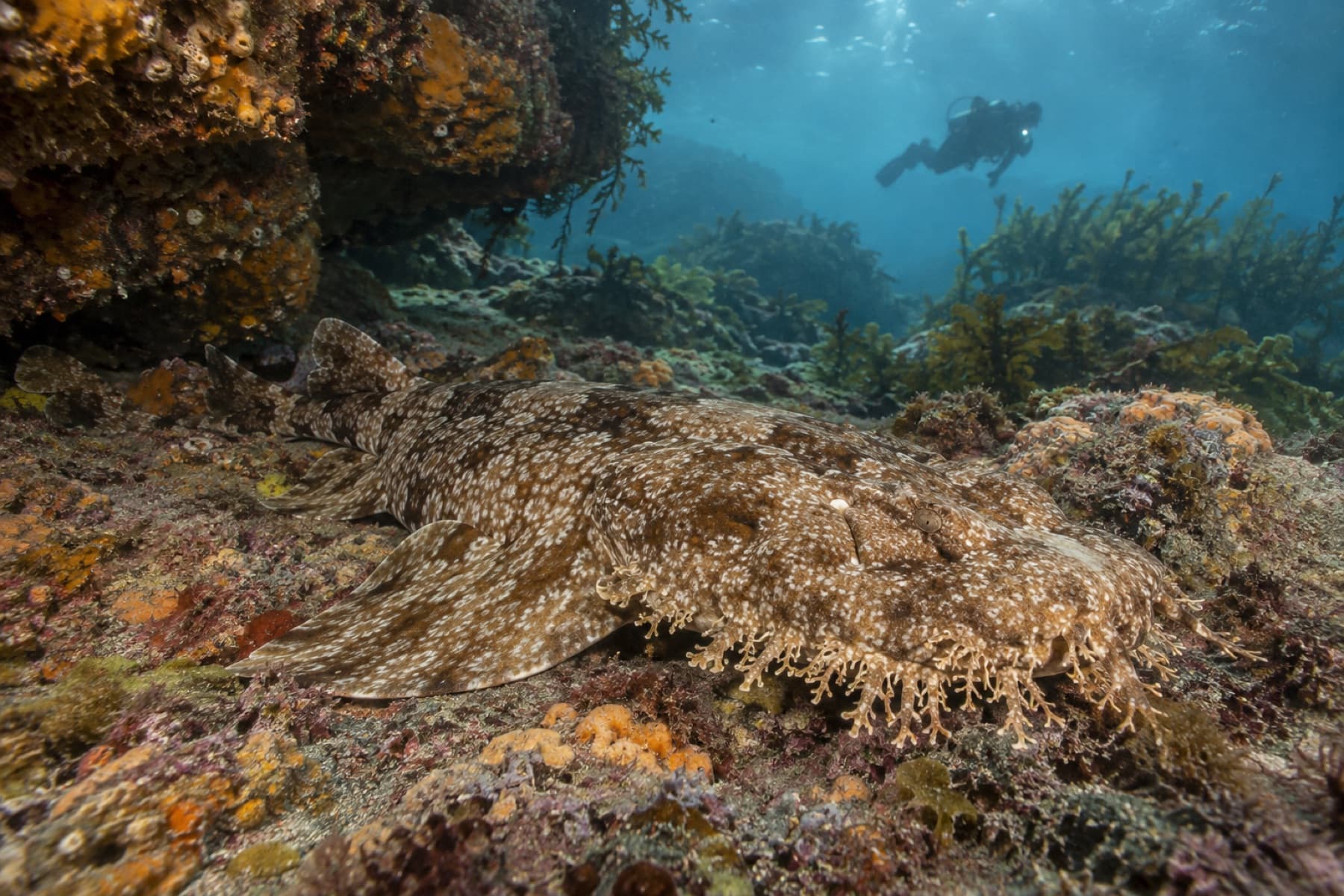 South West RocksFish Rock — grey nurse shark aggregation and one of Australia's few true ocean cave dives.Coffs Harbour & the Solitary IslandsA 75-kilometre marine park where tropical, subtropical and temperate species genuinely overlap.
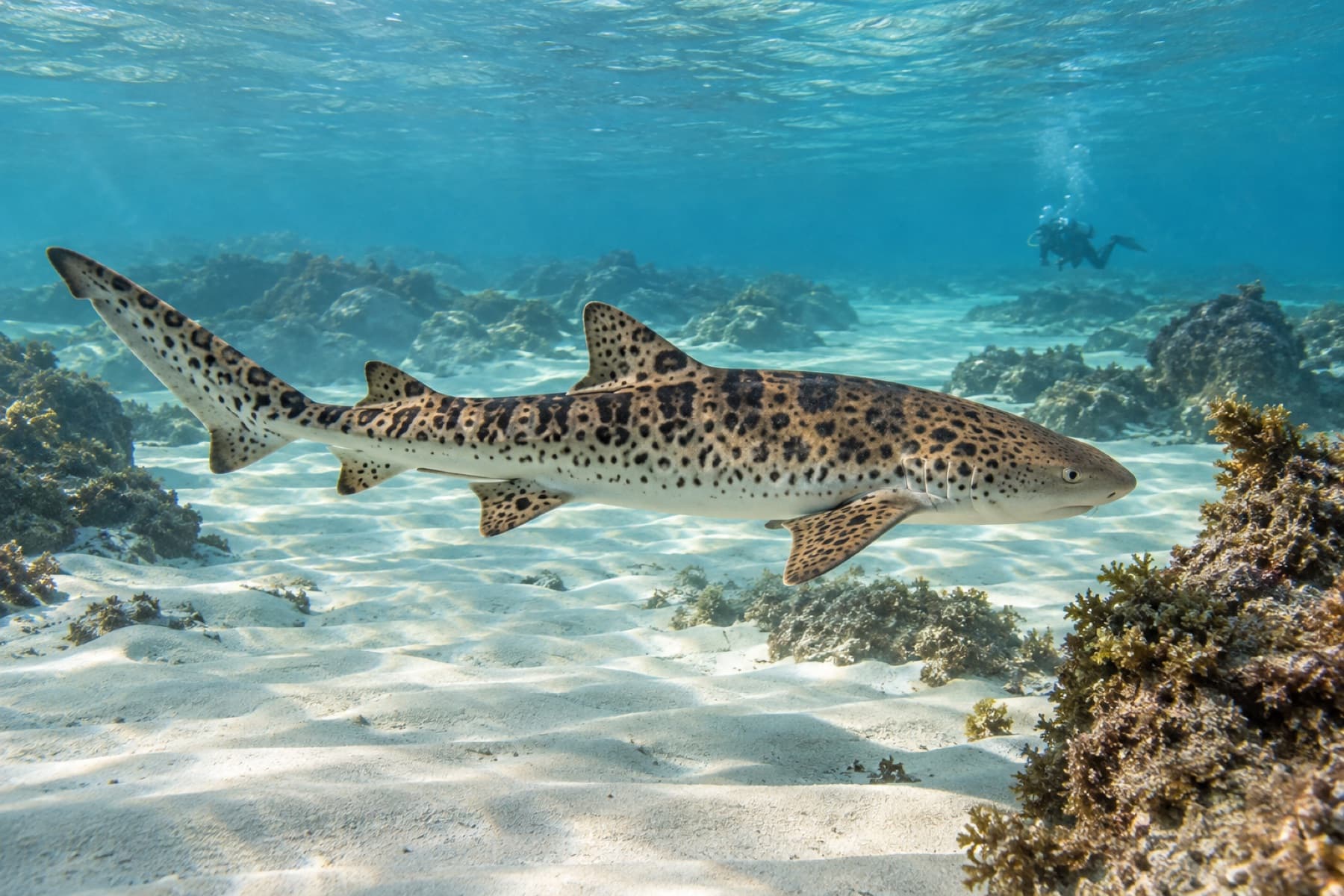 Port MacquarieMid-north coast reef and charter diving with an established local training market.Newcastle, Nelson Bay & Port StephensAustralia's best-known macro shore diving at Fly Point, plus offshore reef, wrecks and shark sites.Central CoastA strong local-diver market with easy access to both shore and boat diving between Sydney and Newcastle.SydneyA major city where you can shore dive before work, boat dive on weekends and train to technical level without leaving town.
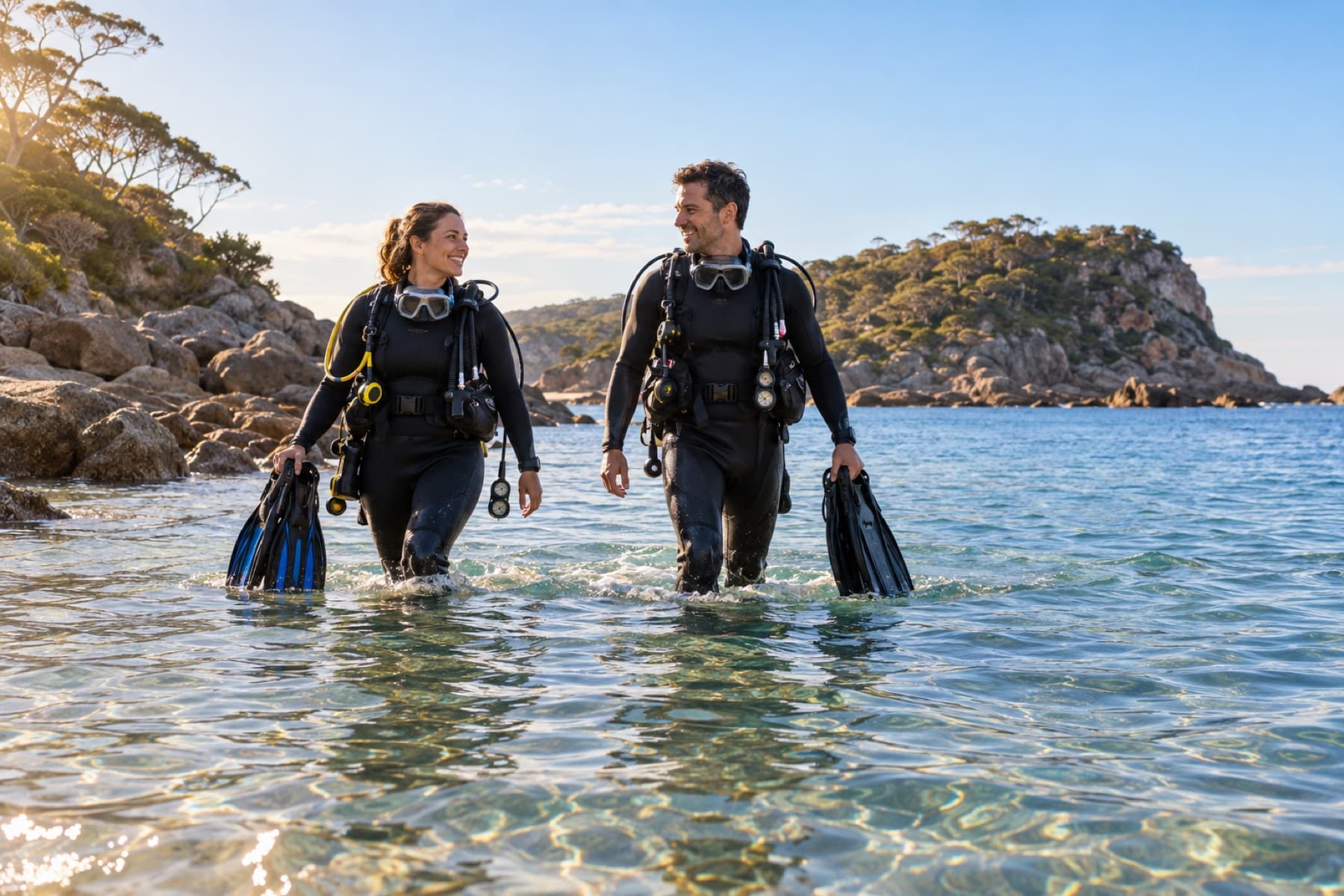 Wollongong & ShellharbourAccessible reef and shore diving an hour south of Sydney, with a quieter local scene.Jervis BayExceptionally clear water, dramatic walls, sponge gardens and reliable seal encounters.
 NaroomaMontague Island — a seal colony and offshore reef system on the far south coast.Merimbula & EdenThe far south coast — cooler, temperate diving that transitions toward Victorian conditions.
- Extensive shore diving, especially Sydney and Port Stephens
- Grey nurse shark aggregation sites
- Fish Rock cave and reef diving
- Julian Rocks tropical–temperate crossover
- Solitary Islands Marine Park
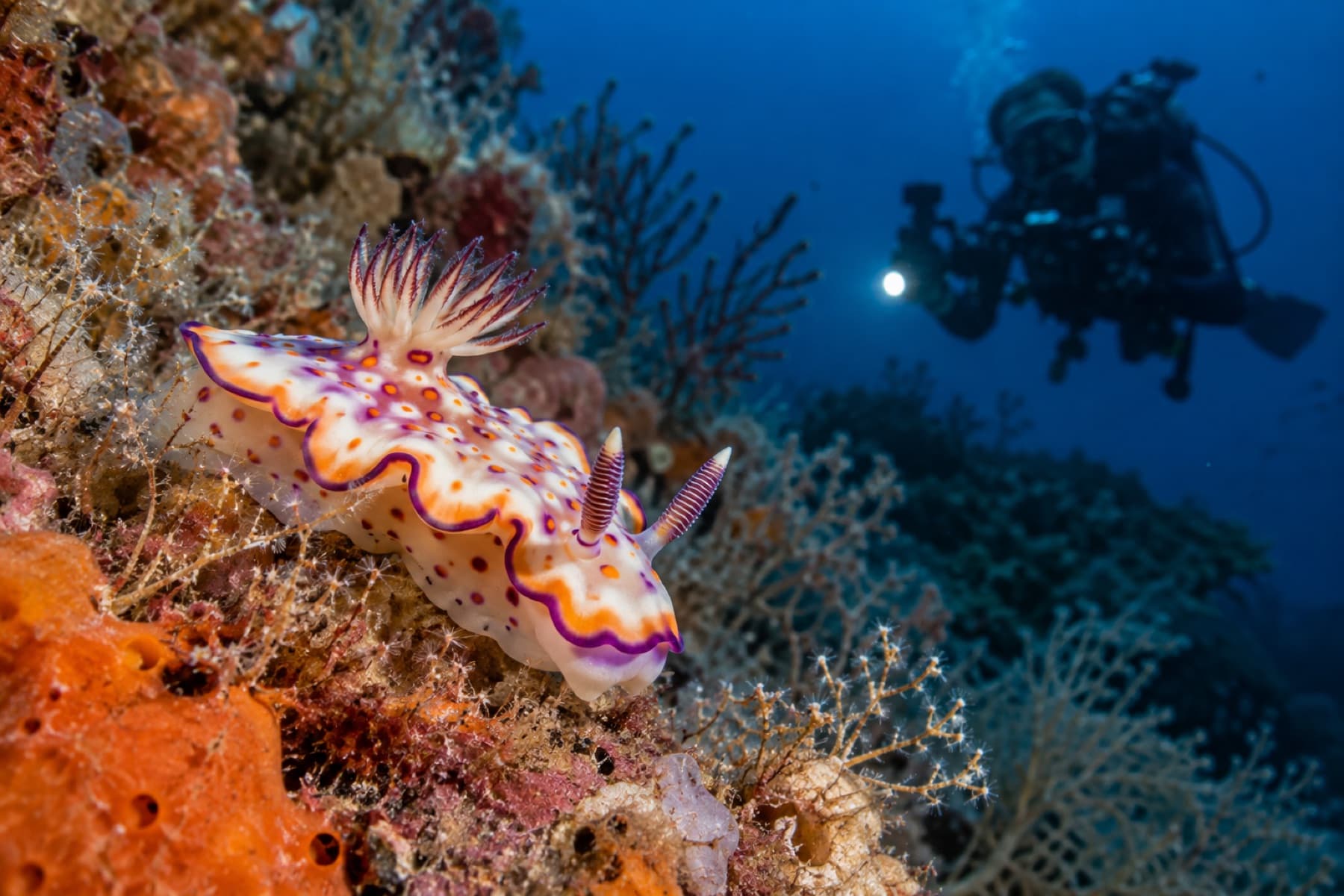
- Strong macro and underwater photography culture
- Large urban training market
- One of Australia's densest technical training concentrations
- Year-round club and weekend diving
| Water temperature | Roughly 21–26°C in summer and 16–20°C in winter, warmer in the north and cooler toward the Victorian border. |
|---|---|
| Visibility | Highly variable. Commonly 5–20 m, with clearer conditions when the East Australian Current runs and after settled weather. |
| Season | Year-round. Summer brings warmer water and tropical visitors; winter is strongly associated with grey nurse shark aggregations and often more settled inshore conditions. |
| Regions documented | 11 |
| Businesses documented | 27 |
| Dive sites documented | 16 |
In much of the world, shore diving is what you do when the boat is cancelled. In NSW it is the main event. Bare Island, Shelly Beach, Fly Point and Gordons Bay support serious diving communities that rarely need a vessel.
This shapes the local market. NSW centres tend to be strong on air fills, servicing, cylinder testing and club structure, because their customers dive constantly and maintain their own equipment.
NSW can be an excellent training environment because students encounter real shore entries, moderate exposure protection and variable conditions early in their development.
The important factor is not whether a course is "harder". It is whether instructors use the environment progressively and safely, building competence rather than simply exposing students to difficulty.
- rock and beach shore entries
- surge and swell
- moderate and changing visibility
- 5 mm and 7 mm wetsuits, and weighting to match
- navigation as a genuinely necessary skill
- reading conditions before committing to a dive
Sydney holds one of Australia's strongest concentrations of technical training facilities, supported by deep offshore sites within reach of a day boat.
Capability should still be compared service by service. A centre teaching Advanced Nitrox does not necessarily blend Trimix, and a centre that blends Trimix does not necessarily support your specific rebreather.
Equipment notes for New South Wales
- A 5 mm suit covers most of the year in Sydney; many regular divers move to 7 mm, a semi-dry or a drysuit for winter.
- Hoods and gloves are normal in the south of the state and through winter statewide.
- Shore-entry diving favours robust fins, boots and a suit you can walk and scramble in.
Every documented site in the state, with conditions, marine life and the operators known to service them.
 Bare IslandSydney's most-dived shore site — weedy seadragons, extraordinary macro life and multiple routes.Bass PointA rocky headland south of Wollongong with several entries and a protected reserve area.Broughton IslandOffshore island diving from Port Stephens, with grey nurse sharks at Looking Glass.ClovellyA sheltered concrete-lined channel giving Sydney's easiest entry into open water.Fish RockGrey nurse shark aggregation and one of Australia's few genuine ocean through-caves.Fly PointA protected sponge garden at Nelson Bay with some of the richest macro life in Australia.Gordons BayAn Eastern Suburbs shore dive with a long-established underwater nature trail.Jervis Bay WallsTemperate sponge-covered walls and drop-offs in some of the clearest water in NSW.Julian Rocks (Nguthungulli)Where tropical and temperate waters meet — more than 20 shark and ray species recorded.KurnellA cluster of Botany Bay shore dives including The Steps and The Leap, with wall terrain.Montague IslandA granite island nine kilometres offshore with a substantial fur seal colony.North Solitary IslandExtensive anemone beds and the strongest tropical influence in the Solitary Islands Marine Park.
27 businesses, grouped by region. Each profile records what is verified, what is advertised and what still needs checking with the operator.
Newcastle, Nelson Bay & Port Stephens
- Feet First DiveA Nelson Bay operation serving the Fly Point and Port Stephens shore-diving community alongside training and boat diving.
- Grey Nurse ChartersA Port Stephens charter operation focused on offshore sites including Broughton Island and local shark aggregation areas.
- Dive NewcastleA Newcastle operation serving local divers with training and local site access.
- Dive SwanseaA Swansea operation servicing tide-sensitive diving around the channel and bridge areas, where local knowledge is a genuine safety factor.
Sydney
- Dive Centre ManlyA Northern Beaches operation with a long-standing presence at Shelly Beach, offering recreational training, boat diving and technical pathways.
- Frog Dive SydneyA long-established Sydney business associated with recreational and technical training alongside retail and workshop services.
- Abyss Scuba DivingA Sydney operation associated with training across recreational and technical levels, boat diving and equipment services.
- Dive Centre BondiAn Eastern Suburbs operation providing recreational training, local diving and technical pathways.
- Geo DiversA Sydney diving operation. Current course range, agency and site access require verification.
- Pro Dive SydneyA Sydney training and retail operation serving the metropolitan recreational market.
- Pro Dive BrookvaleA Northern Beaches training and retail location serving local divers.
- ADRENO SydneyAn equipment retailer with a spearfishing and freediving emphasis alongside scuba equipment. Primarily retail rather than a training centre.
- Scuba WarehouseA Sydney equipment retailer. Whether training and in-house servicing are offered requires verification.
- Ocean HutA Sydney dive equipment business. Retail range, servicing and training availability require verification.
Merimbula & Eden
- Merimbula Divers LodgeA far south coast operation combining diving with accommodation, serving the Merimbula and Eden region.
- Dive EdenAn Eden-based operation providing access to far south coast reef and wreck diving.
- Wilderness Sea n' SkiA far south coast business providing equipment and dive services. Range and training availability require verification.
Frequently asked questions
What is the most famous shark dive in NSW?
Fish Rock at South West Rocks is one of the state's best-known grey nurse shark destinations. Julian Rocks and the Solitary Islands also produce regular shark encounters, and each has a different seasonal pattern.
Is Sydney good for learning to dive?
Yes. Sydney has a large training market, accessible shore diving for confined and early open-water work, and unusually deep continuing-education and technical options if you keep going.
Is shore diving common?
Very. Sydney, Port Stephens and much of the NSW coast support substantial shore-diving communities that dive year-round without needing a boat.
Can I learn technical diving in Sydney?
Yes. Sydney contains several centres offering recognised technical pathways, and the offshore depth to make use of them. Verify the specific agency, course level and gas support before committing.
Is diving seasonal?
Diving happens year-round, but marine life, water temperature, visibility and current vary significantly through the year. Choosing a month matters more in NSW than in tropical Queensland.
Do I need a drysuit in NSW?
Not usually. Most NSW divers use 5 mm or 7 mm wetsuits. Drysuits become more attractive for winter diving in the south of the state, for long dives, and for technical profiles with significant decompression time.