Scuba Diving in Coffs Harbour & the Solitary Islands
A 75-kilometre marine park where tropical, subtropical and temperate species genuinely overlap.
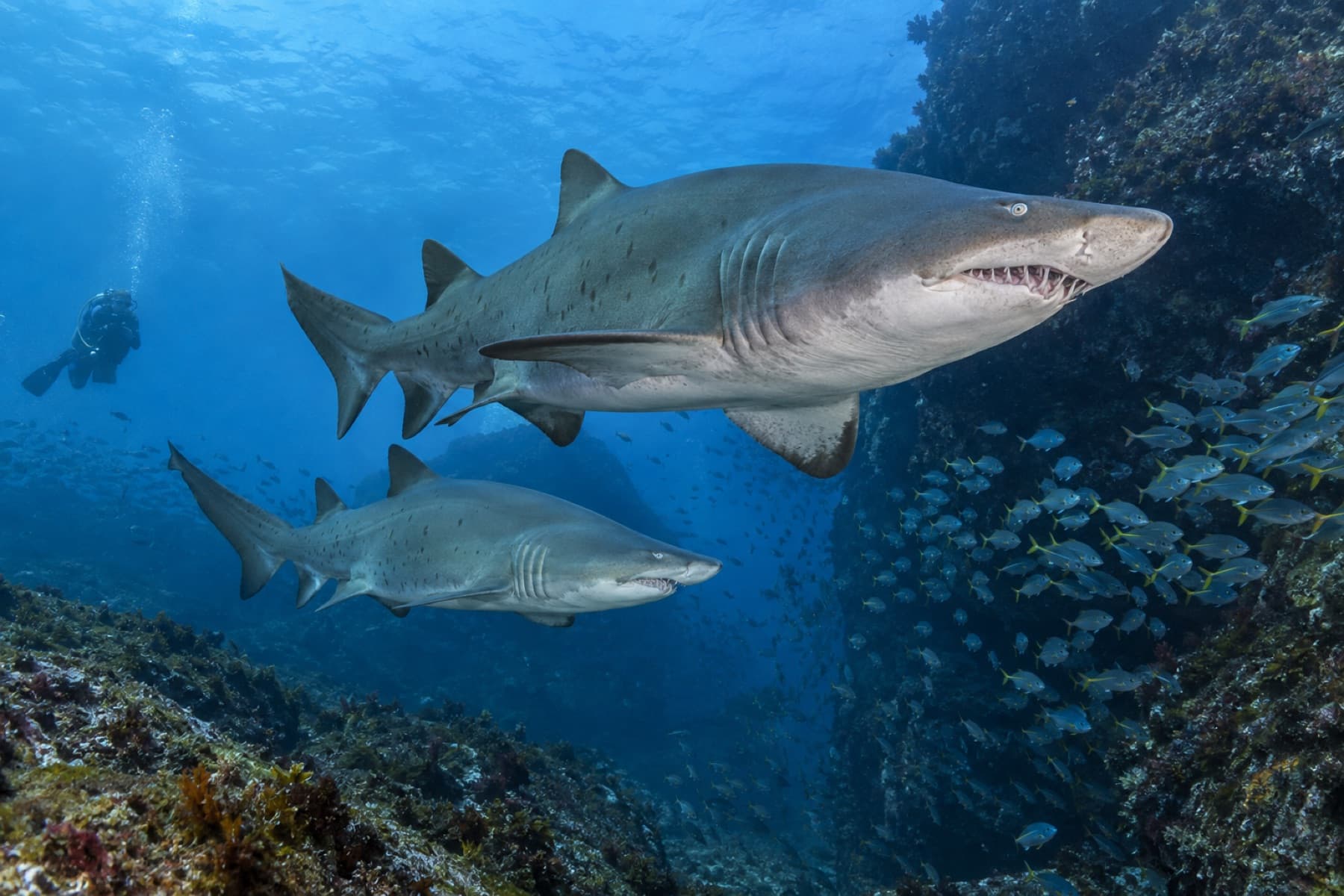
Grey nurse sharks, represented by an AI-generated editorial image.
The Solitary Islands Marine Park stretches approximately 75 kilometres along the coast and covers around 71,000 hectares. It is one of the largest and most ecologically interesting marine parks in New South Wales.
Its proximity to the East Australian Current produces a distinctive mixture of tropical, subtropical and temperate marine life — hard corals growing alongside temperate species that would be out of place on a tropical reef.
Visit NSW particularly highlights extensive anemone beds and soft corals around North Solitary Island, which is one of the region's signature underwater features.
Water temperature
Roughly 18–26°C.
Visibility
Commonly 10–30 m, best when the current runs clean.
Season
Year-round. Grey nurse sharks are strongly associated with cooler months; tropical species peak in late summer.
Diving types
Marine park, Reef, Shark diving, Soft coral
Businesses documented
2
Dive sites documented
2
How to plan diving in Coffs Harbour & the Solitary Islands
Choose the experience
Start with the diving, not the logo
Coffs Harbour & the Solitary Islands is documented for marine park, reef, shark diving and soft coral. Compare operators by the sites, schedule, group model and support your planned dives require.
Time the visit
Use the conditions together
Year-round. Grey nurse sharks are strongly associated with cooler months; tropical species peak in late summer. Visibility: Commonly 10–30 m, best when the current runs clean.
Build the shortlist
Compare documented options
This guide connects 2 documented businesses and 2 dive sites. Read the individual profiles, then verify availability and suitability with the operator.
Scuba Diving in Coffs Harbour & the Solitary Islands: What divers encounter
The species mix changes noticeably with distance offshore and with season, which makes repeat diving here more rewarding than a single visit suggests.
grey nurse sharks
wobbegongs
leopard sharks
manta rays
hard coral
soft coral and extensive anemone beds
schooling fish
Scuba Diving in Coffs Harbour & the Solitary Islands: Access points
Coffs Harbour is the main access point for the southern and central parts of the marine park. Wooli provides access to the northern marine-park region and surrounding islands, including North Solitary Island.
The distinction matters: which island a boat can reach in a day depends heavily on where it departs from.
Dive businesses in Coffs Harbour & the Solitary Islands
Each profile separates what is verified from what is advertised, and lists the questions still worth asking the operator directly.
Capabilities and requirements change. Read how to choose a dive centre for what to actually evaluate, and confirm certification requirements, equipment hire and conditions directly with the operator before travelling.
Scuba Diving in Coffs Harbour & the Solitary Islands: FAQs
When is the best time to dive in Coffs Harbour & the Solitary Islands?
Year-round. Grey nurse sharks are strongly associated with cooler months; tropical species peak in late summer.
What water temperature and visibility should divers expect in Coffs Harbour & the Solitary Islands?
Water temperature: Roughly 18–26°C.. Visibility: Commonly 10–30 m, best when the current runs clean.. These are planning ranges rather than guarantees for a particular dive.
How many dive centres are documented in Coffs Harbour & the Solitary Islands?
This directory currently connects 2 businesses with 2 documented dive sites. Read individual profiles because training, boats, equipment and gas services differ.
Is Coffs Harbour & the Solitary Islands suitable for beginner divers?
Beginner training or beginner-classified sites are documented in the region. Suitability still depends on the exact site, weather, supervision and the diver's comfort on the day.
How should I choose a Coffs Harbour & the Solitary Islands dive operator?
Match the operator to the intended site and support required. Compare current schedule, group size, guiding, equipment, cancellation terms and how the operation assesses recent experience.