South Australia dive centres
Jetty diving, leafy seadragons, the giant Australian cuttlefish aggregation, and Australia's most important freshwater cave-diving region.
South Australia contains some of Australia's most unusual diving. It is the state where the headline attractions are not coral reefs — they are a cuttlefish aggregation, a jetty full of seadragons, and a limestone cave system hundreds of kilometres inland.
The state combines jetties, temperate reefs, leafy seadragons, the giant Australian cuttlefish aggregation, offshore wildlife, wrecks, caves and freshwater sinkholes. Very little of it resembles what most people picture when they imagine Australian diving.
It is also the state where the distinction between recreational and overhead-environment diving matters most. Mount Gambier's sinkholes and caves are internationally significant, and they are emphatically not an extension of recreational certification.
South Australia rewards divers who are interested in behaviour, macro life and unusual ecology more than those looking for big blue water and coral. The photography here is exceptional and the crowds are small.
South Australia is organised by region because conditions, marine life and the kind of business that survives locally vary enormously within the state.
 AdelaideThe state's hub for training, equipment, servicing, fills and technical education.Fleurieu PeninsulaRapid Bay, Second Valley and Port Noarlunga — accessible shore diving and leafy seadragons.
 Yorke Peninsula & EdithburghEdithburgh jetty — one of Australia's premier muck and macro dives.WhyallaThe giant Australian cuttlefish aggregation — one of the world's genuinely unique marine events.
 Port LincolnShark cage tourism, sea lion swims and offshore island diving — categories that need separating.Kangaroo IslandTemperate reef, wrecks and wildlife diving around Australia's third-largest island.Mount GambierAustralia's cave-diving capital — freshwater sinkholes of international significance, governed by CDAA.
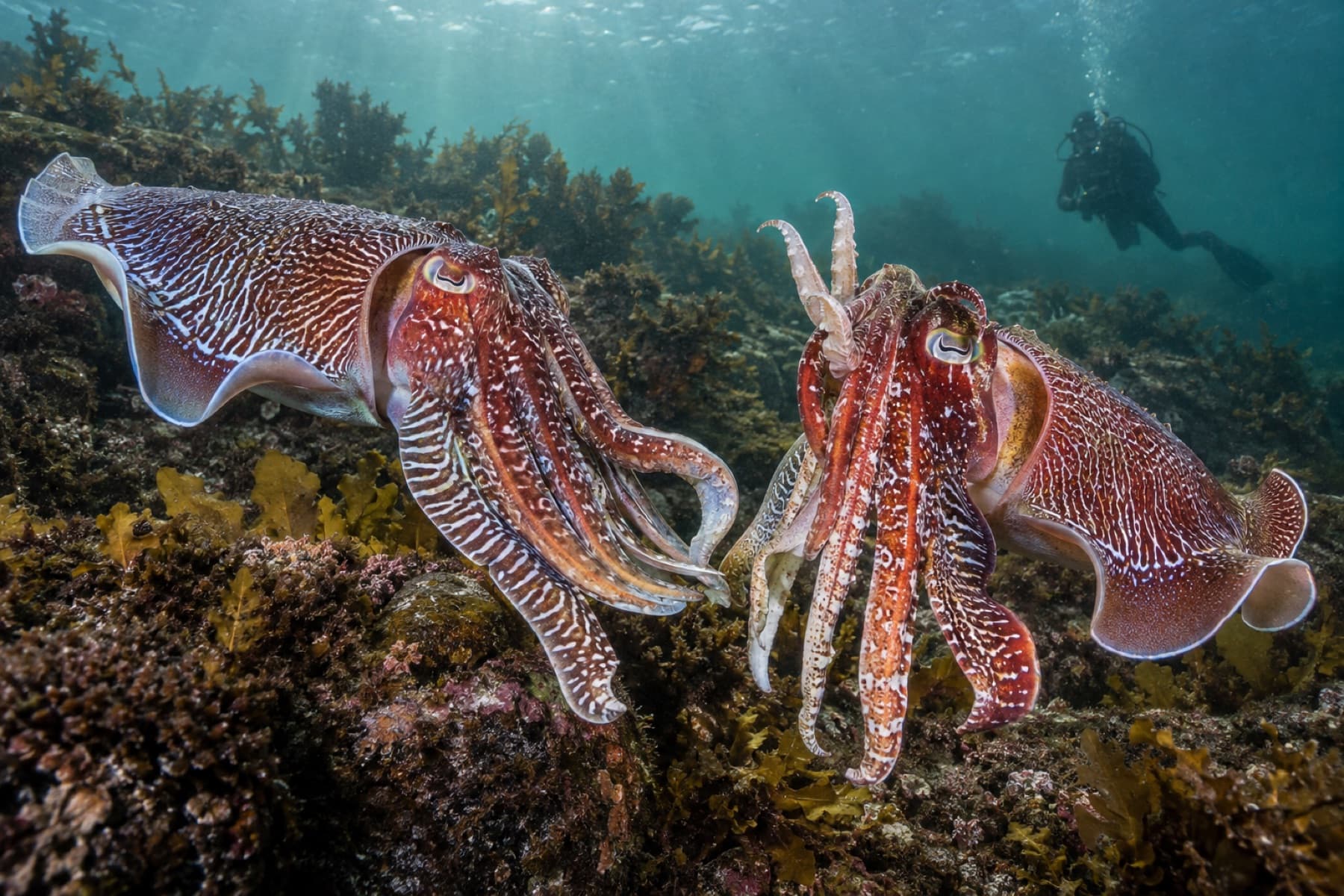
- Giant Australian cuttlefish aggregation at Whyalla
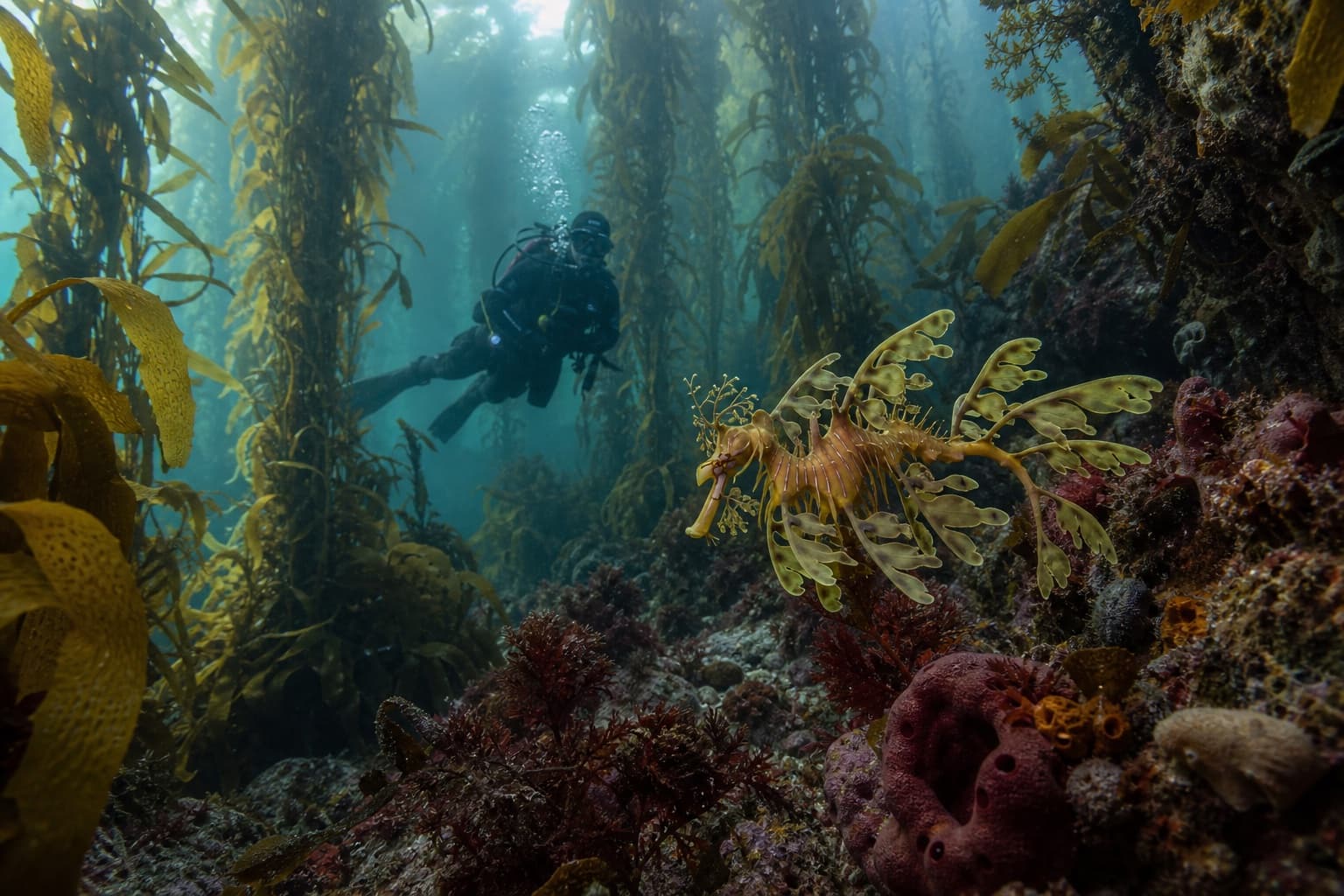
- Leafy seadragons at Rapid Bay and jetty sites
- Exceptional jetty and macro diving
- Temperate reef systems
- Shark cage tourism at Port Lincoln
- Kangaroo Island temperate and wildlife diving
- Mount Gambier freshwater sinkholes and caves
- CDAA-governed cave-diving access
| Water temperature | Roughly 19–22°C in summer and 13–16°C in winter along the coast. Mount Gambier's freshwater sites sit near 15–17°C year-round. |
|---|---|
| Visibility | Jetty sites commonly 5–15 m and weather-dependent. Mount Gambier's freshwater sites can offer exceptional clarity, sometimes well beyond 30 m. |
| Season | Coastal diving is year-round. The Whyalla cuttlefish aggregation runs approximately May to August. Cave diving is year-round but access is governed by CDAA qualification and landowner permission. |
| Regions documented | 7 |
| Businesses documented | 11 |
| Dive sites documented | 12 |
Jetty sites are often described as easy because access is from shore. That can be misleading.
A good jetty dive still involves depth, current, fishing activity, entanglement risk, low light beneath the structure, an entry and exit that changes with sea state, and weather exposure on the walk in. The marine life is the reward for taking the site seriously.
- depth, which is often greater at the seaward end
- current running along or under the structure
- active fishing above and discarded line below
- entanglement in line, rope and net
- low light and shadow beneath the deck
- entry and exit points affected by swell and tide
- long surface walks carrying equipment
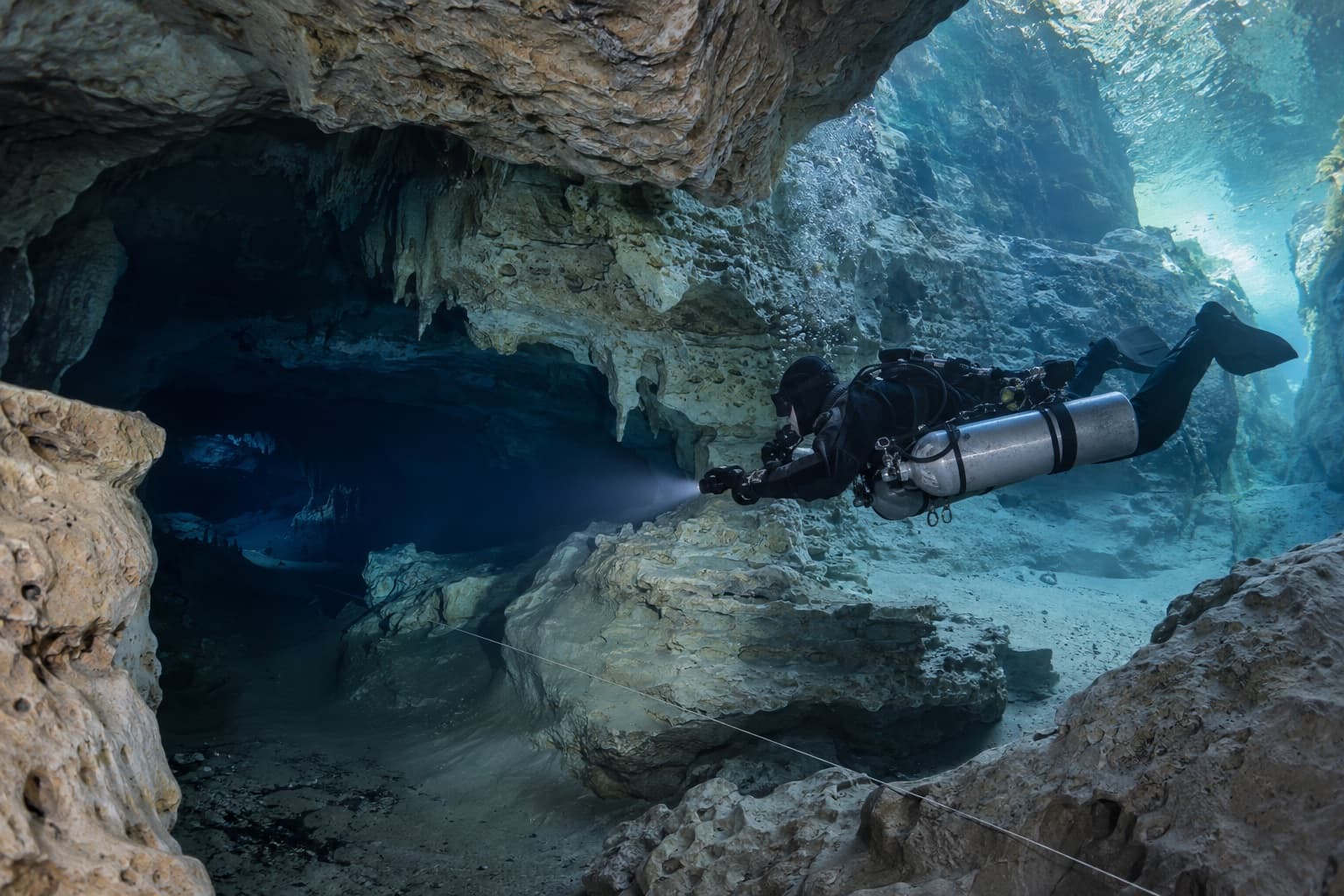
A standard Open Water, Advanced or Deep certification does not prepare a diver to enter an overhead cave environment. This is not a matter of caution or gatekeeping — the failure modes are genuinely different.
Cave diving removes the option of a direct ascent. Everything else follows from that: guideline procedures, strict gas rules, equipment and light redundancy, silt management, restriction technique and complex navigation.
- no direct ascent to the surface
- continuous guideline to open water
- conservative gas reserve rules
- redundant gas and regulators
- redundant lighting
- silt-out management and propulsion technique
- restrictions and their equipment implications
- multi-branch navigation
Each winter, giant Australian cuttlefish gather in large numbers in the shallows of the upper Spencer Gulf near Whyalla. Much of the activity happens in only a few metres of water.
That means snorkellers can experience it fully, and non-divers should not be led to believe certification is mandatory. What is mandatory is adequate exposure protection — it is genuinely cold.
Equipment notes for South Australia
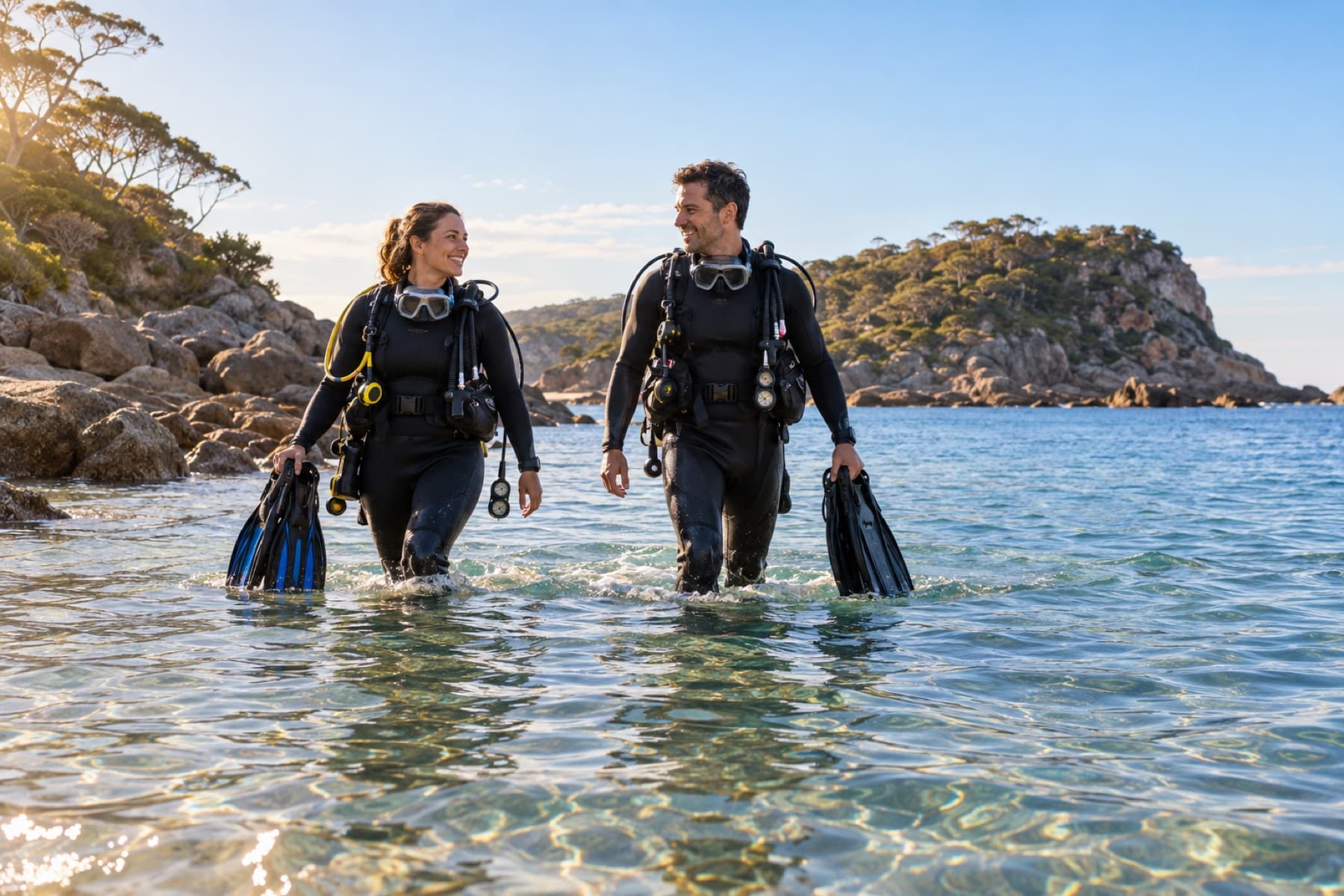
- A 7 mm wetsuit, semi-dry or drysuit suits most South Australian diving; hood and gloves are normal in winter.
- Whyalla in aggregation season is cold-water snorkelling or diving — plan warmth for repeated shallow immersion, not for one deep dive.
- Cave and sinkhole diving requires redundant gas, redundant lighting, reels and a configuration appropriate to the specific site classification.
Every documented site in the state, with conditions, marine life and the operators known to service them.
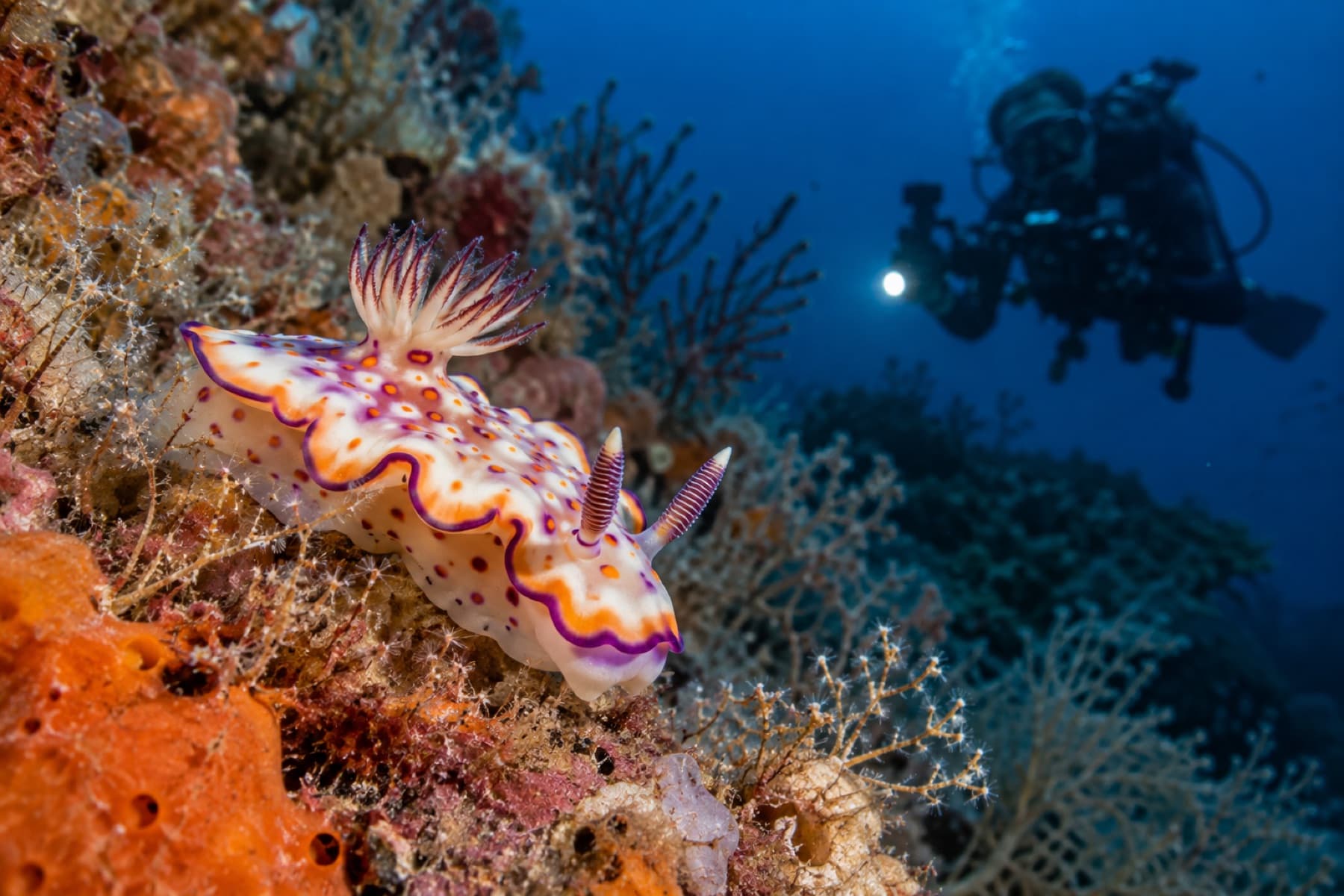 Edithburgh JettyOne of the world's great muck dives — an unremarkable jetty hiding extraordinary small life.Ewens PondsThree shallow spring-fed ponds connected by channels — a drift dive through crystal-clear freshwater.
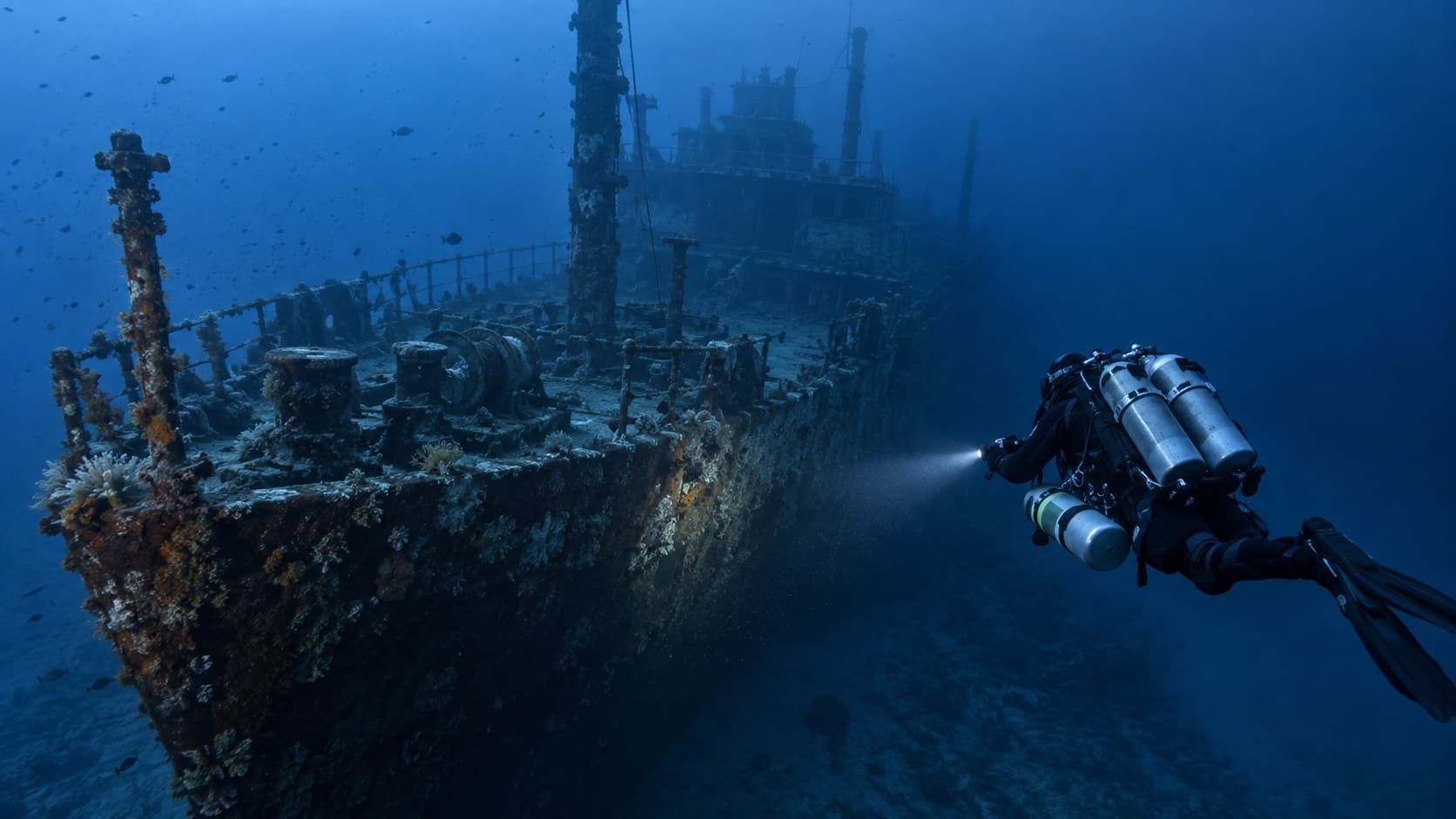 Glenelg WrecksAdelaide's local wreck diving — the Glenelg dredge, barge and artificial reef structures.Kilsby's SinkholeA limestone sinkhole with water so clear the experience is closer to flying than diving.
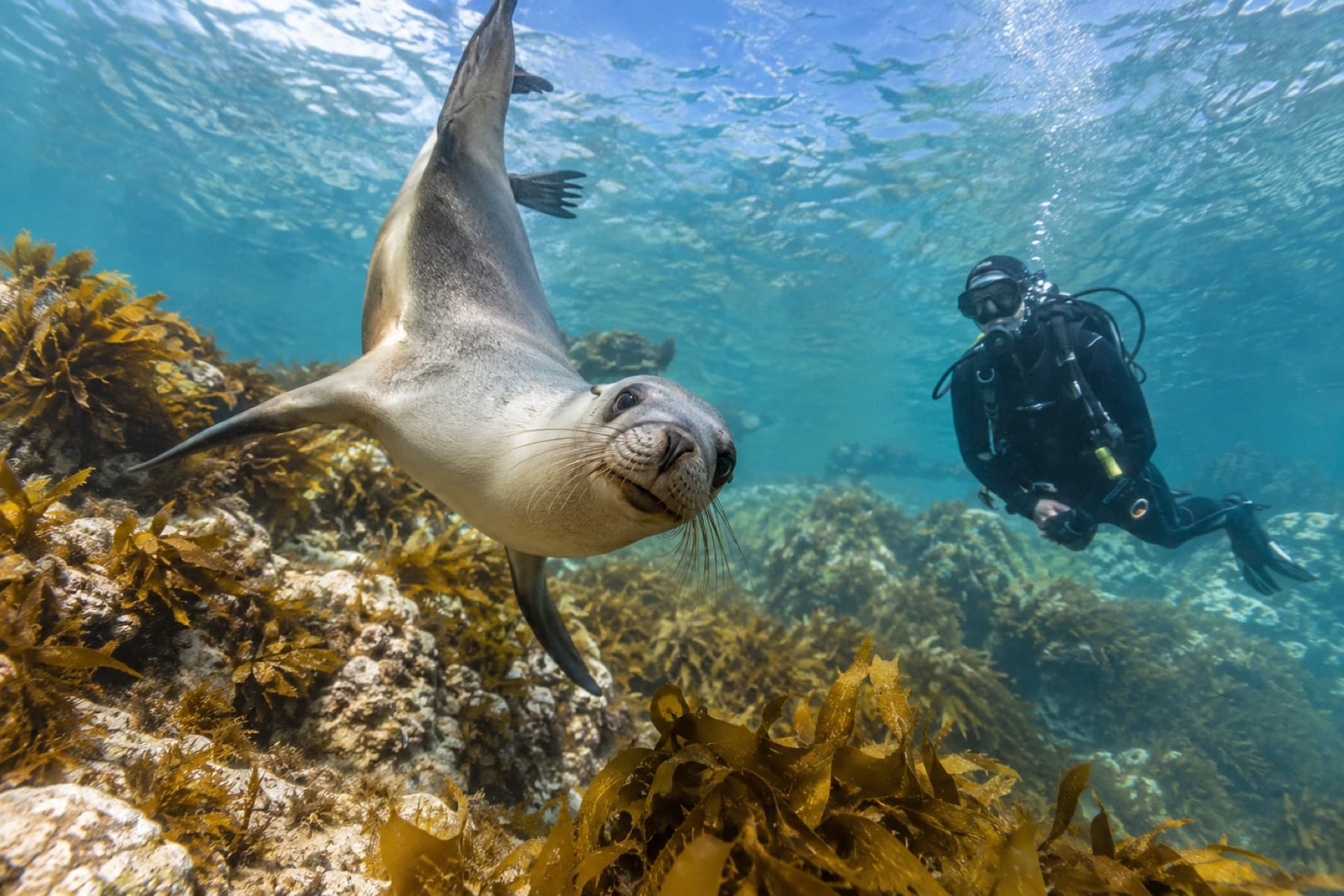 Neptune IslandsAustralia's only great white shark cage location — surface-supplied, not certified scuba.Piccaninnie PondsA karst spring of extraordinary clarity, with the Cathedral chamber and a chasm beyond 100 metres.Port Lincoln Sea Lion SitesAustralian sea lion colonies where curious young animals interact directly with snorkellers and divers.
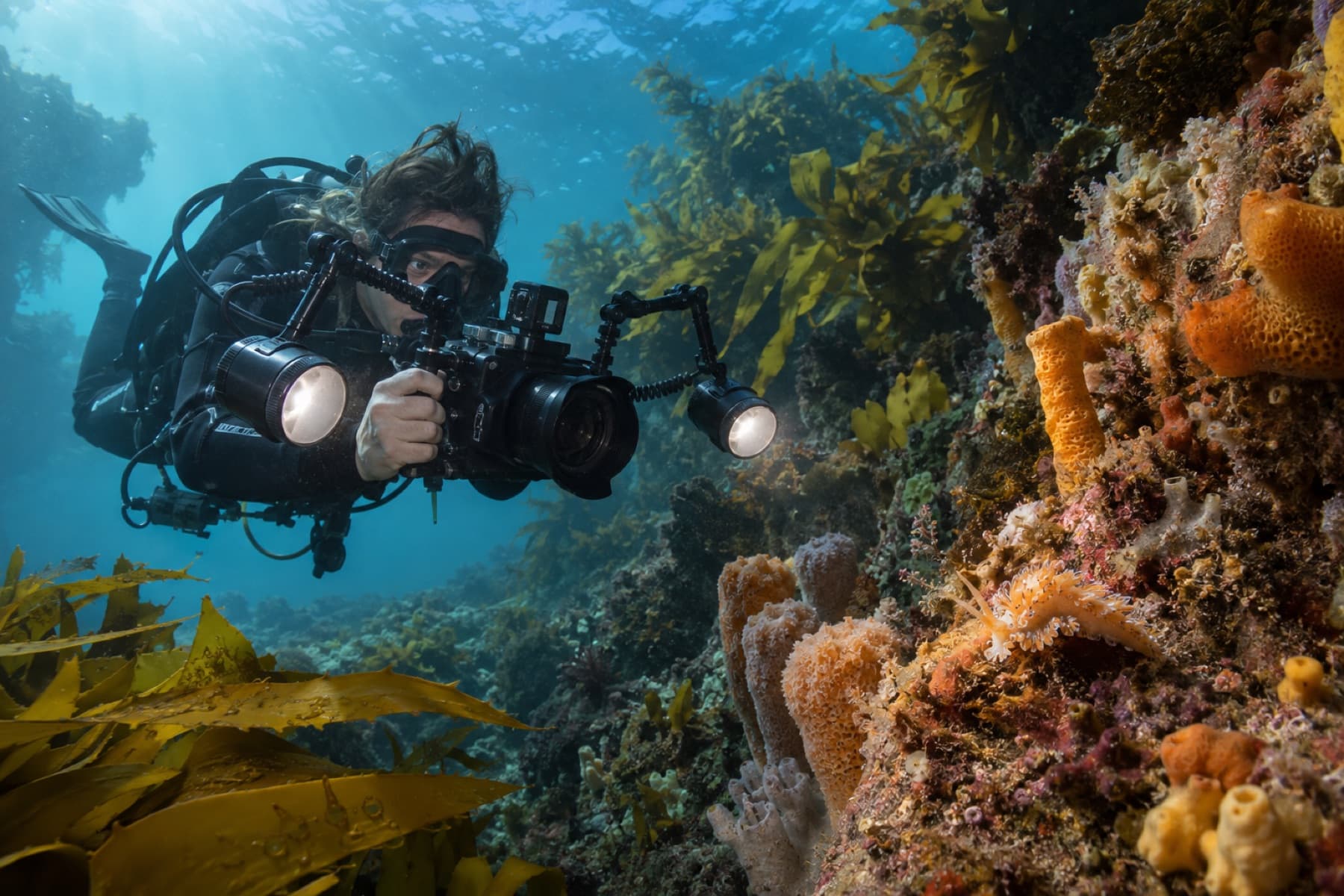 Port Noarlunga ReefA shore-accessible aquatic reserve reef reached via a jetty — South Australia's main training site.Rapid Bay JettySouth Australia's best-known leafy seadragon site, beneath a long jetty on the Fleurieu Peninsula.Second ValleyDramatic rock formations and a sheltered shore entry on the Fleurieu Peninsula.Tank CaveOne of the longest underwater cave systems in Australia — advanced CDAA qualification only.Whyalla Cuttlefish AggregationTens of thousands of giant Australian cuttlefish gathering to breed in a few metres of water.
11 businesses, grouped by region. Each profile records what is verified, what is advertised and what still needs checking with the operator.
Adelaide
- Adelaide ScubaAn Adelaide business providing training, equipment and local diving support, located near Glenelg.
- Diving AdelaideAn Adelaide training and guided diving operation serving local sites and organised trips.
- Underwater SportsAn Adelaide equipment and service business. Retail range and servicing capability require verification.
- The Dive ShackAn Adelaide business combining retail, servicing and training for South Australian divers.
- Divers DelightAn Adelaide dive business. Retail range, servicing and training availability require verification.
- Adelaide Technical DivingAn Adelaide operation specialising in technical diving training, relevant to divers preparing for deep, decompression or cave diving in South Australia.
Port Lincoln
- Adventure Bay ChartersA Port Lincoln wildlife tourism operation running great white shark cage experiences and sea lion swims. These are wildlife tourism products rather than certified scuba diving.
- Calypso Star ChartersA Port Lincoln operation running great white shark cage experiences and sea lion swims. Classified as wildlife tourism rather than a scuba dive centre.
- The Dive Shop Port LincolnA Port Lincoln business providing equipment, fills and dive services — a conventional dive business distinct from the region's cage tourism operators.
Frequently asked questions
When is the Whyalla cuttlefish aggregation?
South Australian tourism information identifies the main aggregation period as approximately May through August. Conditions and numbers vary year to year, so check locally before travelling.
Do I need to be a diver to see the cuttlefish?
No. Much of the aggregation occurs in shallow water and can be experienced by snorkellers. Cold-water exposure protection matters more than certification.
Can I dive the Mount Gambier sinkholes with an Open Water certification?
No. Access to South Australian cave and sinkhole sites is governed by CDAA site classifications and the corresponding qualifications. Recreational certification does not qualify a diver for overhead environments.
Is shark cage diving the same as scuba diving?
No, and the two should be classified separately. Cage experiences at Port Lincoln are typically surface-supplied or snorkel-based wildlife tourism rather than certified scuba diving.
Where can I reliably see a leafy seadragon?
Rapid Bay jetty is the best-known site, and several other Fleurieu Peninsula and Yorke Peninsula jetties support them. Sightings are never guaranteed, and slow, careful searching produces better results than covering ground.