
Choose the experience
Start with the diving, not the logo
Mount Gambier is documented for cave, sinkhole, freshwater, technical and deep. Compare operators by the sites, schedule, group model and support your planned dives require.
South Australia
Australia's cave-diving capital — freshwater sinkholes of international significance, governed by CDAA.
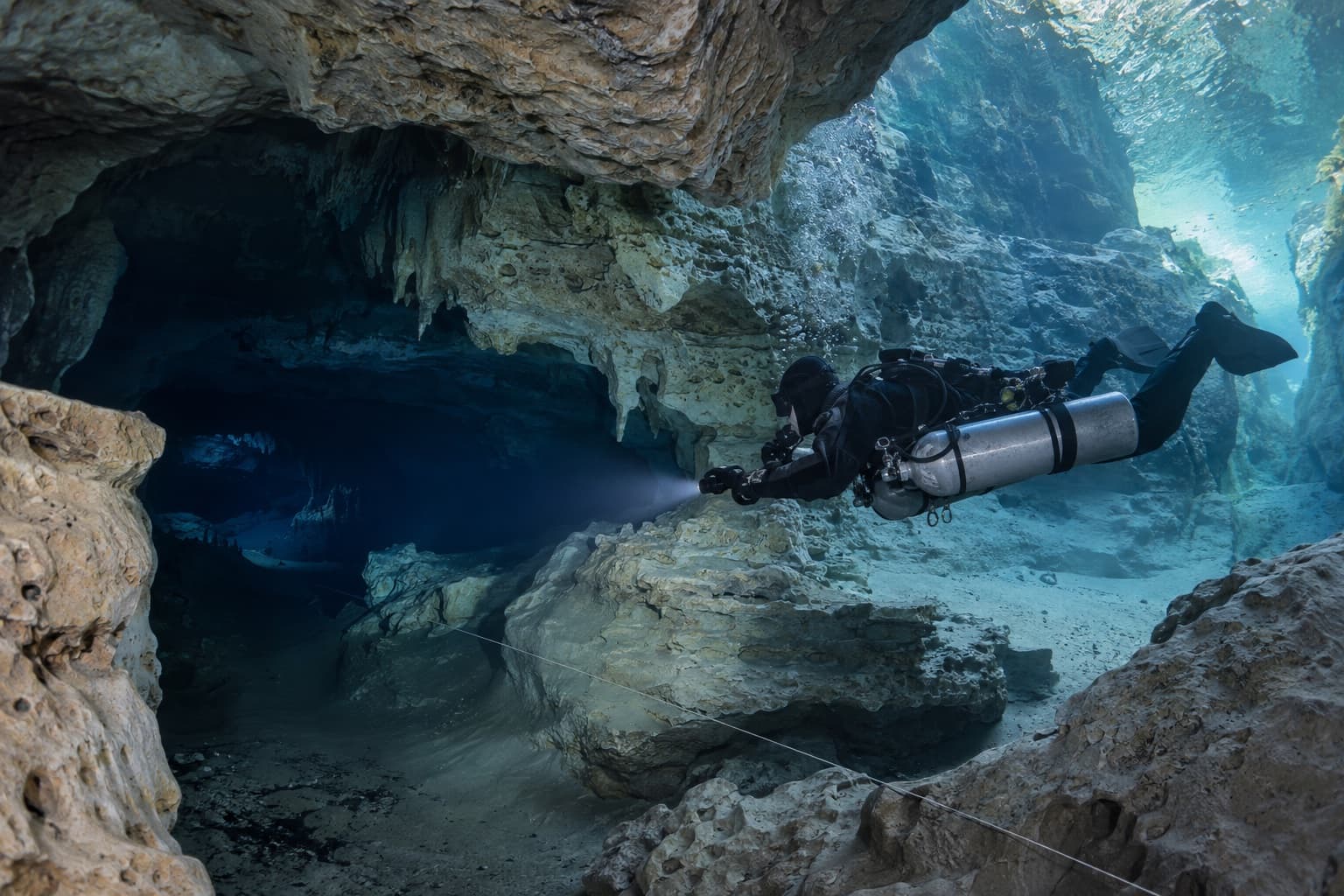

Mount Gambier should be one of the site's flagship technical sections. The region is internationally important for freshwater sinkhole and cave diving, and there is nothing comparable anywhere else in Australia.
The limestone of the Lower South East is riddled with water-filled caves and sinkholes — Kilsby's Sinkhole, Piccaninnie Ponds, Ewens Ponds, Tank Cave and many more. The water clarity in several of them is extraordinary, with visibility that can exceed anything in the ocean.
It is also the region where the gap between recreational certification and the qualification actually required is widest, and where getting that wrong has historically had serious consequences.
| Water temperature | Roughly 15–17°C year-round in the freshwater sites. |
|---|---|
| Visibility | Exceptional in several sites — clarity beyond 30 m is common and can be far greater. |
| Season | Year-round. Access is governed by CDAA qualification and landowner permission rather than by season. |
| Diving types | Cave, Sinkhole, Freshwater, Technical, Deep |
| Businesses documented | 1 |
| Dive sites documented | 4 |
Choose the experience
Mount Gambier is documented for cave, sinkhole, freshwater, technical and deep. Compare operators by the sites, schedule, group model and support your planned dives require.
Time the visit
Year-round. Access is governed by CDAA qualification and landowner permission rather than by season. Visibility: Exceptional in several sites — clarity beyond 30 m is common and can be far greater.
Build the shortlist
This guide connects 1 documented business and 4 dive sites. Read the individual profiles, then verify availability and suitability with the operator.
Useful next reads: interpreting dive conditions, exposure protection and the Australian packing list.
A standard Open Water, Advanced or Deep certification does not prepare a diver to enter an overhead cave environment. This is not a formality.
Cave diving removes the option of direct ascent, and every other requirement follows from that single fact.
The Cave Divers Association of Australia is central to site access and cave-diving standards in the region. Its site classification system determines which qualifications permit access to which sites.
Understanding it is not optional for anyone intending to dive here — CDAA membership and the corresponding category rating is generally the mechanism by which access is granted at all.
Mount Gambier profiles should identify availability of the equipment and gas that cave diving actually requires, rather than assuming a technical-sounding business supports all of it.
Each profile separates what is verified from what is advertised, and lists the questions still worth asking the operator directly.
Use these guides to match the region to the right season, experience level and style of diving.
Before you book
Capabilities and requirements change. Read how to choose a dive centre for what to actually evaluate, and confirm certification requirements, equipment hire and conditions directly with the operator before travelling.
Year-round. Access is governed by CDAA qualification and landowner permission rather than by season.
Water temperature: Roughly 15–17°C year-round in the freshwater sites.. Visibility: Exceptional in several sites — clarity beyond 30 m is common and can be far greater.. These are planning ranges rather than guarantees for a particular dive.
This directory currently connects 1 business with 4 documented dive sites. Read individual profiles because training, boats, equipment and gas services differ.
Beginner training or beginner-classified sites are documented in the region. Suitability still depends on the exact site, weather, supervision and the diver's comfort on the day.
Match the operator to the intended site and support required. Compare current schedule, group size, guiding, equipment, cancellation terms and how the operation assesses recent experience.