Tasmania dive centres
Dramatic temperate diving — kelp, sea caves, sponge gardens, walls and deep wrecks in genuinely cold water.
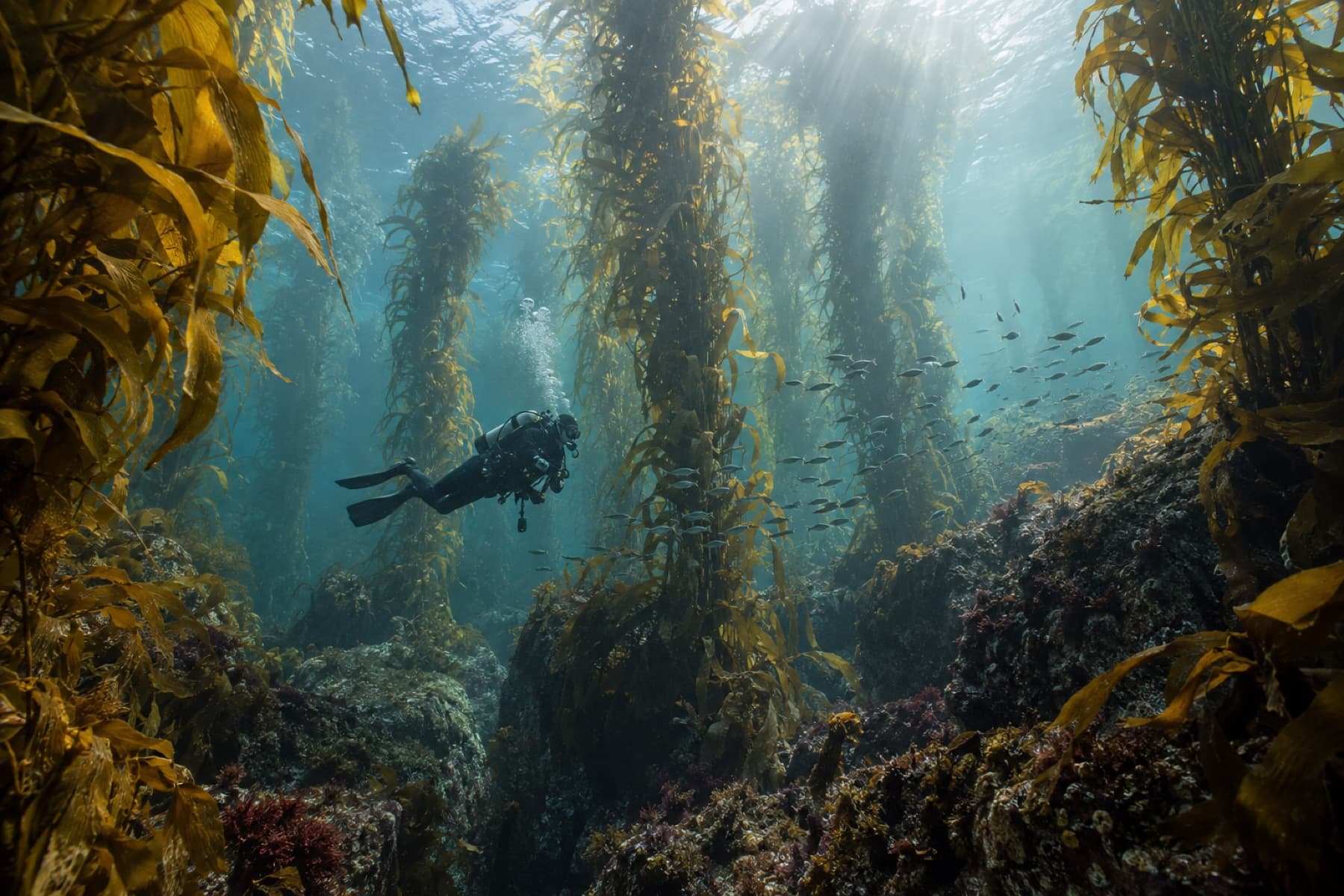
Tasmania offers some of Australia's most dramatic temperate diving. Sea caves, towering dolerite walls, giant kelp, sponge gardens dense with colour, deep wrecks and a rich temperate ecosystem that exists nowhere else in the country.
This is not Great Barrier Reef diving with colder water. The environment, equipment and dive planning can be fundamentally different, and treating it as a cooler version of tropical diving is the most common mistake visiting divers make.
The payoff is that Tasmania's underwater terrain is genuinely spectacular in a way that photographs rarely convey. The Tasman Peninsula's sea caves are formed in the same dolerite columns that make the cliffs above them among the highest in the Southern Hemisphere.
Tasmania also has more technical potential than its small population suggests. Depth, walls, wrecks and cave-like environments are all present within reach of a day boat.
Tasmania is organised by region because conditions, marine life and the kind of business that survives locally vary enormously within the state.
HobartTasmania's training, retail and equipment-support hub, and the base for Tasman Peninsula diving.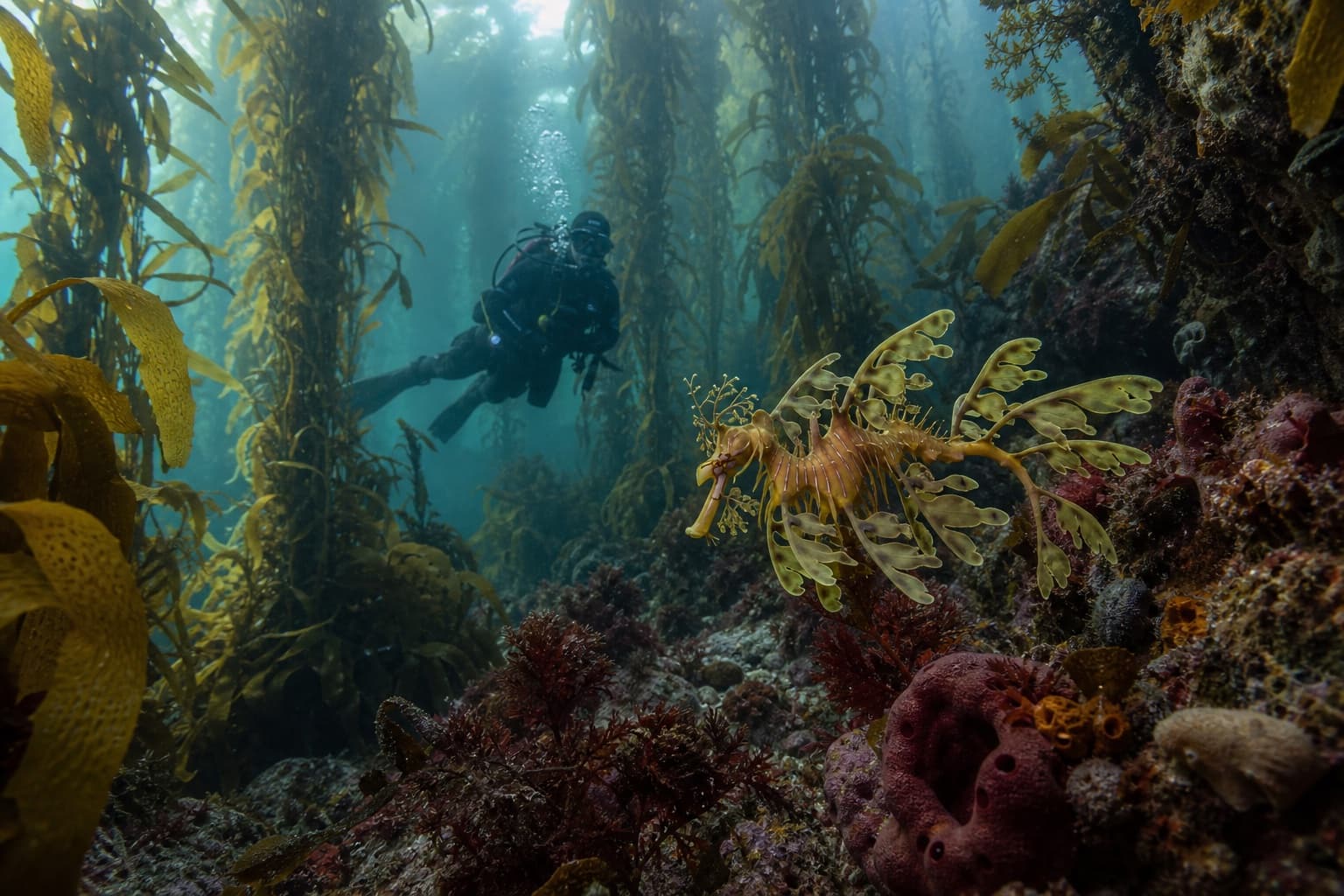 Tasman Peninsula & Eaglehawk NeckDolerite sea caves, towering walls, giant kelp and the deep wreck of the SS Nord.
 BichenoGovernor Island Marine Reserve — dense sponge gardens and colourful temperate walls.Northern TasmaniaBass Strait coastline, wrecks and a smaller local diving community.
- Dolerite sea caves and Cathedral Cave
- Giant kelp and temperate sponge gardens
- Deep walls and drop-offs
- Governor Island Marine Reserve at Bicheno
- SS Nord and deeper wreck diving
- Exceptional cold-water macro life
- Strong drysuit culture
- Technical diving potential including Trimix and CCR
| Water temperature | Roughly 15–18°C in late summer and 11–13°C in winter. Cold enough that thermal planning affects every dive. |
|---|---|
| Visibility | Often very good, particularly in winter. 10–25 m is common and exceptional days go beyond that. |
| Season | Year-round. Winter frequently produces the clearest water, and summer offers the most comfortable surface conditions and longest days. |
| Regions documented | 4 |
| Businesses documented | 7 |
| Dive sites documented | 5 |
Divers need to understand how exposure protection affects everything else, not just comfort. A thick wetsuit or drysuit changes weighting, buoyancy, trim, mobility, gas consumption and task loading simultaneously.
A diver certified entirely in warm water may benefit from an orientation dive before independently diving Tasmania. That is not a commercial upsell — it is the difference between managing four new variables with help and managing them alone.
- weighting, which increases substantially
- buoyancy control, as suit compression changes with depth
- trim, affected by where that weight sits
- mobility and reach for valves and equipment
- gas consumption, which rises when you are cold
- task loading from gloves, hood and restricted movement
Tasmania's sea caves are a headline attraction and many are dived recreationally. They are still overhead environments in part, and they deserve honest evaluation rather than either dismissal or alarm.
The relevant questions are about the specific route: how much overhead, whether natural light is continuously visible, what the surge is doing, and how experienced the guide is at that particular site on that particular day.
Tasmanian walls and wrecks reach technical depth close to shore. The SS Nord lies around 42 metres according to official Tasmanian tourism information, putting much of the wreck beyond ordinary entry-level recreational limits.
That means the honest classification of a Tasmanian dive site often has to separate recreational observation from the depths where the interesting parts actually are.
Equipment notes for Tasmania
- A 7 mm semi-dry is the practical minimum for most Tasmanian diving; drysuits are common among regular divers.
- Hood and gloves are standard year-round, and a good hood makes more difference to comfort than most divers expect.
- Confirm rental drysuit sizing and availability before travelling — specialist sizes are not always on the shelf.
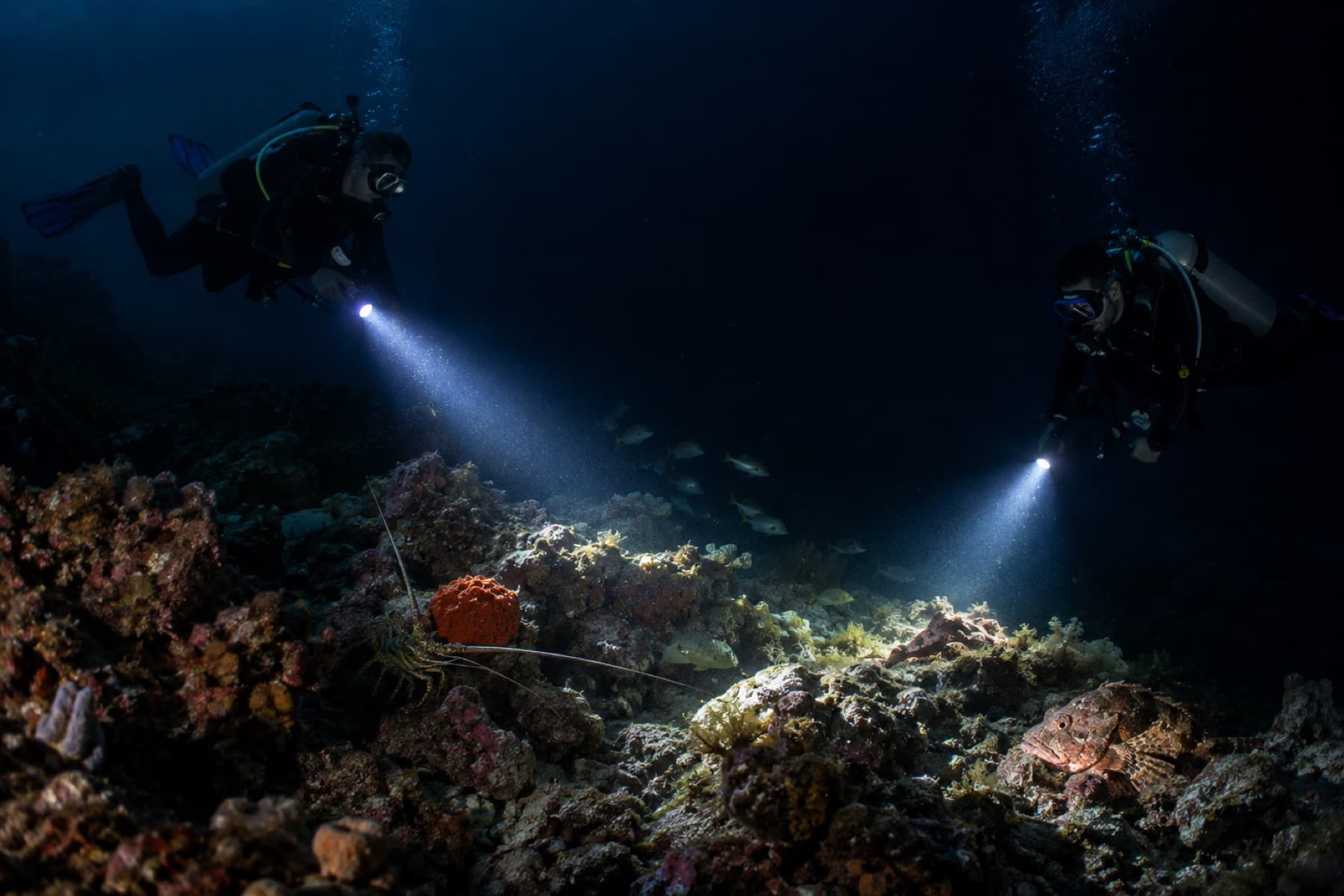
- Lighting matters: sponge gardens and cave environments have little colour without it.
Every documented site in the state, with conditions, marine life and the operators known to service them.
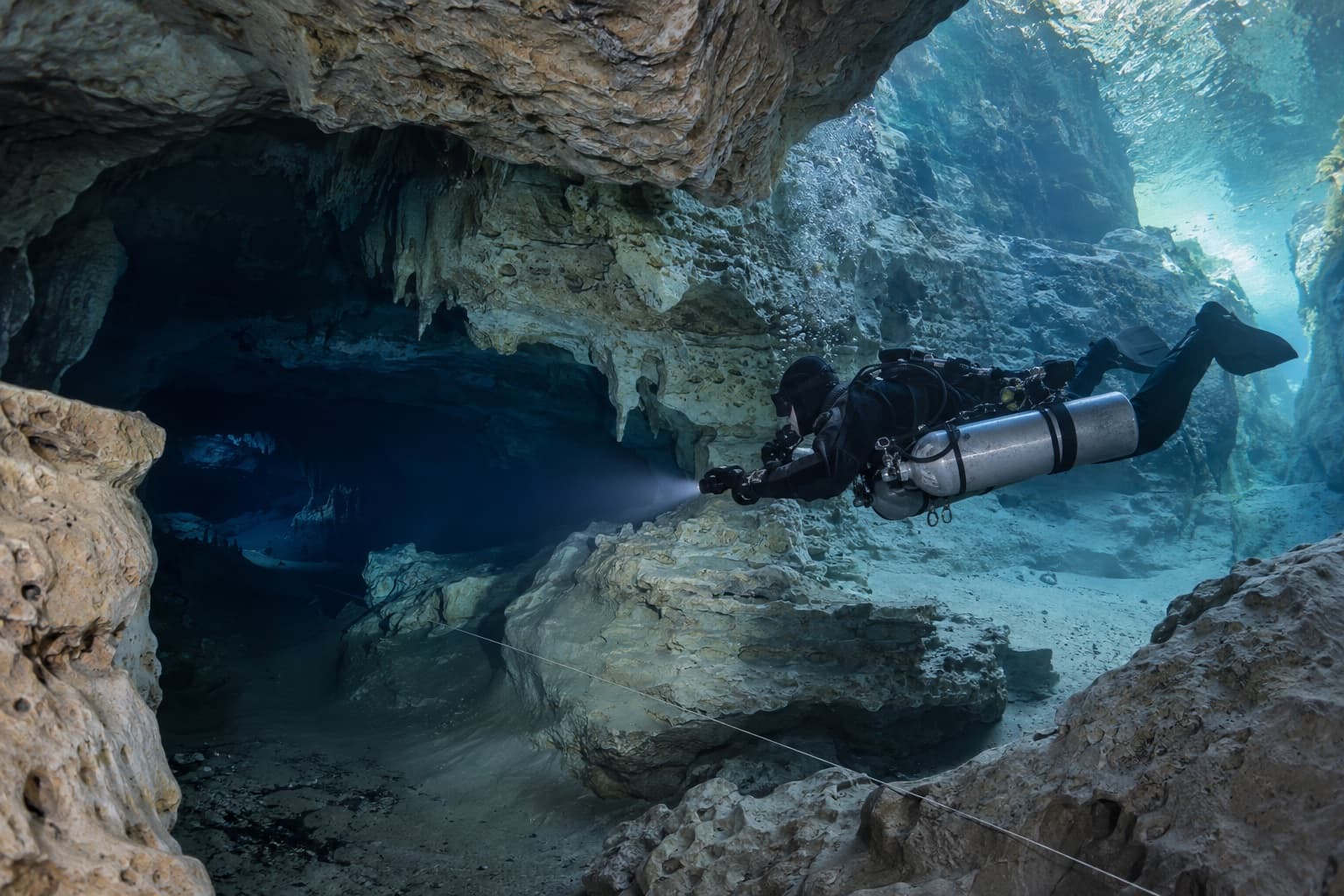 Cathedral CaveAn enormous dolerite sea cave on the Tasman Peninsula, large enough to surface inside.
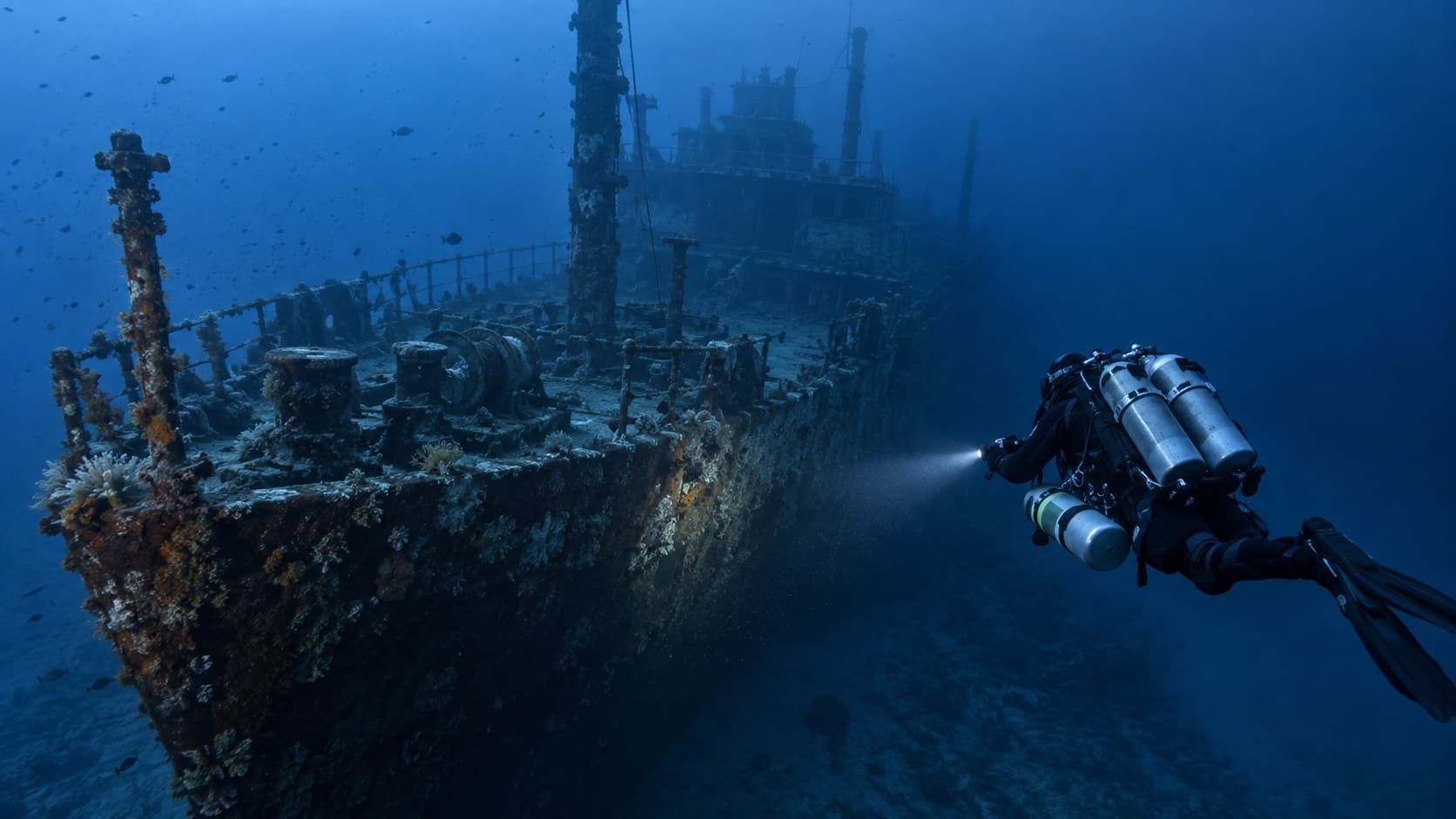 D'Entrecasteaux ChannelSheltered channel diving near Hobart, with jetties, reefs and handfish habitat.Governor Island Marine ReserveGranite walls and sponge gardens of unusual density and colour, protected since 1991.SS NordA steamer lost in 1915, lying around 42 metres off the Tasman Peninsula.Waterfall BayDolerite walls, sea caves and giant kelp beneath some of Australia's highest sea cliffs.
7 businesses, grouped by region. Each profile records what is verified, what is advertised and what still needs checking with the operator.
Hobart
- Go Dive TasmaniaA Tasmanian business providing training, equipment and service support for cold-water diving.
- Tasmania Tech and Dive CentreThe Tasmanian operation most clearly associated with technical diving services, spanning recreational and technical training with technical gas support.
- The Dive Shop HobartA Hobart equipment and service business supporting local cold-water divers.
- Tasmanian Divers SouthA southern Tasmanian operation serving the Hobart region and surrounding diving.
Frequently asked questions
Is Tasmania suitable for beginners?
Yes, when appropriate sites and conditions are selected. Cold water and exposure protection add task loading, so good instruction and sensible site choice matter more here than in warm water.
Do I need a drysuit in Tasmania?
Not necessarily. Many divers use thick wetsuits or semi-dry suits successfully. Frequent divers, winter divers and technical divers more often prefer drysuits, mainly for repeat dives and longer bottom times.
Is Tasmania good for technical diving?
Yes. Deep walls, wrecks, caves and cold-water environments create substantial opportunities. Support capability is smaller than in Melbourne or Sydney, so gas and equipment logistics should be confirmed in advance.
Can warm-water divers rent everything locally?
Rental is available from several operations, but sizes and specialist equipment — drysuits in particular — should be confirmed before travel rather than assumed.
When is the best time to dive Tasmania?
There is no single answer. Winter often brings the clearest water and the best visibility; summer brings warmer air, calmer surface conditions and longer days. Both are legitimate choices.