Tasmania
Tasman Peninsula & Eaglehawk Neck
Dolerite sea caves, towering walls, giant kelp and the deep wreck of the SS Nord.
The Tasman Peninsula is one of Australia's most dramatic cold-water destinations, and for many divers the single best reason to dive Tasmania.
The same dolerite columns that form the highest sea cliffs in the Southern Hemisphere continue underwater, producing sea caves, sheer walls and architecture that is genuinely unusual.
Important attractions include Cathedral Cave, sponge gardens, walls, the SS Nord and Sisters Rocks, with Eaglehawk Neck functioning as the main access point.
| Water temperature | Roughly 11–17°C. |
|---|---|
| Visibility | Often 10–25 m, frequently best in winter. |
| Season | Year-round; swell exposure determines access on any given day. |
| Diving types | Sea cave, Wall, Deep, Wreck, Kelp, Technical |
| Businesses documented | 1 |
| Dive sites documented | 3 |
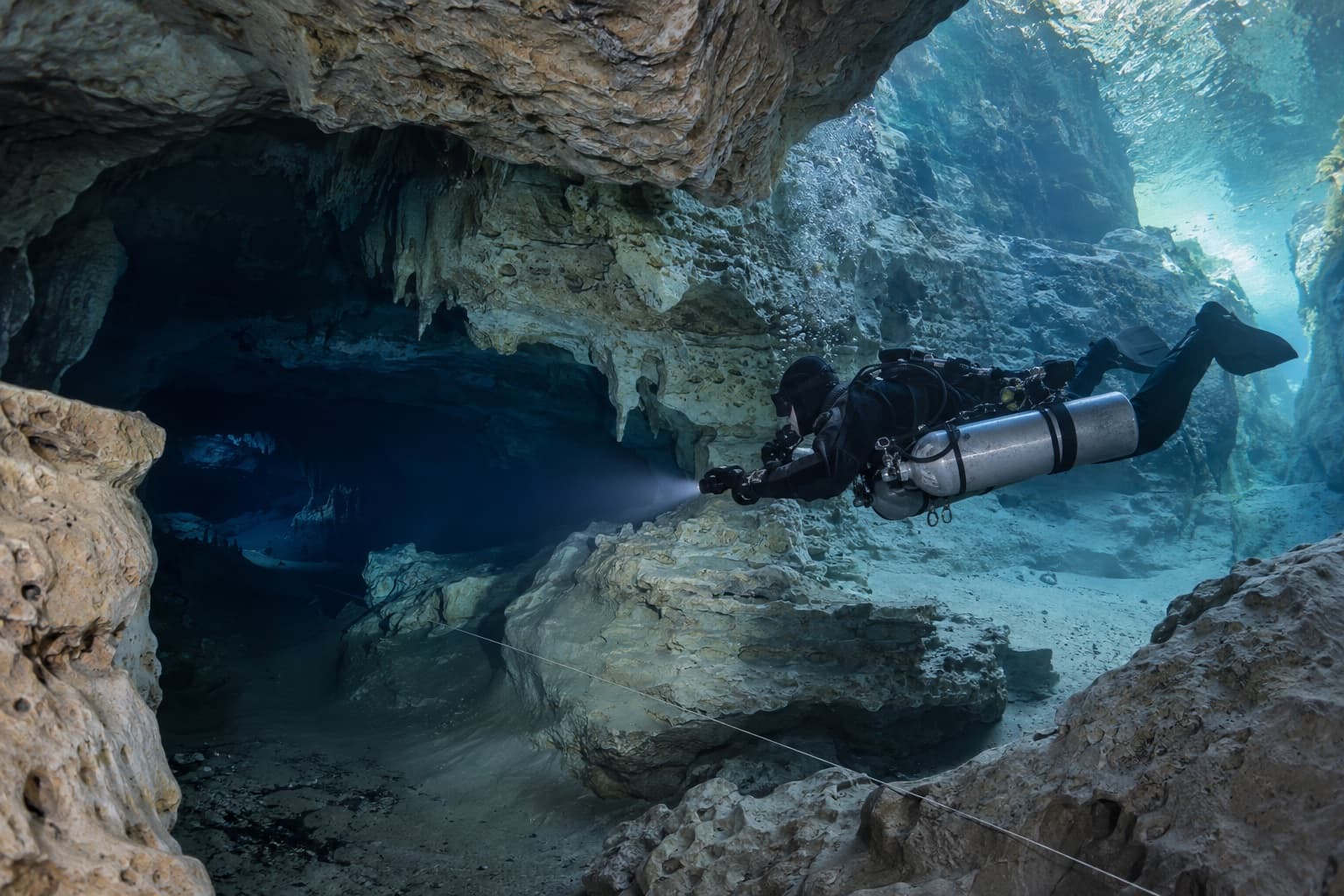
Cathedral Cave is part of a substantial sea-cave system, and its scale is the attraction — the chamber is large enough that divers surface inside it.
Even when portions are used by recreational divers, cave-like environments require careful consideration of the overhead, available light, visibility, surge, the specific route and the guide's experience at that site.
- extent of overhead on the planned route
- natural light and whether it stays visible
- visibility on the day
- surge, which can be significant in a confined chamber
- route selection and turn points
- guide experience at that specific site
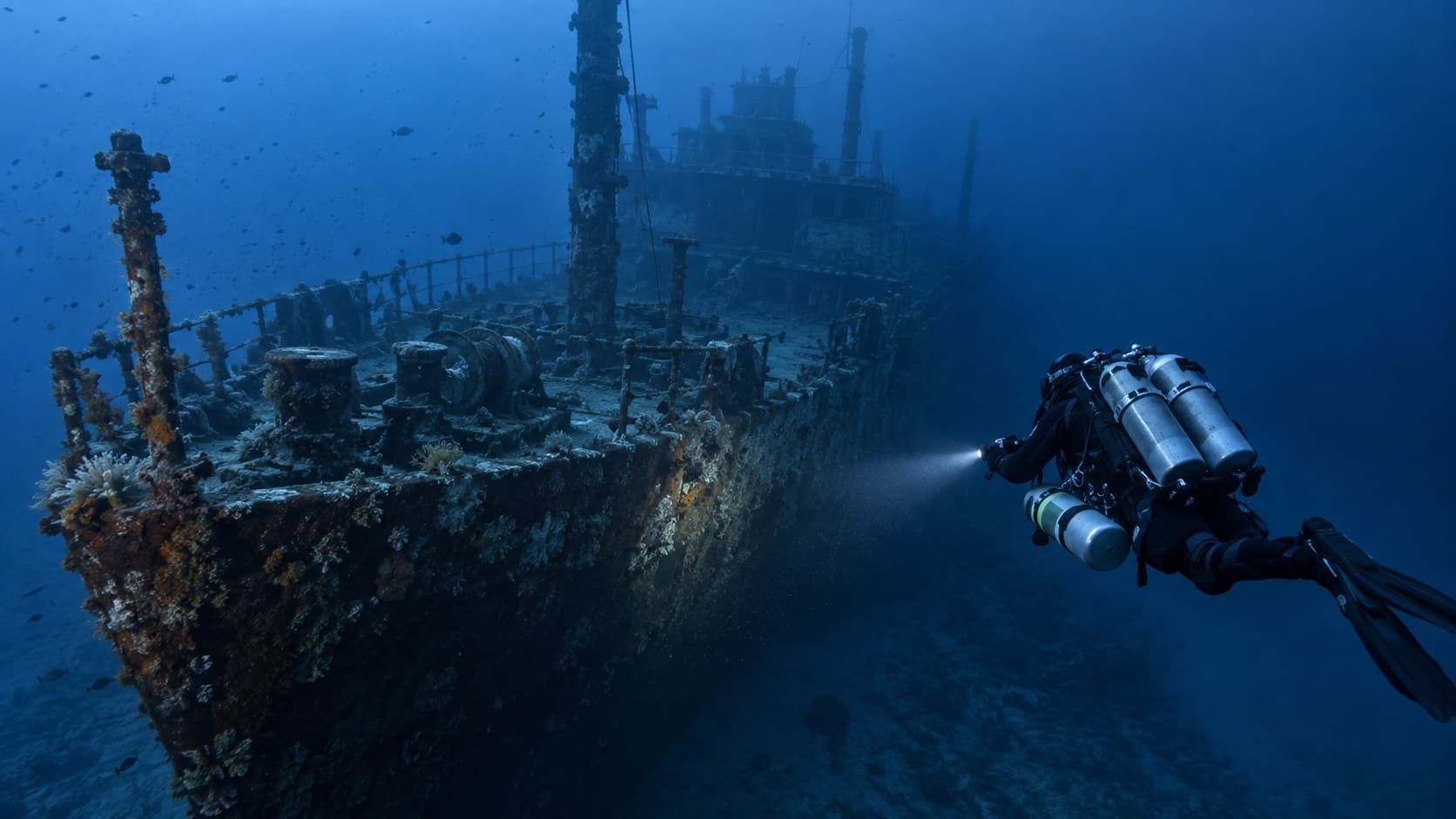
The Nord lies around 42 metres according to official Tasmanian tourism information, putting much of the wreck beyond ordinary entry-level recreational limits.
Honest coverage has to separate recreational observation of the shallower structure from the deep-diving requirements, decompression planning and technical options that reaching the rest of the wreck involves.
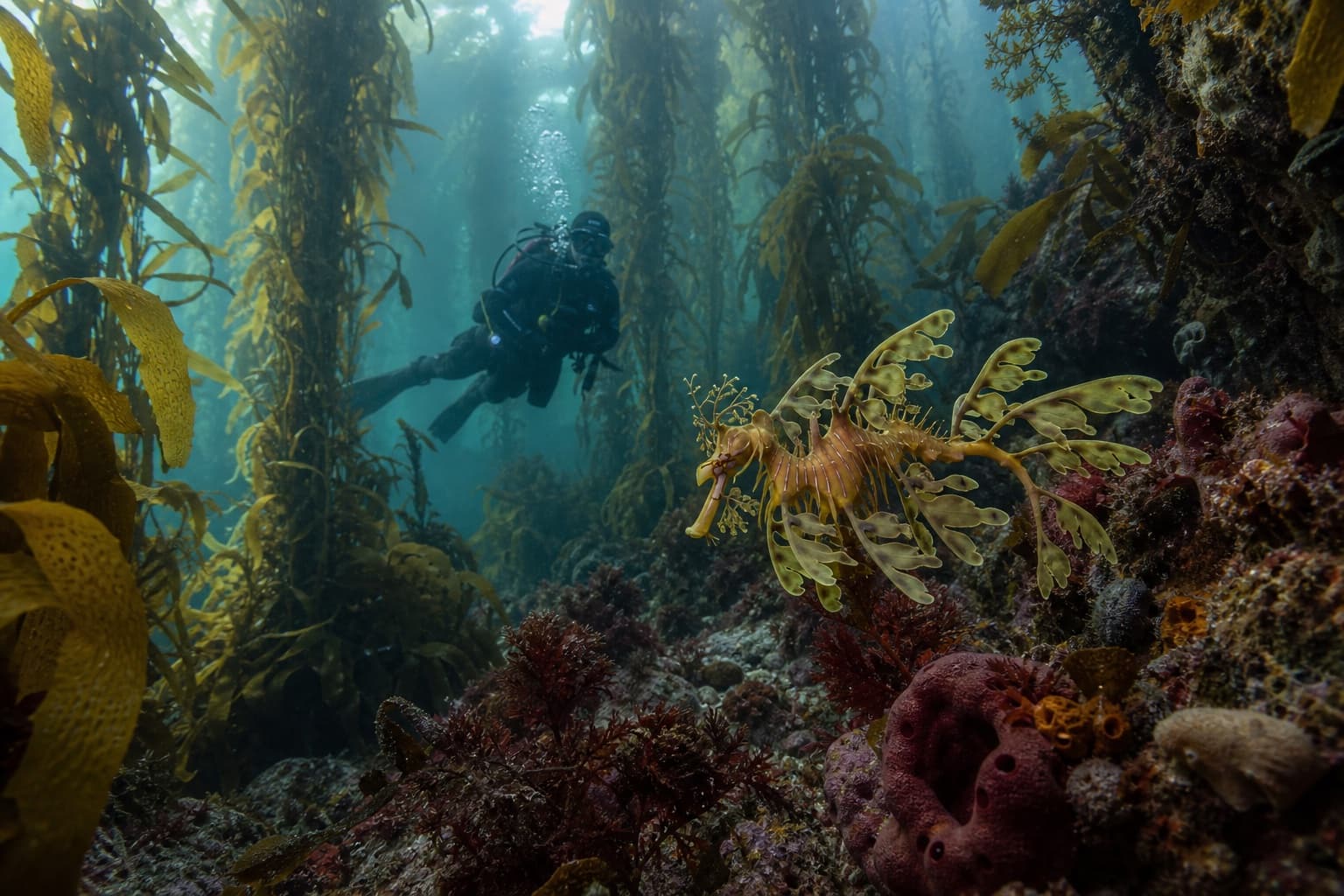
Tasmania's giant kelp forests have declined substantially, which makes the remaining stands both a highlight and a conservation story worth understanding before diving them.
Each profile separates what is verified from what is advertised, and lists the questions still worth asking the operator directly.
Before you book
Capabilities and requirements change. Read how to choose a dive centre for what to actually evaluate, and confirm certification requirements, equipment hire and conditions directly with the operator before travelling.