Australian diving guide
Macro and Muck Diving in Australia
The bays, piers and sheltered sites where small Australian marine life rewards slow diving, careful buoyancy and a very different idea of a good site.
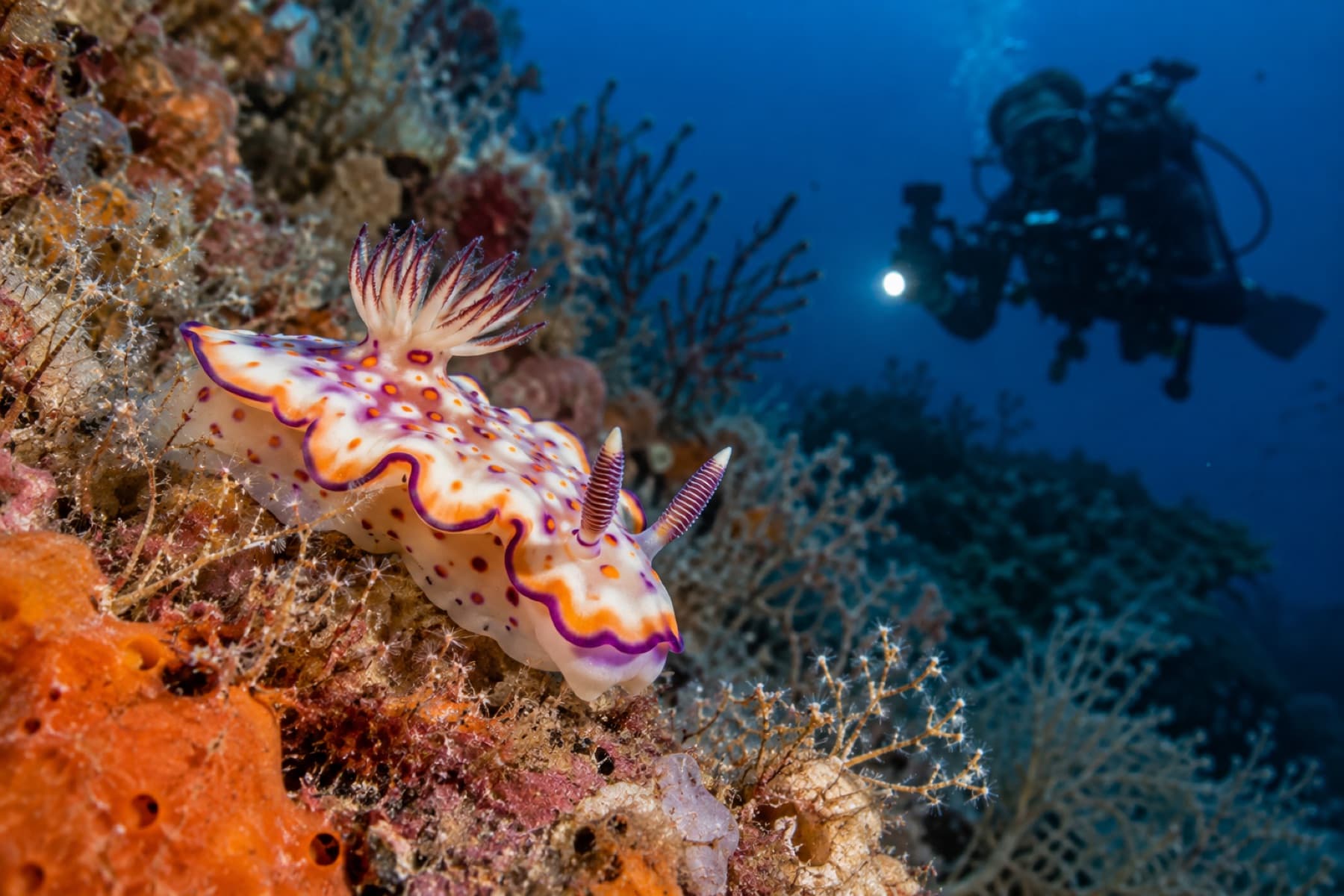
Australia's most productive macro dives are often visually unimpressive from the surface. Sand, pylons, rubble and seagrass support nudibranchs, pipefish, seahorses, frogfish, juvenile fish and cephalopods that disappear when a group swims too quickly.
Muck diving is not about covering ground. It is about learning which small habitats to inspect and maintaining buoyancy well enough not to erase the subject in a cloud of silt.
Sydney Harbour, Port Stephens, Port Phillip and South Australian jetties all contain strong macro environments. Productive locations change with rainfall, visibility, access and seasonal settlement.
- Clifton Gardens and other sheltered Sydney sites
- Fly Point and Halifax Park around Port Stephens
- Blairgowrie and Rye piers in Port Phillip
- Edithburgh and Rapid Bay jetties in South Australia
Slow down before looking harder. Search one habitat at a time: sponge edges, hydroids, seagrass blades, discarded shells and the shaded side of pylons. A local guide who knows recent sightings can be more valuable than a longer dive.
Good trim protects both the animal and the visibility for the divers behind you. Keep fins above the bottom, position without grabbing living structure and back away before turning.
- use a stable camera configuration
- avoid pointer sticks as anchors
- do not move animals onto a cleaner background
- limit repeated flashes when behaviour changes
- share a subject rather than surrounding it
Some macro sites are at their most interesting when general visibility is modest. Keep the team close, use a simple route and separate the photography plan from any attempt to cover a large area.
Frequently asked questions
What is muck diving?
It is slow, detail-focused diving over sand, silt, rubble, seagrass or human-made structure where small and unusual marine life can be concentrated.
Where is Australia's best macro diving?
Port Stephens, Sydney Harbour, Port Phillip and South Australia's jetties are consistently strong regions, with individual sites varying by season and conditions.
Do I need a macro lens?
No. The diving is worthwhile without a camera, and learning to locate and observe small animals is the foundational skill.