Marine life
Wobbegong
Orectolobidae
Carpet sharks so well camouflaged that most divers swim straight past them — and occasionally put a hand on one.
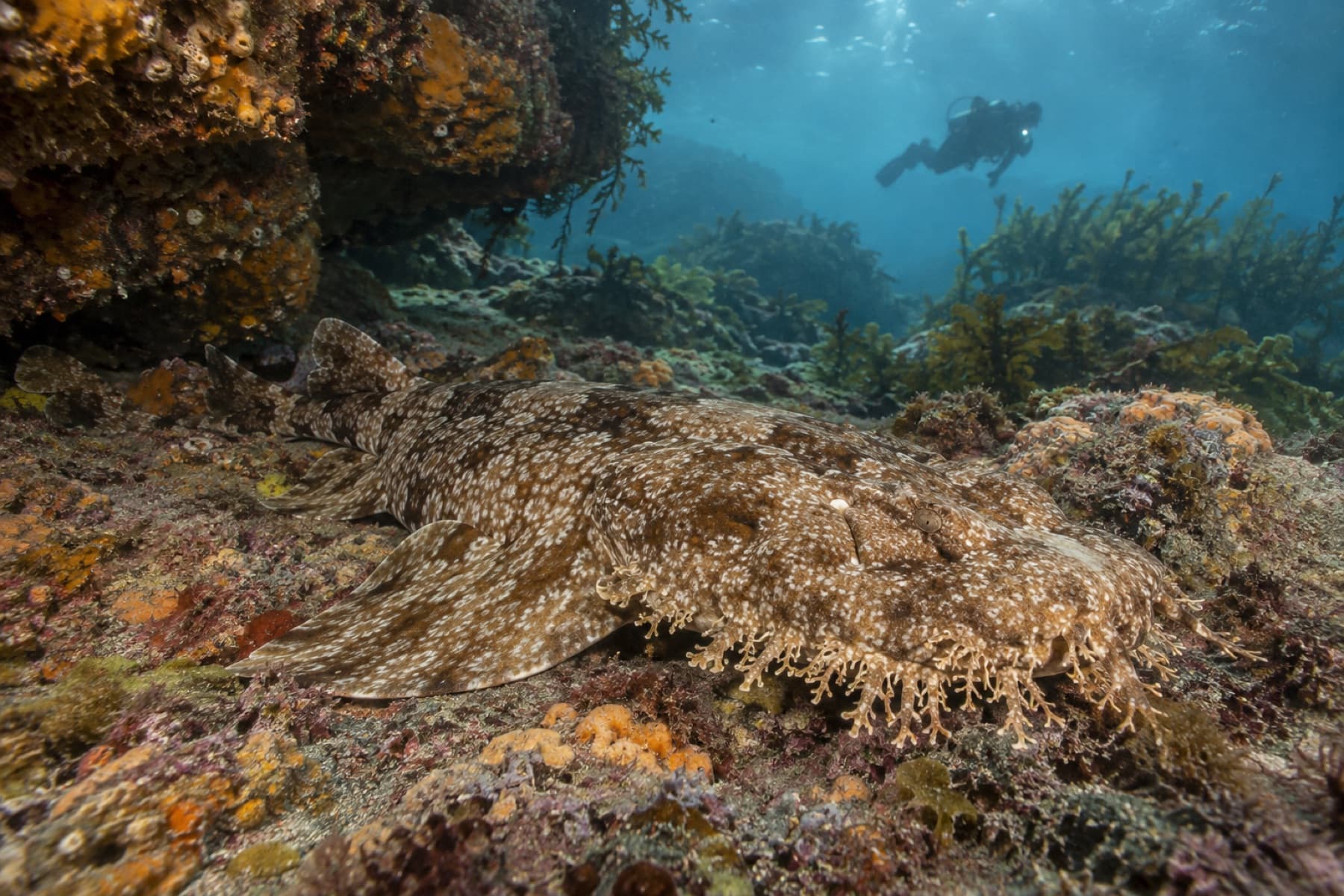
Wobbegongs are flattened, patterned carpet sharks that spend the day lying still under ledges and on reef, relying on camouflage that is genuinely excellent.
Australia has several species, and they are among the most commonly encountered sharks on temperate and subtropical dives — divers just do not always notice them. The fringe of skin flaps around the mouth breaks up the outline so effectively that a two-metre animal can be invisible from a metre away.
They are placid and are not aggressive toward divers, but they are the Australian shark most likely to bite one, almost always because someone has stood on, grabbed, or reached over a resting animal. Treat them as furniture that can object.
| Scientific name | Orectolobidae |
|---|---|
| Typical size | Commonly 1–3 m depending on species |
| Peak months | Year-round |
| Documented sites | 13 |
| States | New South Wales, Queensland, Western Australia |
- flattened body, broad head, cryptic mottled pattern
- distinctive fringe of dermal flaps around the mouth and snout
- usually motionless under ledges, in caves or on open reef
- mouth set at the very front of the head
- Ambush predator — sits still and waits rather than hunting actively.
- Mostly nocturnal; daytime encounters are resting animals.
- Will hold position even as divers pass close by.
In-water etiquette
How divers behave around this species affects both the animal and everyone else's encounter.
- Watch where you put your hands, particularly under ledges.
- Never touch, pull or attempt to move one.
- Give resting animals a wide berth when photographing — they have a short reach but a determined grip.
Where to see them
Sites where this species is documented as a reliable encounter.
Operators servicing those sites
Businesses documented as diving the sites above. Confirm seasonality and requirements directly.
Often seen on the same dives
Frequently asked questions
Are wobbegongs dangerous?
They are placid and not aggressive, but they are the Australian shark most likely to bite a diver — nearly always in response to being stood on, grabbed or reached over.
Where are wobbegongs most common?
Throughout temperate and subtropical Australian waters. They are a near-guaranteed sighting on NSW and southern Queensland reef dives.
Last researched: September 2026. Dive businesses change frequently — confirm current services, prices and requirements directly with the operator before booking.