Marine life
Humpback Whale
Megaptera novaeangliae
Heard far more often than seen — the soundtrack to winter diving on both Australian coasts.
For most Australian divers, humpbacks are an acoustic experience rather than a visual one. Through winter, song carries clearly underwater along both coasts, and hearing it mid-dive is one of the more remarkable things that happens in Australian diving.
The east coast migration runs north from roughly June, returning south with calves through spring. Sightings from dive boats are common through the season; in-water encounters on scuba are not, and are not the point.
Ningaloo runs a regulated humpback swim season following the whale shark season, conducted as snorkelling under permit.
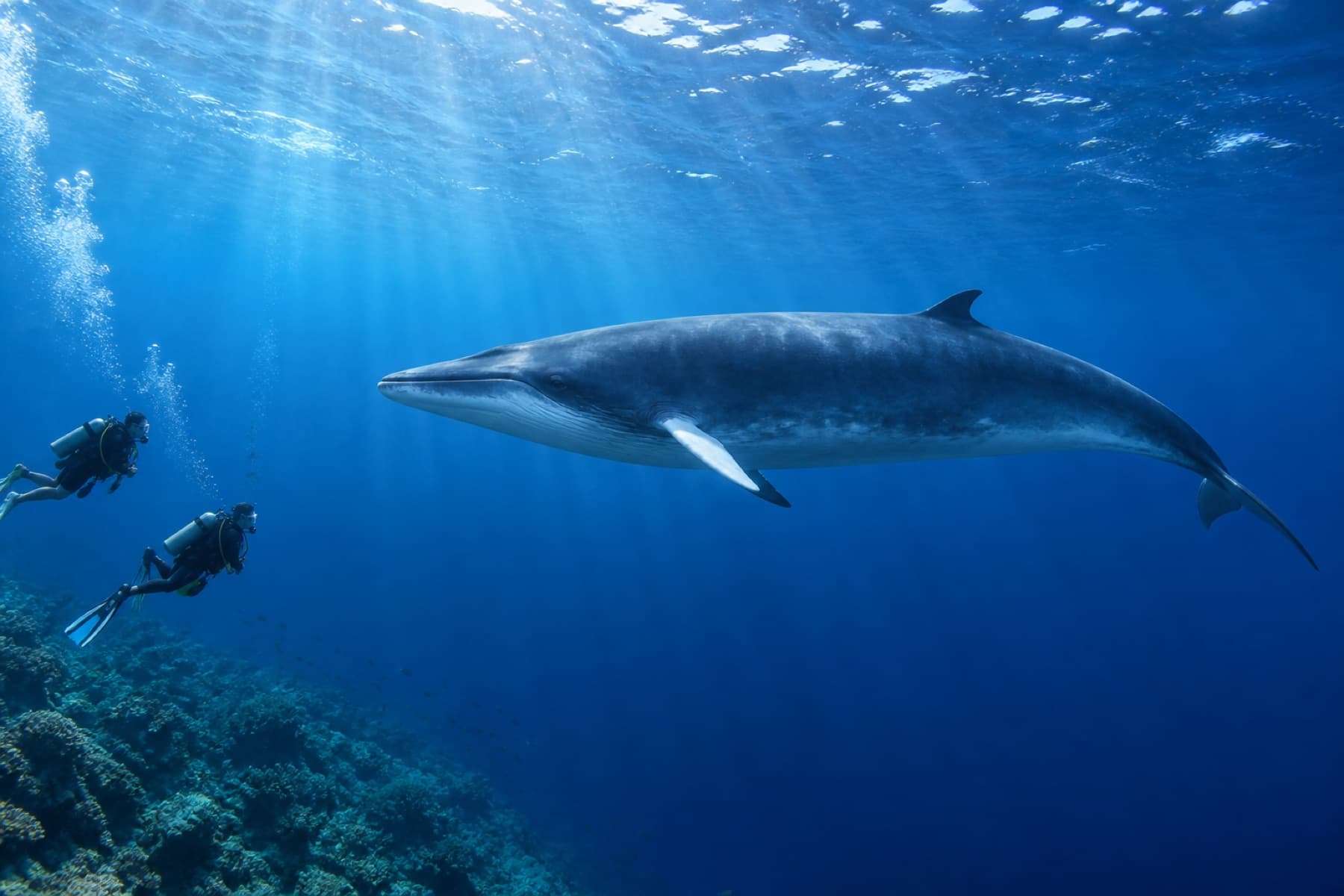
| Scientific name | Megaptera novaeangliae |
|---|---|
| Typical size | Adults 12–16 m |
| Peak months | June, July, August, September, October |
| Documented sites | 7 |
| States | New South Wales, Queensland, Western Australia |
- very long white pectoral fins, roughly a third of body length
- knobbly tubercles on the head
- distinctive bushy blow
- tail fluke patterning unique to the individual
- Males sing complex songs during the breeding migration.
- Breaches, tail slaps and pectoral slaps are common surface behaviours.
- Migrates between Antarctic feeding grounds and tropical breeding areas.
In-water etiquette
How divers behave around this species affects both the animal and everyone else's encounter.
- In-water interactions are regulated and permit-based — only join licensed operations.
- Approach distances for vessels are set by law; a good skipper will shut down and let whales approach.
- Never attempt to swim toward a whale from a dive boat.
Where to see them
Sites where this species is documented as a reliable encounter.
Operators servicing those sites
Businesses documented as diving the sites above. Confirm seasonality and requirements directly.
Often seen on the same dives
Frequently asked questions
Can I dive with humpback whales in Australia?
Scuba interactions are not permitted. Ningaloo runs regulated snorkelling swims under permit, broadly August to October. Elsewhere, divers most often hear rather than see them.
When is whale season?
The east coast migration runs roughly June to November, peaking mid-season.
Last researched: September 2026. Dive businesses change frequently — confirm current services, prices and requirements directly with the operator before booking.