Marine life
Port Jackson Shark
Heterodontus portusjacksoni
A small, harmless, harness-marked shark that gathers in southern NSW winters to breed.
Port Jackson sharks are small, blunt-headed bottom sharks with a dark harness-shaped marking across the head and shoulders, and they are one of the great pleasures of a Sydney winter dive.
Through the cooler months they gather on inshore reefs in numbers, sometimes stacked several deep under a single ledge, to breed and lay their distinctive spiral-flanged egg cases wedged into rock crevices.
They are entirely harmless, crushing molluscs and urchins with flattened rear teeth, and they tolerate divers at close range. For a Sydney diver, their arrival is the compensation for water dropping below 17°C.
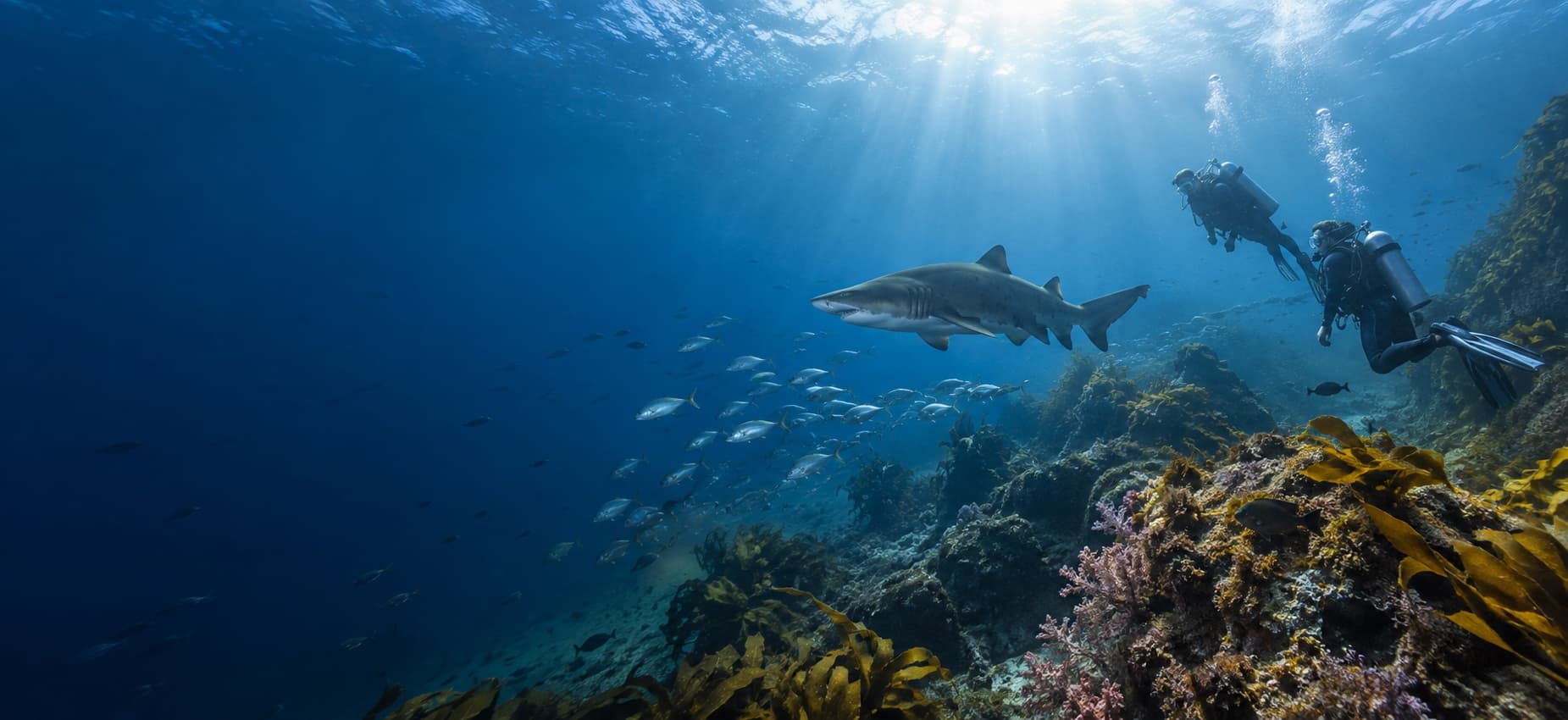
| Scientific name | Heterodontus portusjacksoni |
|---|---|
| Typical size | Commonly 0.8–1.4 m |
| Peak months | June, July, August |
| Documented sites | 6 |
| States | New South Wales |
- blunt, rounded head with a pig-like snout
- dark harness marking across the head and along the flanks
- a spine in front of each dorsal fin
- typically resting under ledges or on sand
- Nocturnal feeder on molluscs, crustaceans and urchins.
- Aggregates in winter to breed, often in the same locations year after year.
- Lays a distinctive spiral egg case, wedged into rock crevices.
In-water etiquette
How divers behave around this species affects both the animal and everyone else's encounter.
- Do not handle or move animals to photograph them.
- Leave egg cases exactly where they are — they are wedged deliberately.
- Take care not to crowd resting aggregations under ledges.
Where to see them
Sites where this species is documented as a reliable encounter.
Operators servicing those sites
Businesses documented as diving the sites above. Confirm seasonality and requirements directly.
Often seen on the same dives
Frequently asked questions
When do Port Jackson sharks appear in Sydney?
Broadly May to September, when they aggregate on inshore reefs to breed before dispersing south for summer.
Are they dangerous?
No. They are small, placid bottom-feeders that crush shellfish and pose no threat to divers.
Last researched: September 2026. Dive businesses change frequently — confirm current services, prices and requirements directly with the operator before booking.