
Technical training
Advanced Nitrox Course in Australia
High-oxygen decompression gases and oxygen-clean equipment — not ordinary recreational Nitrox.
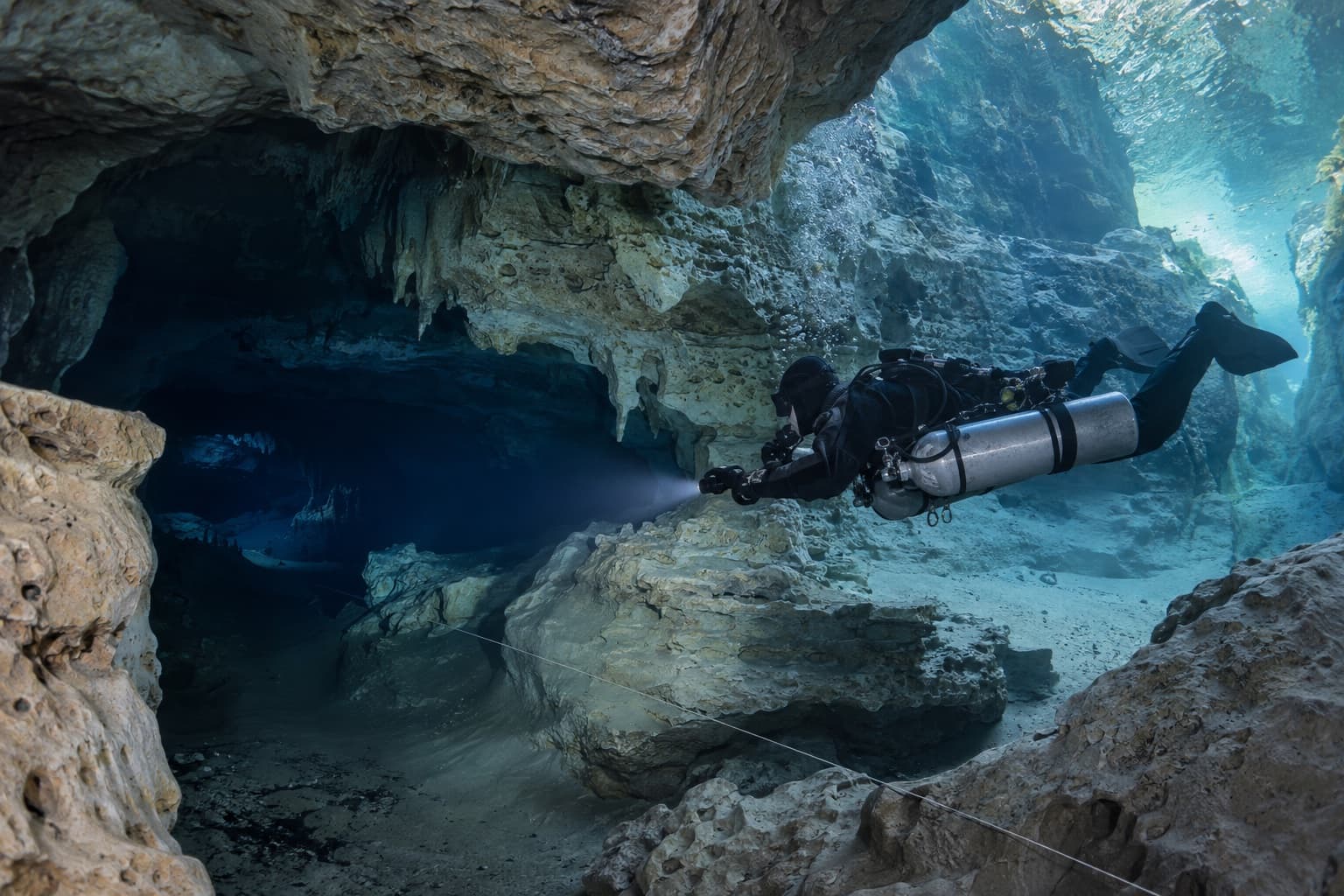
Advanced Nitrox is not ordinary recreational Nitrox. It deals with mixes up to 100 percent oxygen used as accelerated decompression gases, and the equipment requirements that come with them.
The course covers oxygen exposure tracking across a dive, gas switching procedures, decompression gas selection and the handling of oxygen-clean cylinders and regulators.
It is usually taken alongside or immediately before Decompression Procedures, and together they form the standard entry point into technical diving.
| Track | Technical |
|---|---|
| Prerequisites | Nitrox certification; Advanced Open Water or equivalent; Typically a minimum number of logged dives |
| Agency equivalents | TDI: Advanced Nitrox · PADI: Tec 40/45 · IANTD: Advanced Nitrox · RAID: Deco 40 |
- oxygen exposure limits and CNS tracking
- decompression gas selection and maximum operating depth
- gas switching procedures and verification
- oxygen-clean equipment requirements
- analysing and labelling multiple gases
- equipment configuration for stage cylinders
Recreational enriched air support means a compressor, a blending system and an analyser. Advanced Nitrox support means oxygen-clean cylinders, oxygen-compatible regulators, high-oxygen fills and staff who handle them properly.
These are different capabilities, and a centre advertising Nitrox should not be assumed to provide both.
Breathing a 100 percent oxygen decompression mix at the wrong depth is fatal. Every technical agency teaches a verification procedure — confirming the analysis, the depth and the cylinder with a buddy — precisely because the consequence of getting it wrong is immediate.
Readiness
- Buoyancy, trim and valve awareness must remain stable while handling an additional cylinder.
- The diver should already understand recreational Nitrox analysis, maximum operating depth and oxygen exposure.
What to compare
- TDI and IANTD commonly teach Advanced Nitrox beside decompression procedures; PADI and SSI distribute similar capability across staged pathway courses.
- Compare permitted gases, maximum oxygen content, number of stage cylinders and whether the programme includes actual decompression or only prepares for it.
Useful outcome
- The central outcome is safe analysis, labelling and switching of high-oxygen decompression gas.
- The certification is not a substitute for a decompression qualification where mandatory stops are planned.
Questions to ask the instructor
- Is Decompression Procedures taught concurrently?
- Which gases and cylinders are included?
- How many gas switches are practised in open water?
Dive Sites for Advanced Nitrox Skills
Sites where holding this certification genuinely changes what you can do — not a list of everywhere it is accepted.
Courses After Advanced Nitrox
Courses that build directly on this one.
Advanced Nitrox Prerequisite Courses
Advanced Nitrox Course Names by Training Agency
Agency versions and nearest equivalents. Names, prerequisites and limits can differ, so operators assess the exact certification and experience.
Australian Dive Centres Offering Advanced Nitrox
Businesses where the relevant capability is verified or advertised. Always confirm the specific course directly.
Advanced Nitrox Guides and Comparisons
Planning guides and comparisons connected to the skills on this course.
Advanced Nitrox Course FAQs
What is the difference from recreational Nitrox?
Recreational Nitrox covers mixes up to around 40 percent used as bottom gas. Advanced Nitrox covers mixes up to 100 percent used as decompression gases, with the equipment and procedures that requires.
Do I need this for CCR?
Most rebreather pathways require or strongly recommend it, since bailout planning and oxygen handling are central to closed-circuit diving.
Sources
What the verified statements on this page are based on. We link primary sources so you can check them yourself — and so you can see the date they were consulted.
- PADI — Technical Diving Educationchecked September 2026
- SSI — Extended Range trainingchecked September 2026
- TDI — current diver standardschecked September 2026