
Technical training
Trimix Diver Course in Australia
Adding helium to manage narcosis, oxygen exposure and gas density at depth.
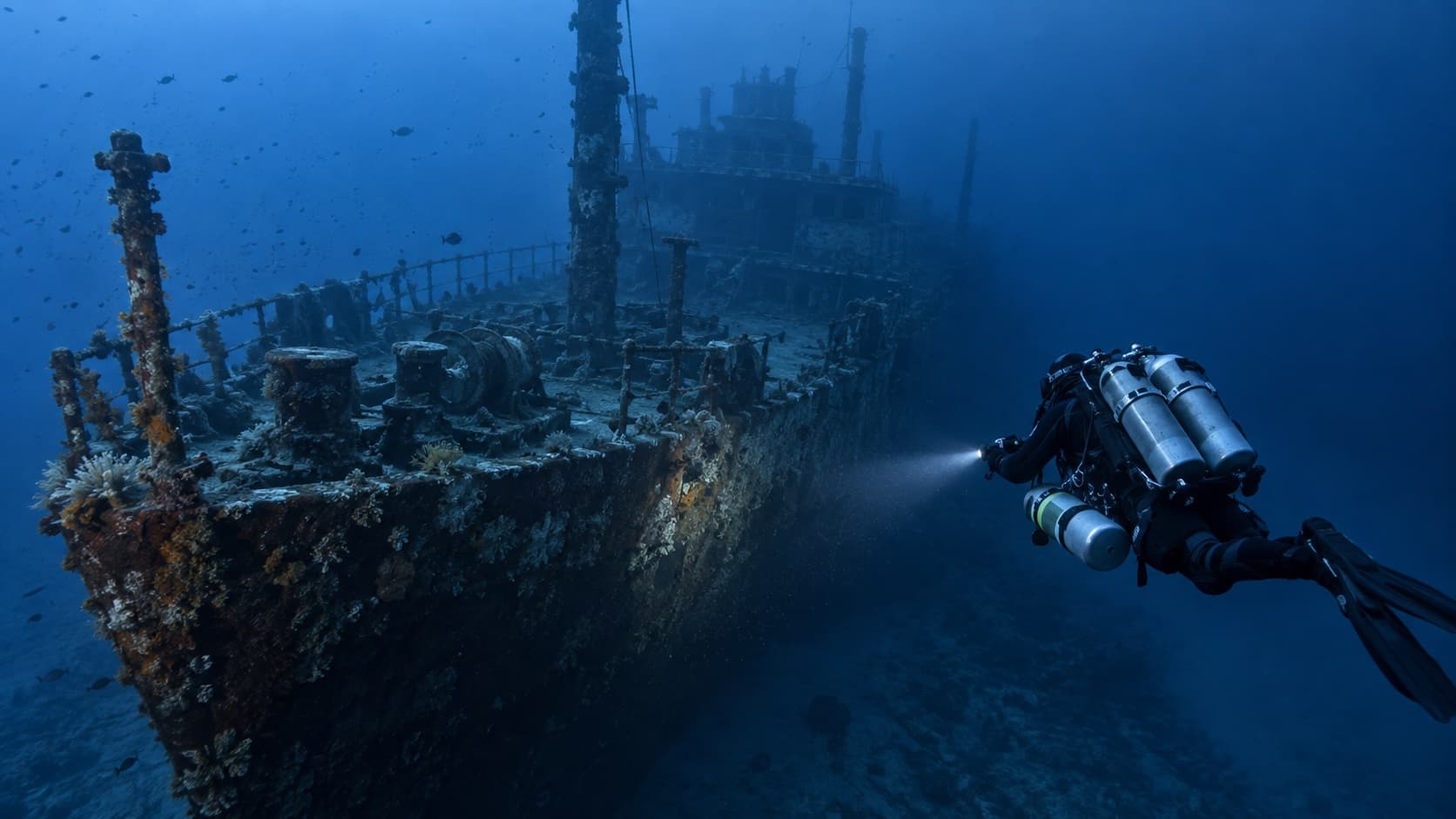
Trimix introduces helium into the breathing mixture, alongside oxygen and nitrogen. It is the standard approach to diving beyond the practical limits of air and Nitrox.
Helium is added for three reasons: to reduce narcosis, to manage oxygen exposure at depth, and to reduce gas density so that breathing remains possible without excessive work.
In Australia, Trimix is most relevant at Port Phillip Heads, the Ships' Graveyard, deeper Tasmanian wrecks and the deeper Mount Gambier sinkholes — all places where the interesting terrain continues past where air stops being viable.
| Track | Technical |
|---|---|
| Prerequisites | Decompression Procedures; Advanced Nitrox; Substantial logged technical experience |
| Agency equivalents | TDI: Trimix Diver · PADI: Tec Trimix · IANTD: Trimix Diver · RAID: Trimix |
- helium's physiological effects and thermal considerations
- mix selection for a target depth
- multi-gas decompression planning
- gas density and work of breathing
- isobaric counterdiffusion awareness
- logistics of sourcing and blending helium
Technical divers often plan entire trips around gas availability. Helium is expensive, supply is variable, and not every centre that advertises technical services actually blends it.
Helium availability should always be treated as time sensitive. A centre that blended Trimix last year may not be doing so this month.
Technical-centre pages must separately verify each of these rather than treating "technical" as a single capability.
- Trimix courses offered and at what level
- helium availability and current supply
- oxygen for decompression gases
- custom blending versus fixed mixes
- suitable cylinders and stage hire
- analyser availability
Readiness
- Trimix is a progression from competent decompression diving, not a way to make an inexperienced deep diver feel clearer.
- Multi-gas ascents, failures and minimum-gas calculations should already be routine.
What to compare
- Normoxic and hypoxic Trimix qualifications have different depth ranges, oxygen constraints and travel-gas requirements.
- PADI TecRec, SSI Extended Range, TDI, RAID and IANTD package the progression differently; compare the gas and depth limits of the exact certification.
- Australian course feasibility depends on reliable helium, oxygen, suitable sites and an instructor actively diving those profiles.
Useful outcome
- The outcome is disciplined mixed-gas selection and execution, including gas density, narcosis, oxygen exposure and decompression consequences.
- The card does not remove the need to rebuild a plan for every site and available gas supply.
Questions to ask the instructor
- Is this normoxic or hypoxic Trimix?
- Are helium and all training gases included?
- Which dives exceed 40 metres, and what happens if weather prevents them?
Dive Sites for Trimix Diver Skills
Sites where holding this certification genuinely changes what you can do — not a list of everywhere it is accepted.
Courses After Trimix Diver
Courses that build directly on this one.
Trimix Diver Prerequisite Courses
Trimix Diver Course Names by Training Agency
Agency versions and nearest equivalents. Names, prerequisites and limits can differ, so operators assess the exact certification and experience.
Australian Dive Centres Offering Trimix Diver
Businesses where the relevant capability is verified or advertised. Always confirm the specific course directly.
Trimix Diver Guides and Comparisons
Planning guides and comparisons connected to the skills on this course.
Trimix Diver Course FAQs
Where can I get Trimix fills in Australia?
Availability is concentrated in Sydney, Melbourne, Perth and a small number of other centres. It should be confirmed directly and well in advance of any trip.
Why is helium expensive?
Helium is a finite resource with competing industrial and medical demand, and supply is periodically constrained. Prices and availability both fluctuate.
Does Trimix make me colder?
Helium conducts heat more effectively than nitrogen, which is a genuine consideration on long cold-water dives, particularly when used as drysuit inflation gas.
Sources
What the verified statements on this page are based on. We link primary sources so you can check them yourself — and so you can see the date they were consulted.
- PADI — Technical Diving Educationchecked September 2026
- SSI — Extended Range trainingchecked September 2026
- TDI — current diver standardschecked September 2026