Technical training
Closed Circuit Rebreather Diver
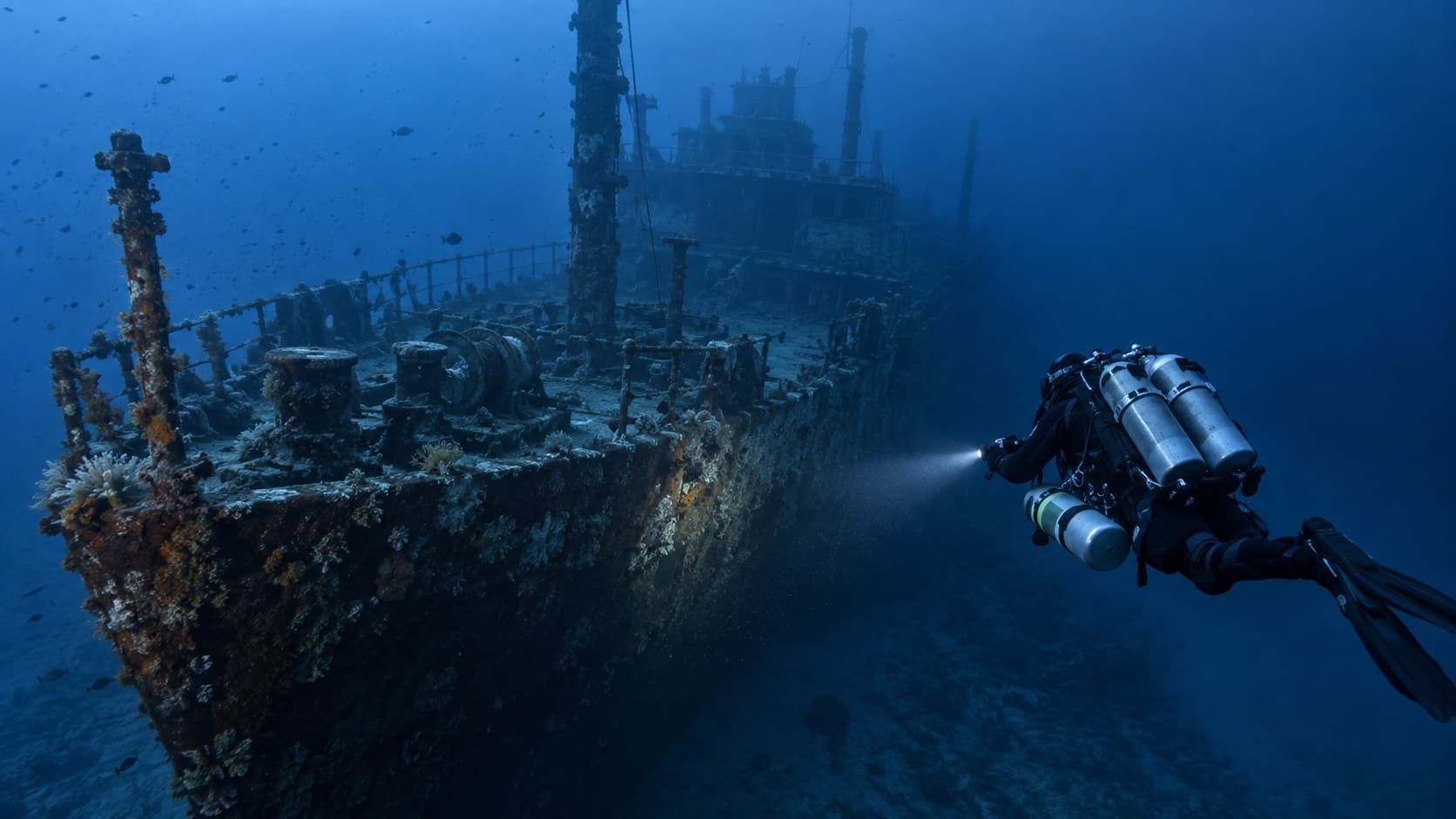
Recycling breathing gas to extend duration, reduce bubbles and optimise oxygen exposure.
Closed-circuit rebreathers recycle breathing gas and continuously manage the breathing loop's composition, removing carbon dioxide with a scrubber and adding oxygen as it is consumed.
The benefits are substantial: long gas duration largely independent of depth, near-silent operation with minimal bubbles, warm moist breathing gas and an optimised oxygen partial pressure throughout the dive.
The risks are equally real and are different in kind from open-circuit diving. CCR training is unit-specific, and so is the support a dive centre can provide.
| Track | Technical |
|---|---|
| Prerequisites | Advanced Nitrox and Decompression Procedures typically required; Substantial technical experience; Unit-specific training |
| Agency equivalents | TDI: CCR Diver · PADI: Rebreather Diver · IANTD: CCR Diver · RAID: CCR |
- loop assembly, pre-breathe and pre-dive checks
- oxygen partial pressure monitoring and manual control
- scrubber packing, duration and monitoring
- diluent management and depth limits
- bailout planning and execution
- failure recognition and response
Open-circuit diving fails obviously — a regulator free-flows, a cylinder empties. Rebreather failures are frequently silent, and the diver may feel fine while the loop becomes unbreathable.
- hypoxia from insufficient oxygen addition
- hyperoxia from excessive oxygen
- carbon dioxide buildup from scrubber exhaustion or channelling
- oxygen sensor failure or drift
- loop flooding
- electronics failure
CCR support is not a single capability. A centre may service one manufacturer's units, stock a particular sorb, and have instructors qualified on specific models.
A centre page should name supported units where possible, because a rebreather diver arriving with the wrong unit has no support at all.
Where this qualification matters in Australia
Sites where holding this certification genuinely changes what you can do — not a list of everywhere it is accepted.
Natural next steps
Courses that build directly on this one.
Courses that lead here
Agency versions of this course
The same qualification under different names. All are mutually recognised by operators.
Centres documented as offering this level of training
Businesses where the relevant capability is verified or advertised. Always confirm the specific course directly.
Frequently asked questions
Is a rebreather worth it for recreational diving?
For most recreational divers, no. The cost, maintenance burden and training commitment are substantial, and the benefits are most valuable on long, deep or wildlife-sensitive dives.
Can I get sorb and support anywhere in Australia?
Support is concentrated in the major cities and specific technical centres, and is unit-dependent. Confirm both sorb availability and unit support before any trip.
Which unit should I train on?
Consider what your local centre supports and services, because ongoing support matters more than the initial purchase decision.