Northern Territory
Darwin
Tide-governed harbour diving with significant WWII and historic wreck heritage.
Darwin Harbour is not a clear-water coral-reef destination, and content implying otherwise sets visiting divers up for disappointment. What it offers instead is genuine wreck history and an environment few Australian divers have experienced.
Divers should expect an environment where visibility varies greatly, tides matter, site timing matters and wreck history is significant. That makes local operator knowledge particularly important.
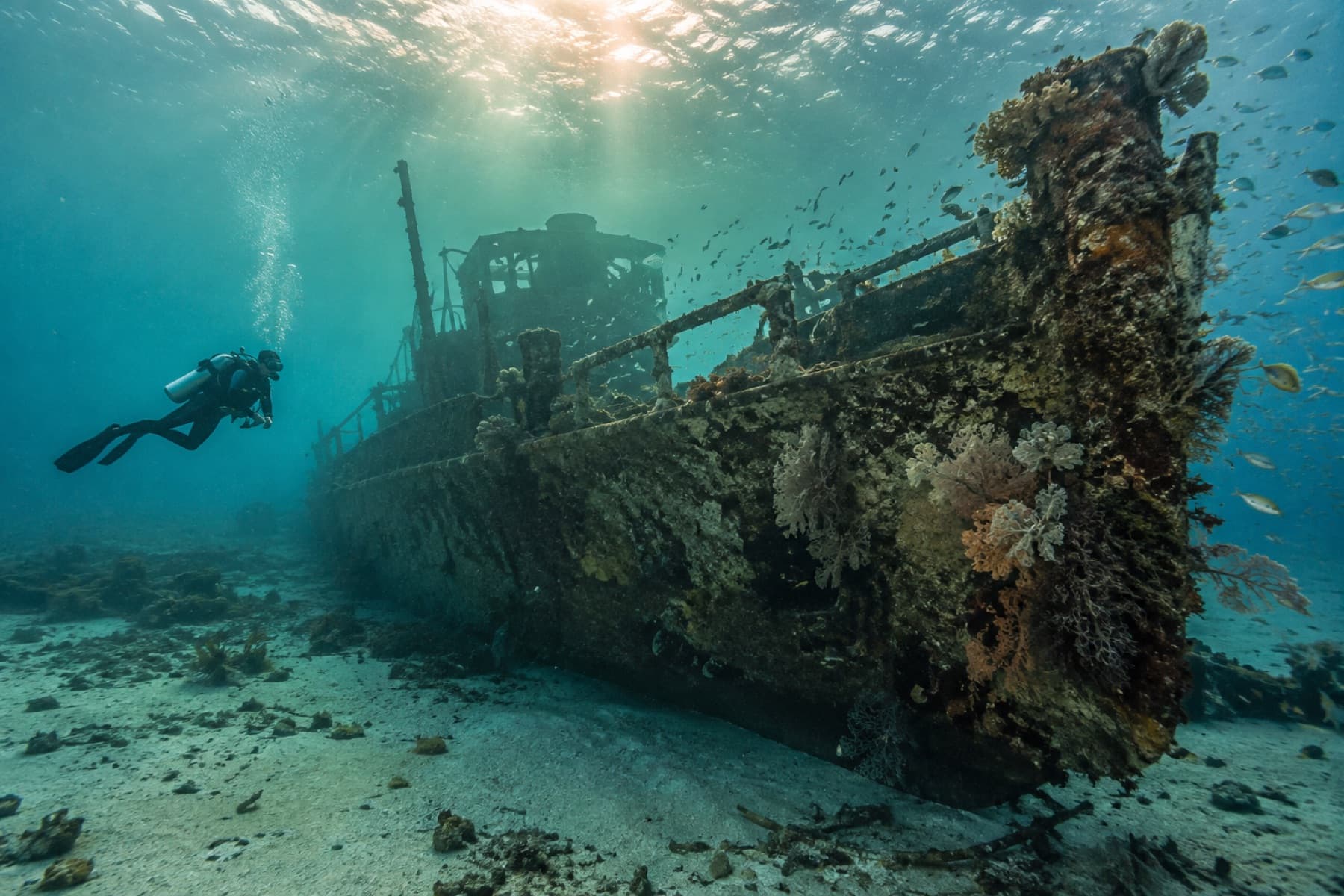
Darwin's wrecks include vessels associated with the 1942 bombing of Darwin, alongside later scuttlings and historic losses. It is arguably the most historically dense wreck diving in Australia.
| Water temperature | Roughly 25–31°C. |
|---|---|
| Visibility | Highly variable and tide-dependent. |
| Season | Dry season, broadly May to October, generally offers settled conditions. |
| Diving types | Wreck, Tidal, Historic, Training |
| Businesses documented | 1 |
| Dive sites documented | 1 |
Darwin's large tidal range means current, access and visibility all change through the day. Sites are dived in specific windows, and those windows move.
This is the defining practical feature of diving here and the main reason independent diving is impractical for visitors.
Local training provides experience in actual Territory conditions, which is valuable for residents who intend to keep diving locally rather than only on holiday.
Students should ask specific questions about how the course is structured around conditions.
- where confined-water training occurs
- where the open-water dives actually happen
- how tides affect scheduling
- what happens if conditions are unsuitable on the day
- what equipment is included
A dedicated wreck guide should document each vessel's name, history, depth, orientation, access, visibility, current and certification requirements.
Wreck penetration should be classified separately from external recreational wreck diving, since the training and equipment requirements are genuinely different.
Each profile separates what is verified from what is advertised, and lists the questions still worth asking the operator directly.
Before you book
Capabilities and requirements change. Read how to choose a dive centre for what to actually evaluate, and confirm certification requirements, equipment hire and conditions directly with the operator before travelling.