Australian diving guide
Boat Diving in Australia: A Practical Guide
Entries, exits, seasickness, briefings and equipment routines for day boats, RIBs and liveaboards around Australia.
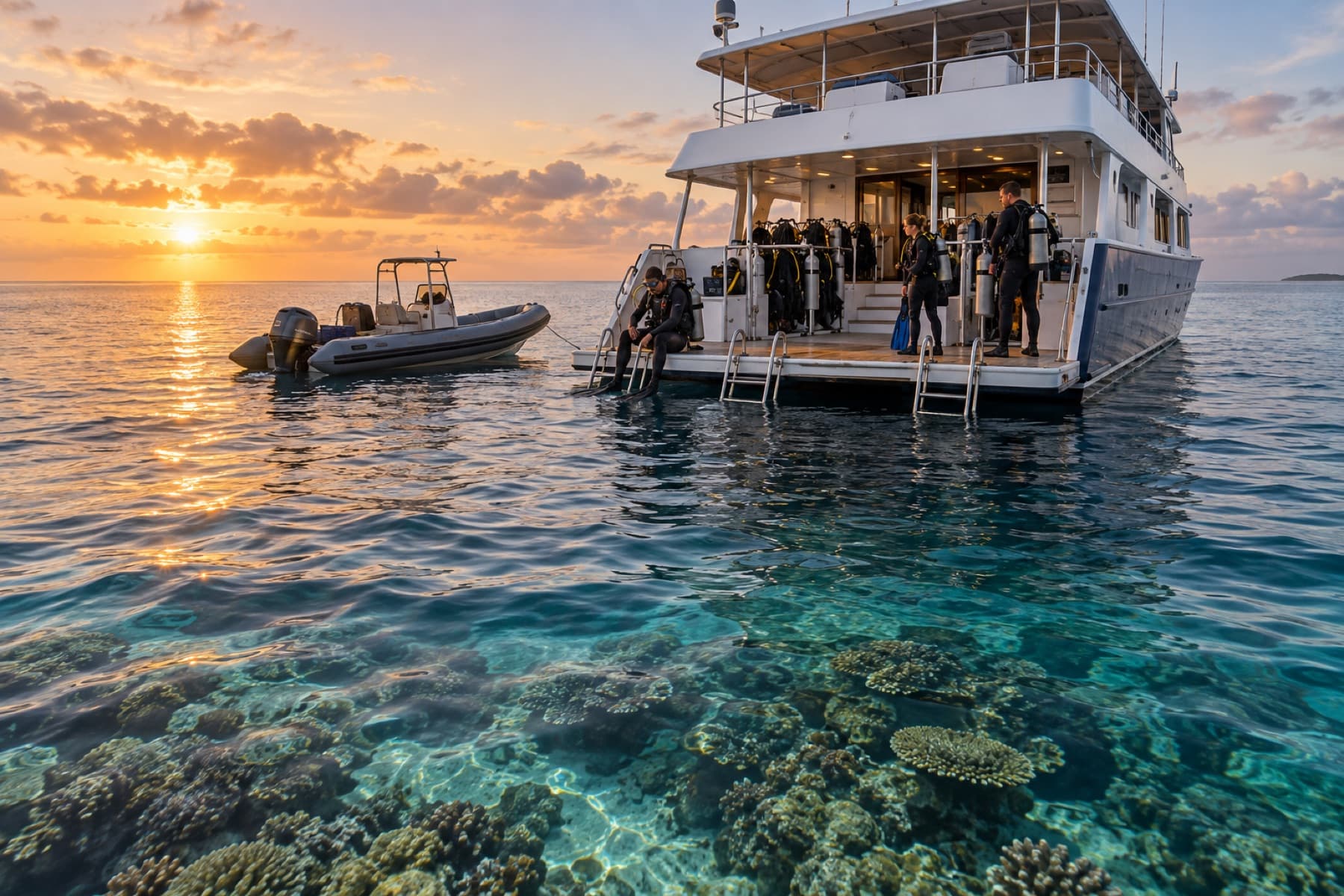
Australian dive boats range from small inflatables crossing surf bars to large outer-reef vessels. The same certification can feel very different across those platforms.
Ask about the vessel and procedure before assuming that boat diving is a single skill.
Confirm entry style, ladder, seating, shade, toilet, travel time and whether equipment remains assembled between dives.
- giant stride, roll or seated entry
- negative entry requirements
- tag lines and current lines
- crew help at the ladder
- camera hand-up procedure
Discuss medication with a clinician or pharmacist before the trip and test it before the dive day where appropriate. Hydrate, eat sensibly, stay in fresh air and avoid spending unnecessary time below deck.
The briefing should cover recall signals, lost buddy procedure, maximum time and depth, pickup method and emergency equipment. Repeat the key limits with your buddy before entering.
Frequently asked questions
Is boat diving suitable for beginners?
Often, when the site, weather and supervision are appropriate. Tell the operator your experience and ask about entries, current and ladder technique.
Should I remove my equipment at the ladder?
Procedures vary with the vessel and conditions. Follow the crew briefing and practise the expected method before the dive.
Is guiding normally included?
Not always. Confirm whether certified divers are expected to navigate independently or whether a guide is included or optional.