Australian diving guide
Underwater Photography Etiquette
How to make better images without damaging habitat, crowding wildlife or turning a group dive into a private photo session.
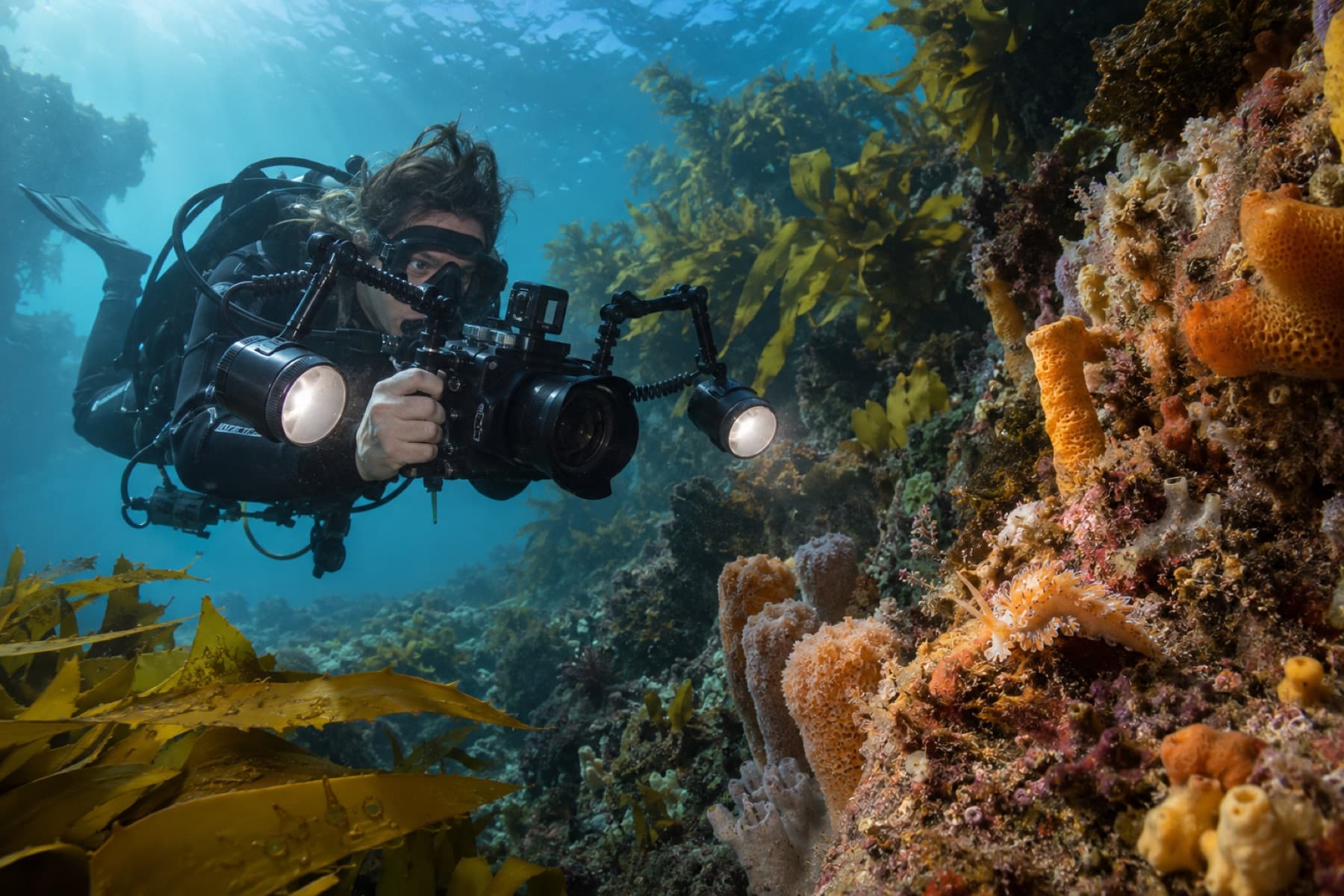
The camera increases task load and narrows attention. Good underwater photography starts with buoyancy, awareness and respect for the subject rather than proximity at any cost.
Australian sites include fragile temperate growth, aggregation animals and crowded shore entries where considerate behaviour materially improves the dive for everyone.
Approach slowly, stay off the substrate and let wildlife choose the distance. Use appropriate optics rather than chasing or cornering a subject.
- secure gauges and accessories
- use frog kick near sediment
- limit repeated flash on sensitive subjects
- do not stage or relocate wildlife
Take a short sequence, then move away so another diver can approach. Do not occupy a rare animal for the whole group dive or block a narrow route.
Agree whether the dive is photography-led, who watches navigation and gas, and how the buddy gets the photographer's attention. A non-photographer is not an unpaid spotter by default.
Frequently asked questions
Can I touch the reef to steady a camera?
No. Build stable buoyancy and use composition or equipment suited to the conditions without contacting living substrate.
Is flash harmful to marine life?
Effects vary by species and circumstance. Avoid repeated close firing, signs of disturbance and any operator or site restriction.
Should new divers carry cameras?
Only after basic buoyancy, gas awareness and buddy contact remain reliable with spare attention.