Australian diving guide
Flying After Diving in Australia
How to build conservative surface time into reef, liveaboard and remote-island itineraries without turning the final dive into a travel deadline.
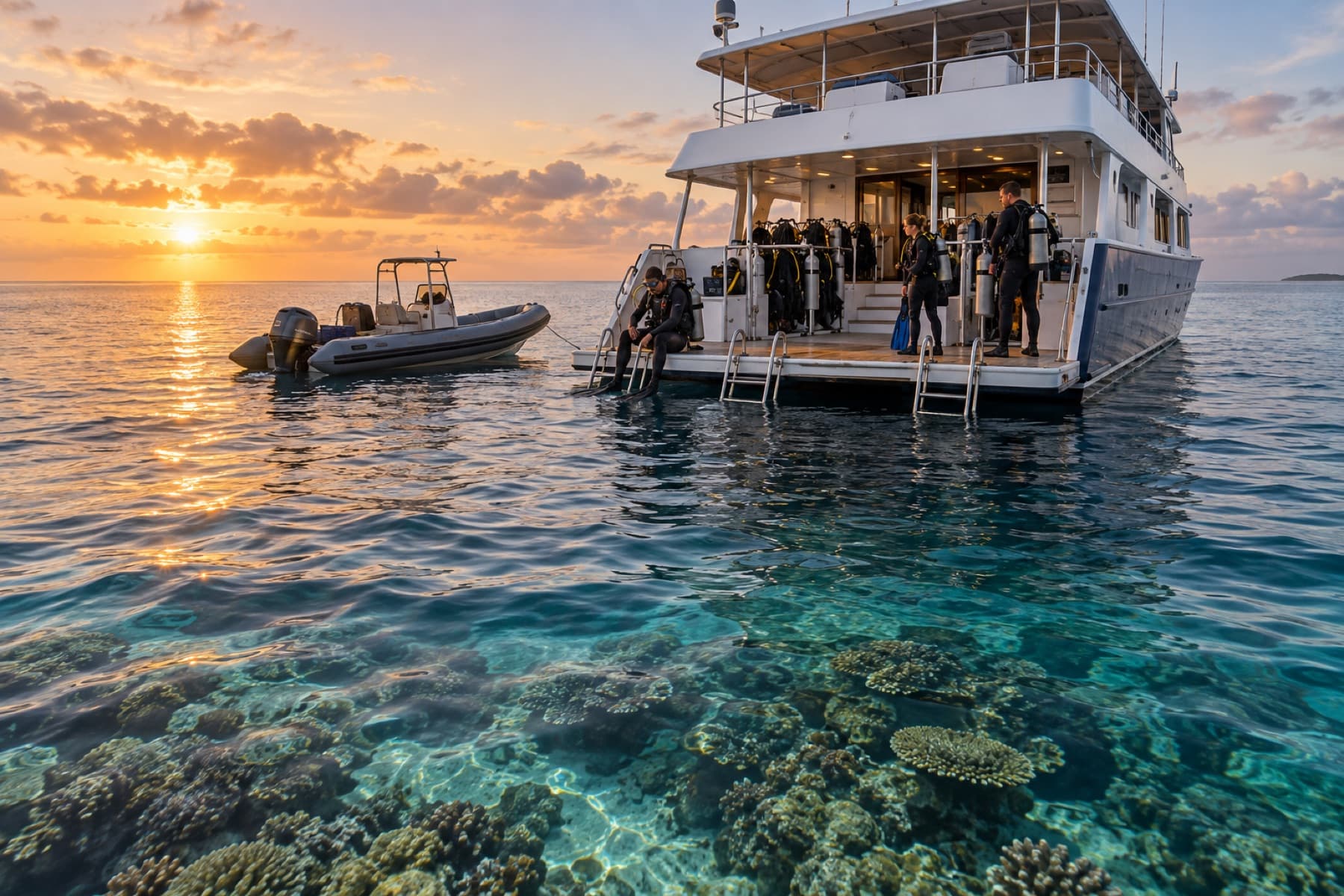
Australia's best diving often sits beside a flight: Cairns, Exmouth, Lord Howe Island and remote liveaboard gateways are obvious examples. That makes post-dive travel part of the dive plan.
Follow the current guidance used by your training agency, computer and medical advisers. If recommendations differ, use the more conservative interval.
The relevant interval starts when the last dive ends, not when the boat docks. Repetitive, multi-day and decompression diving generally call for more conservative planning than a single shallow dive.
Mountain roads and high inland routes can also reduce ambient pressure. Ask locally before driving over elevated terrain soon after diving.
- identify the route altitude
- check the latest agency guidance
- avoid using the computer's no-fly display as the only plan
- do not add a final dive impulsively
A dry day can hold equipment care, wildlife viewing, museums or onward surface travel. Planning it deliberately removes pressure to squeeze in a marginal last dive.
Frequently asked questions
How long should I wait before flying?
There is no single interval for every profile. Use current recognised guidance for the number and type of dives completed, and choose the most conservative applicable recommendation.
Does a short domestic flight count?
Yes. Cabin altitude changes even when flight time is short.
Can I drive to altitude after diving?
Altitude exposure can matter on land too. Check the route and seek qualified advice for the profiles involved.