Dive Centres AustraliaSearch
Menu

Dive sites · 2026 guide

The Best Cave and Sinkhole Dives in Australia

Mount Gambier's freshwater sinkholes have some of the clearest water on earth, and Tasmania's Tasman Peninsula has spectacular sea caves. Many freshwater sites need Cave Divers Association of Australia (CDAA) ratings or permits, and some are open-water sinkholes any certified diver can visit.

Overhead environments are unforgiving — only enter caves with the training the site requires.

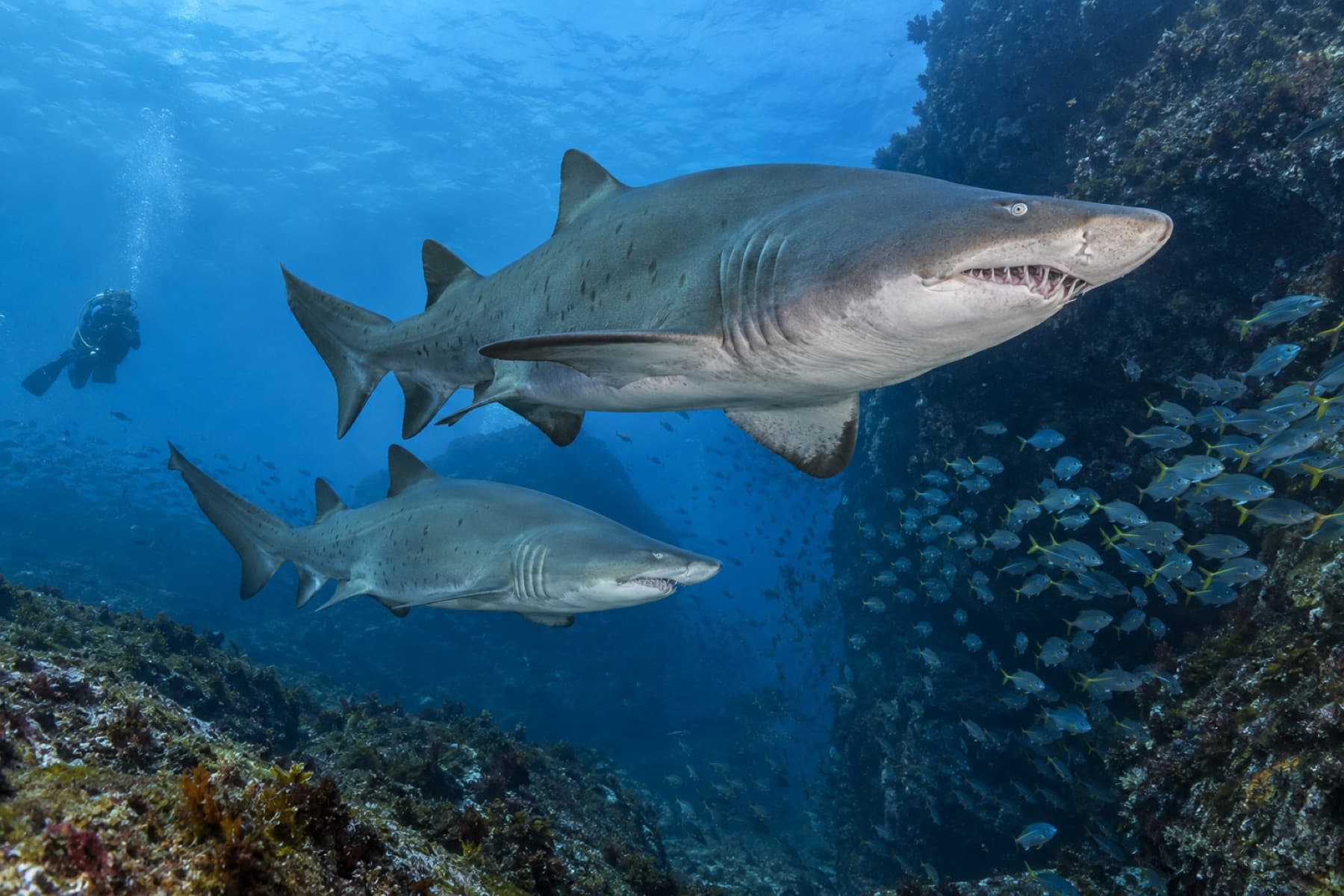
Grey nurse sharks cruising calmly beside a rocky reef1

Fish Rock

South West Rocks, New South Wales

Advanced · 18–25 m~20 m typical, 30 m maxBoat divereef · cave

Grey nurse shark aggregation and one of Australia's few genuine ocean through-caves.

The cave has a deeper entrance around 24 metres and rises internally toward shallower water before reaching the opposite side. That makes it a genuine through-cave rather than a cavern, which is unusual in an ocean setting.

Look for: Grey Nurse Shark, Wobbegong

Full Fish Rock guide →

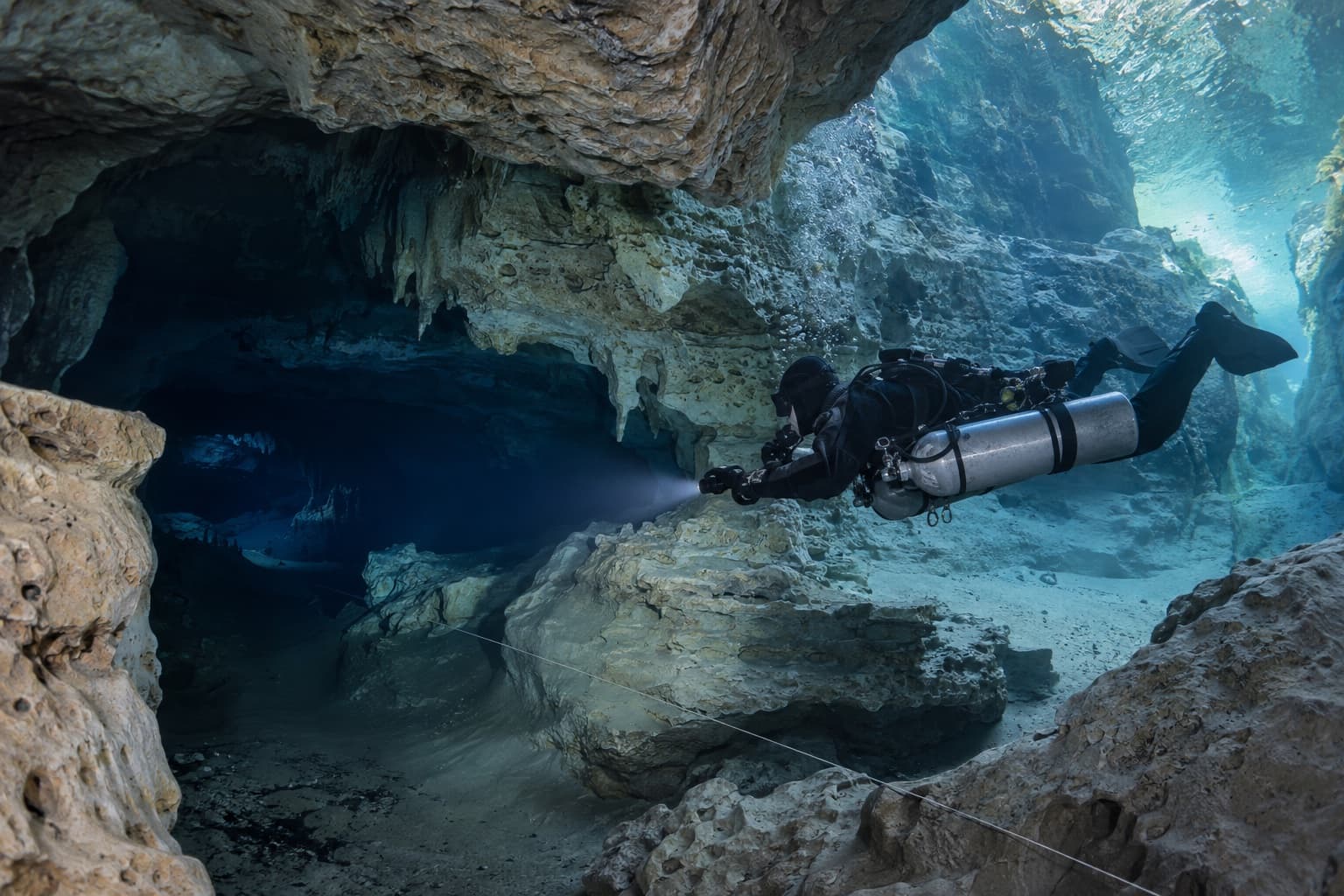
Sidemount cave diver following a guideline into a clear limestone cavern3

Kilsby's Sinkhole

Mount Gambier, South Australia

Deep · 25–30 m~30 m typical, 65 m maxShore divesinkhole · cave

A limestone sinkhole with water so clear the experience is closer to flying than diving.

The visibility is the point. With clarity that can exceed anything in the ocean, divers hanging mid-water can see the full dimensions of the chamber, and shafts of sunlight through the entrance produce the images the site is known for.

Look for: Very little — these are oligotrophic freshwater systems with minimal life, which is part of why the water is so clear.

Who takes you there Dive Experience
Full Kilsby's Sinkhole guide →
Sidemount cave diver following a guideline into a clear limestone cavern4

Rottnest Island

Rottnest Island, Western Australia

Open Water · ≤18 m~15 m typical, 35 m maxBoat dive · Shore divereef · cave · wall

Limestone caverns, swim-throughs, ledges and walls 18 kilometres off Fremantle.

Marine life reflects a warm-temperate mix influenced by the Leeuwin Current, which brings tropical species considerably further south than the latitude would suggest.

Look for: western blue gropers, tropical and temperate fish together, coral growth at high latitude, crayfish, rays

Full Rottnest Island guide →
Sidemount cave diver following a guideline into a clear limestone cavern6

Ewens Ponds

Mount Gambier, South Australia

Easy · <10 m~6 m typical, 10 m maxShore divesinkhole

Three shallow spring-fed ponds connected by channels — a drift dive through crystal-clear freshwater.

Because the ponds are shallow and open to the sky, the site does not require cave qualification, though a permit is needed and access is time-limited.

Look for: dense aquatic vegetation, freshwater crayfish, small native fish, Very limited compared with marine sites

Who takes you there Dive Experience
Full Ewens Ponds guide →
Sidemount cave diver following a guideline into a clear limestone cavern7

Piccaninnie Ponds

Mount Gambier, South Australia

Advanced · 18–25 m~20 m typical, 100 m maxShore divesinkhole · cave

A karst spring of extraordinary clarity, with the Cathedral chamber and a chasm beyond 100 metres.

The main features are the First Pond, the Cathedral — a white limestone chamber — and the Chasm, which descends beyond 100 metres.

Look for: Minimal — freshwater karst systems support very little life, which contributes to the clarity.

Who takes you there Dive Experience
Full Piccaninnie Ponds guide →
Sidemount cave diver following a guideline into a clear limestone cavern8

Tank Cave

Mount Gambier, South Australia

Open Water · ≤18 m~12 m typical, 20 m maxShore divecave

One of the longest underwater cave systems in Australia — advanced CDAA qualification only.

It is restricted to divers holding the highest CDAA qualification categories, and access requires both that qualification and landowner permission.

Look for: Effectively none — this is a freshwater cave system.

Who takes you there Dive Experience
Full Tank Cave guide →

Questions about this list

How is this list ranked?

Sites are chosen from our dive-site database and ordered by how well documented they are: flagship status, the number of operators we have confirmed dive there, and the marine life recorded. Nobody pays to be listed.

Can a business pay to appear here?

No. Listings and order come from our research only. Businesses can ask us to correct their details, but not to change their position.

How current is this guide?

It is generated from the directory's latest research, checked in 2026. Conditions, operators and seasons change — confirm details with the operator before you book.

All best-of guides →