Dive Centres AustraliaSearch
Menu

Dive sites · 2026 guide

The Best Shark Dives in Australia

Australia is one of the best places in the world to dive with sharks, most of them harmless to divers. Grey nurse sharks gather at predictable sites along the east coast, leopard sharks arrive at Byron Bay each summer, and Ningaloo and Christmas Island are famous for whale sharks.

Shark encounters are seasonal — check each site's marine-life notes for the best months.

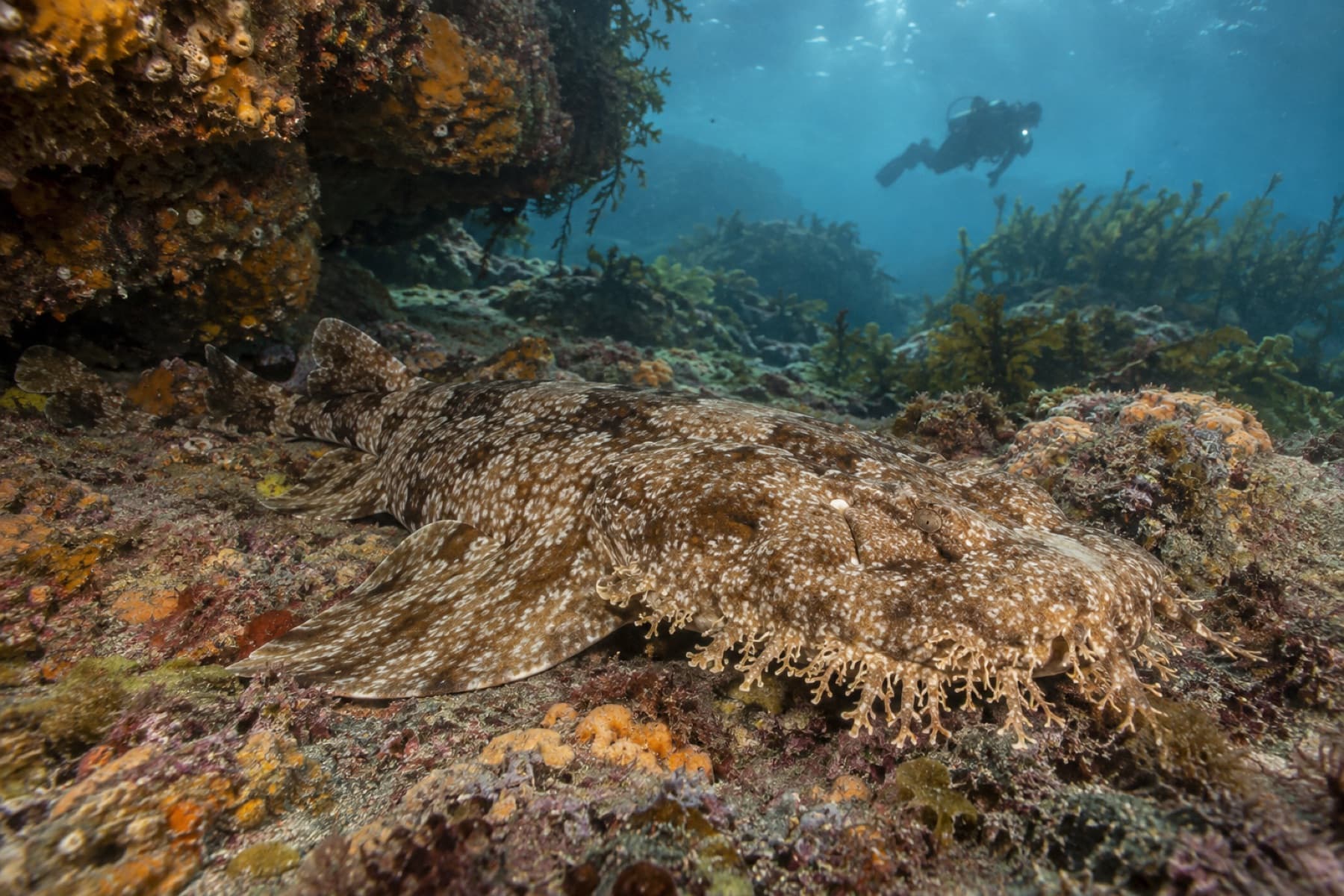
Tasselled wobbegong resting camouflaged on a rocky reef1

Julian Rocks (Nguthungulli)

Byron Bay, New South Wales

Open Water · ≤18 m~15 m typical, 25 m maxBoat divereef · island

Where tropical and temperate waters meet — more than 20 shark and ray species recorded.

The ecological importance of the site comes from the meeting of tropical and temperate influences. Warm water arriving on the East Australian Current mixes with cooler temperate water, and species from both systems occur here together.

Look for: Green Turtle, Grey Nurse Shark, Humpback Whale, Leopard Shark (Zebra Shark)

Full Julian Rocks (Nguthungulli) guide →

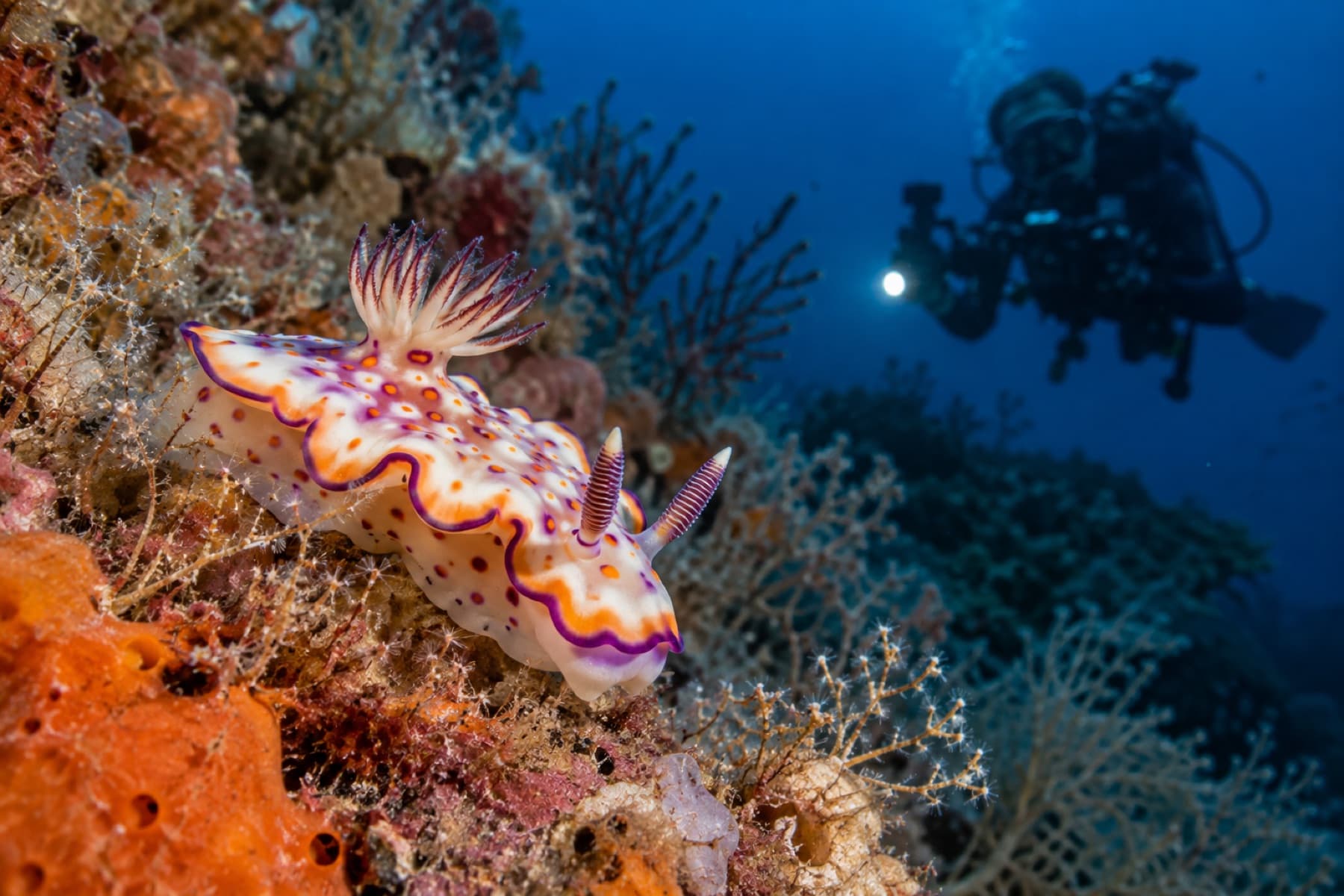
Colourful nudibranch on a sponge garden with a diver behind2

Bare Island

Sydney, New South Wales

Open Water · ≤18 m~12 m typical, 20 m maxShore divereef · muck

Sydney's most-dived shore site — weedy seadragons, extraordinary macro life and multiple routes.

The site offers several distinct routes at different depths, which is why it sustains that popularity — divers who have dived it a hundred times still find new things.

Look for: Eastern Blue Groper, Giant Australian Cuttlefish, Nudibranchs, Port Jackson Shark

Full Bare Island guide →
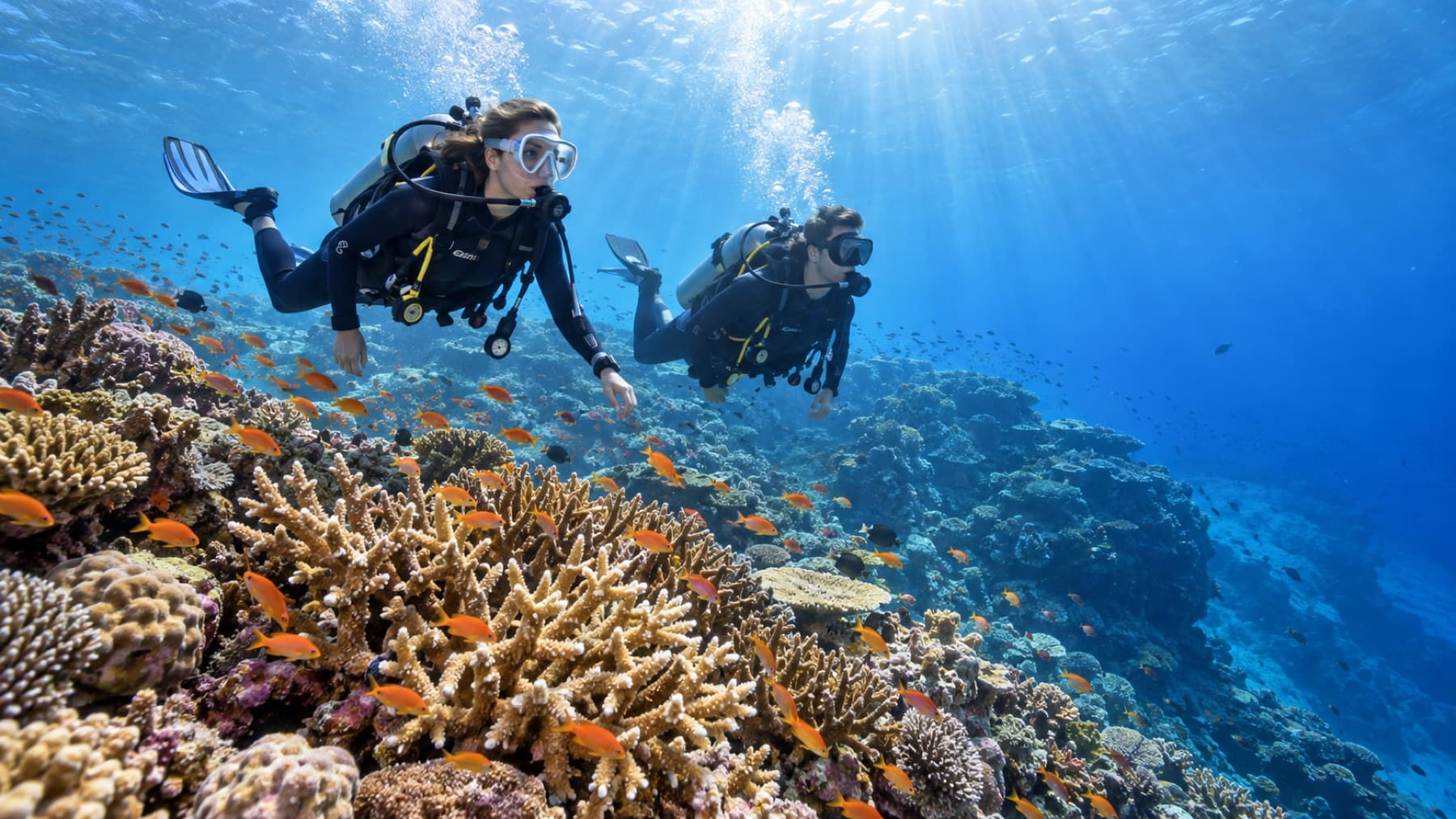
Two scuba divers over a sunlit outer Great Barrier Reef coral garden3

Great Barrier Reef (Cairns Outer Reefs)

Cairns, Queensland

Open Water · ≤18 m~15 m typical, 30 m maxBoat divereef

The reef systems reached daily from Cairns — the most-dived section of the Great Barrier Reef.

Coral cover, fish density and crowding vary considerably between them. The reefs closest to port see the most traffic; the outer reefs generally offer better coral and clearer water in exchange for a longer steam.

Look for: Green Turtle, Queensland Groper

Full Great Barrier Reef (Cairns Outer Reefs) guide →
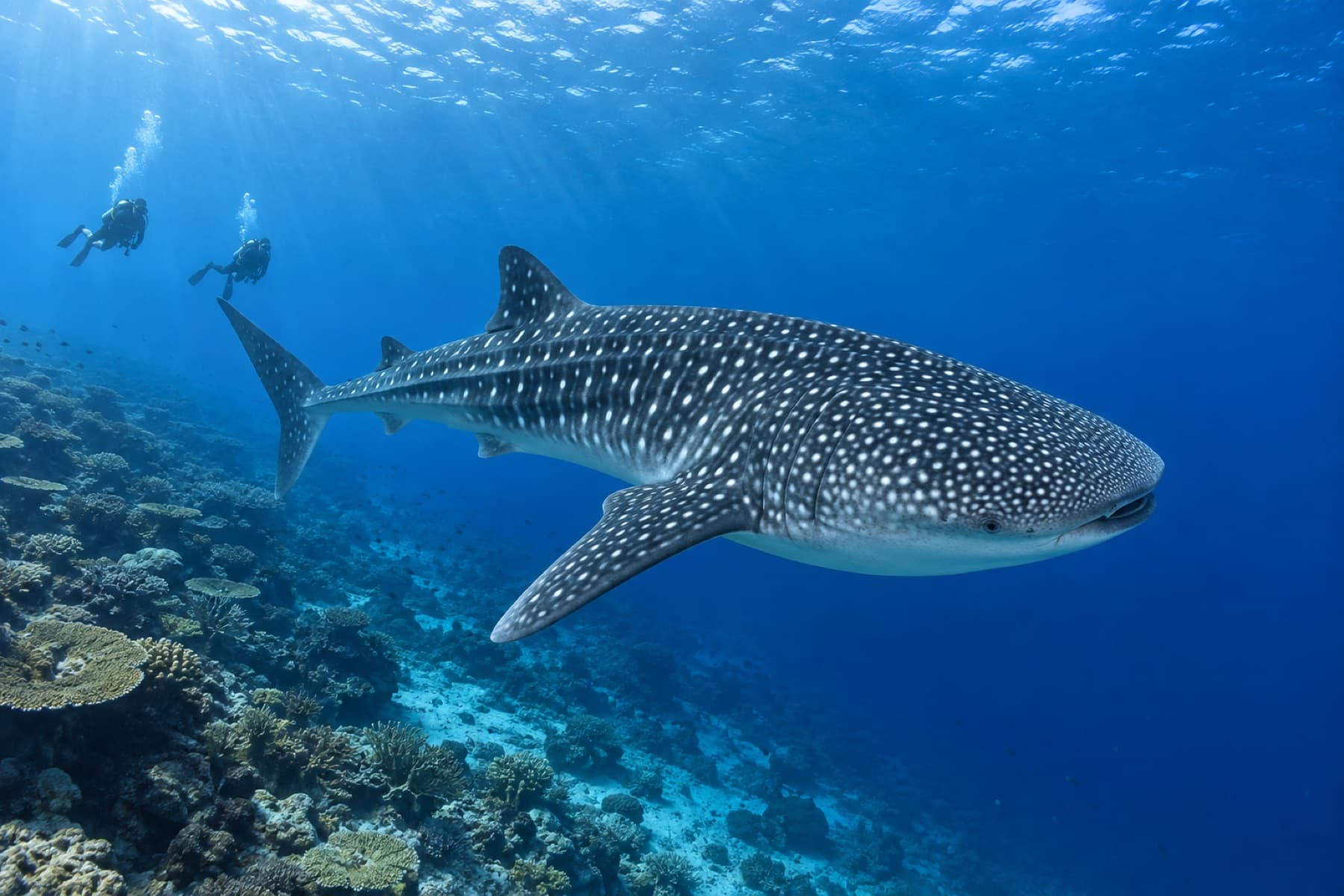
Whale shark cruising over Ningaloo Reef with divers in the distance4

Ningaloo Reef

Ningaloo & Exmouth, Western Australia

Open Water · ≤18 m~15 m typical, 30 m maxShore dive · Boat divereef · drift

A fringing reef close enough to shore that in places you can swim to it from the beach.

For certified divers, the reef systems and offshore sites around the Exmouth Gulf provide the main scuba product, with drift diving along the reef edge and coral bommies inside the lagoon.

Look for: Green Turtle, Humpback Whale, Manta Ray, Spotted Eagle Ray

Full Ningaloo Reef guide →
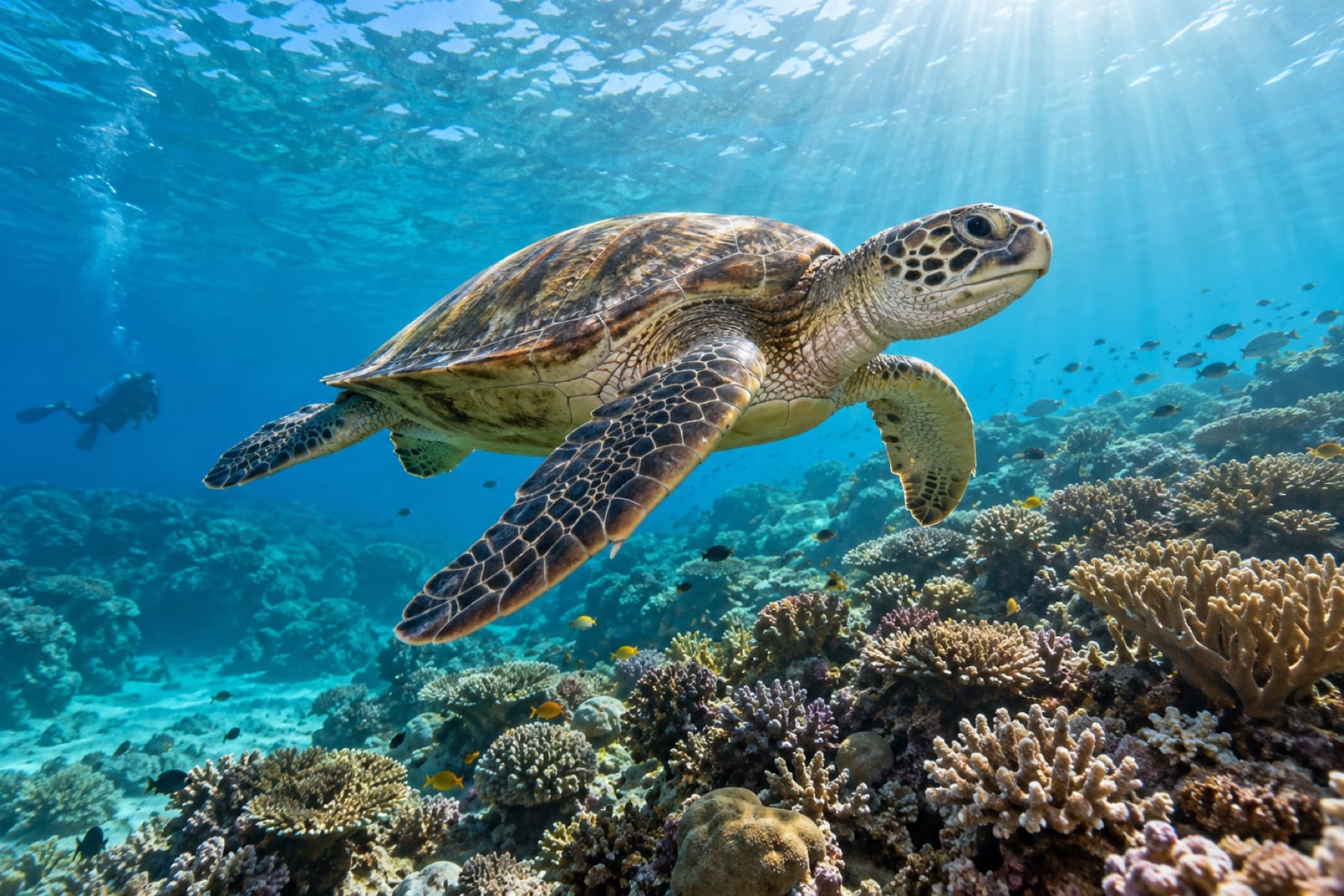
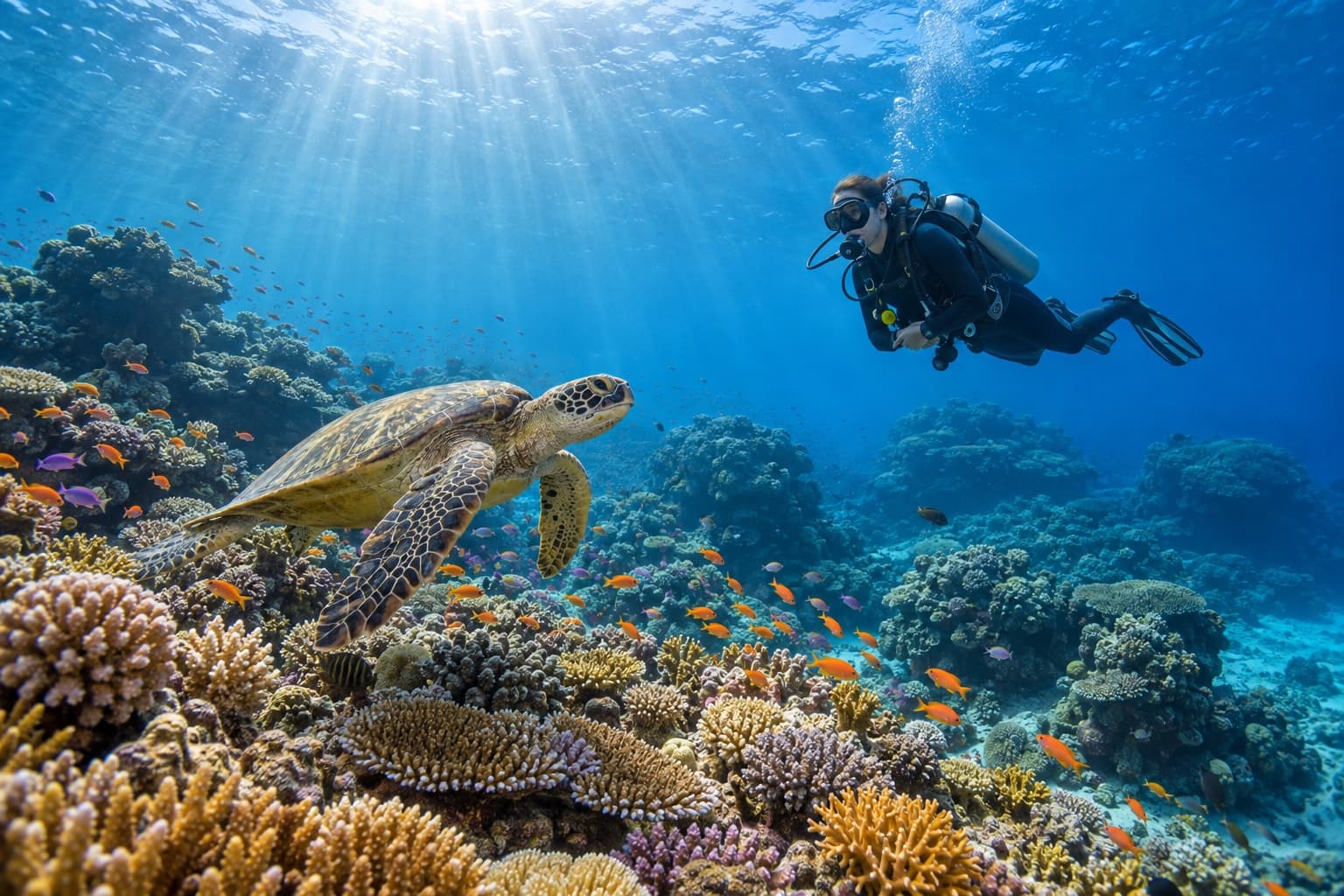
Green sea turtle swimming above a sunlit coral reef5

Wolf Rock

Rainbow Beach & Wolf Rock, Queensland

Advanced · 18–25 m~25 m typical, 35 m maxBoat divereef

An offshore volcanic pinnacle and one of the few known aggregation sites for pregnant grey nurse sharks.

The site is particularly associated with grey nurse sharks and large rays. It is one of the few known aggregation sites for pregnant female grey nurse sharks, which gives it genuine conservation significance.

Look for: Grey Nurse Shark, Humpback Whale, Leopard Shark (Zebra Shark), Manta Ray

Who takes you there Wolf Rock Dive Centre
Full Wolf Rock guide →
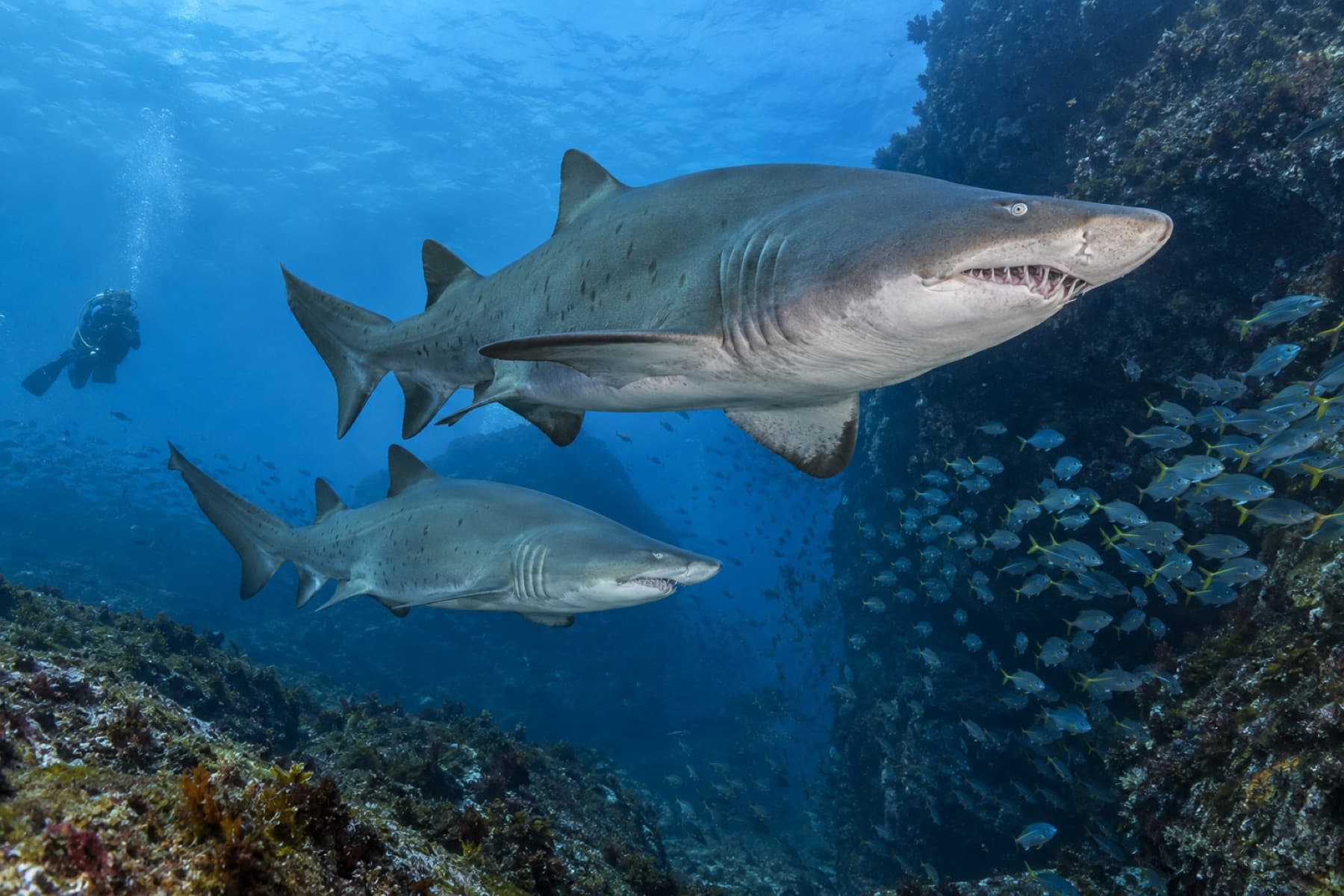
Grey nurse sharks cruising calmly beside a rocky reef6

Fish Rock

South West Rocks, New South Wales

Advanced · 18–25 m~20 m typical, 30 m maxBoat divereef · cave

Grey nurse shark aggregation and one of Australia's few genuine ocean through-caves.

The cave has a deeper entrance around 24 metres and rises internally toward shallower water before reaching the opposite side. That makes it a genuine through-cave rather than a cavern, which is unusual in an ocean setting.

Look for: Grey Nurse Shark, Wobbegong

Full Fish Rock guide →
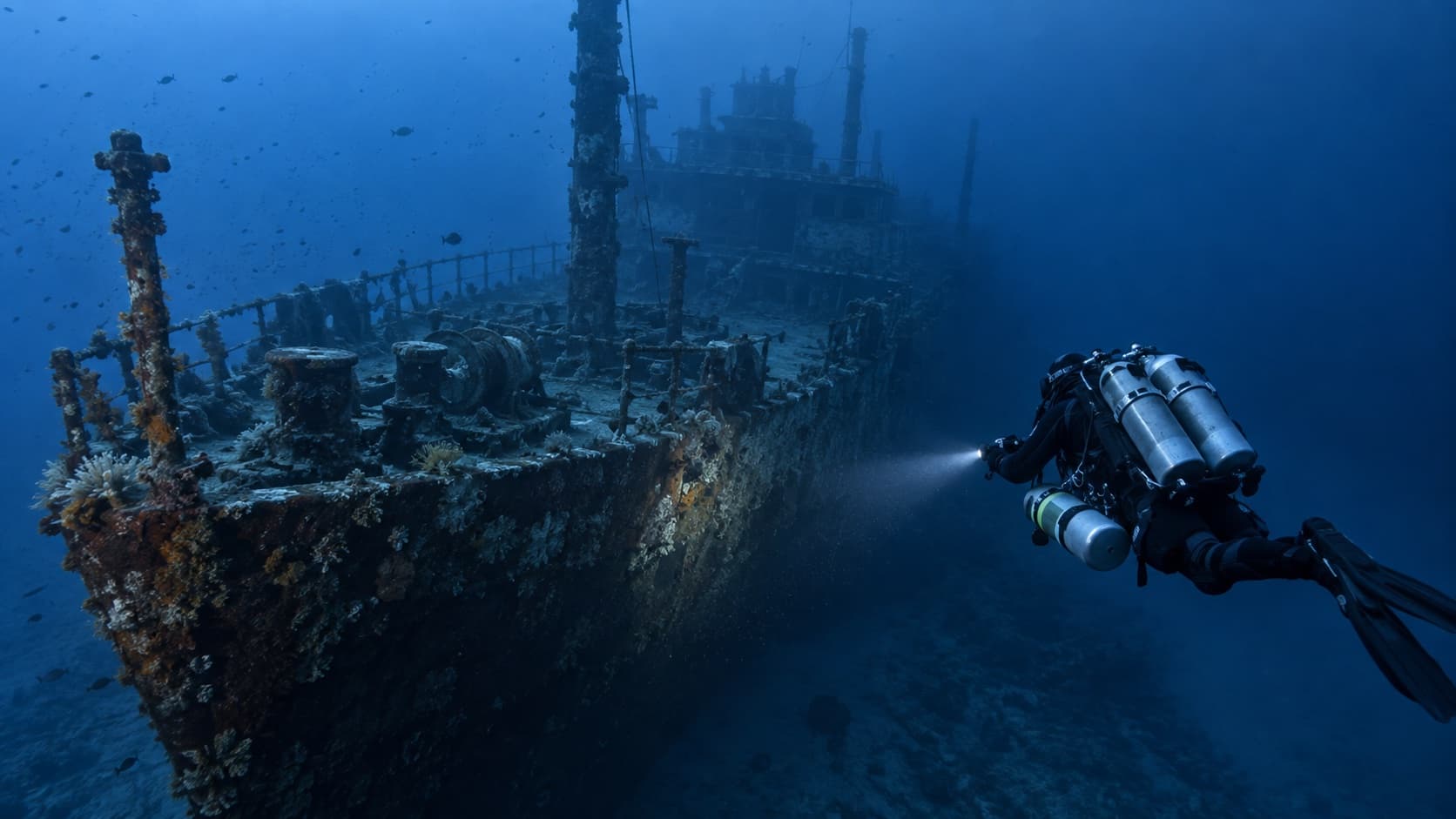
Technical scuba diver approaching a shipwreck in deep blue water7

SS Yongala

Townsville, Ayr & the SS Yongala, Queensland

Advanced · 18–25 m~25 m typical, 30 m maxBoat divewreck

A 100-metre passenger steamer lost in 1911, now carrying possibly the densest marine life in Australia.

The wreck is around 100 metres long and lies at depths reaching roughly 30 metres. Queensland tourism material treats the site as an advanced diving attraction.

Look for: Queensland Groper, Spotted Eagle Ray

Full SS Yongala guide →
Scuba diver and green sea turtle above a tropical coral reef8

Cook Island

Gold Coast, Queensland

Open Water · ≤18 m~14 m typical, 20 m maxBoat diveisland · reef

An aquatic reserve off Tweed Heads with a resident turtle population and seasonal grey nurse sharks.

The protected status has produced habituated marine life, and divers regularly encounter multiple turtles on a single dive.

Look for: Green Turtle, Grey Nurse Shark, Humpback Whale, Leopard Shark (Zebra Shark)

Full Cook Island guide →
Technical scuba diver approaching a shipwreck in deep blue water9

ex-HMAS Brisbane

Sunshine Coast, Queensland

Advanced · 18–25 m~24 m typical, 28 m maxBoat divewreck

A former guided missile destroyer scuttled off Mooloolaba and prepared specifically for divers.

Because the vessel was prepared specifically for diving, access points were cut and hazards removed, which makes the wreck considerably more forgiving than a historic loss.

Look for: schooling baitfish and trevally, wobbegongs, soft coral and sponge colonisation, lionfish, occasional turtles and rays

Full ex-HMAS Brisbane guide →
Colourful nudibranch on a sponge garden with a diver behind11

Exmouth Navy Pier

Ningaloo & Exmouth, Western Australia

Open Water · ≤18 m~10 m typical, 15 m maxShore divepier

A structure dive with extraordinary fish density, on Defence land with controlled access.

The structure supports an extraordinary density of fish — grey nurse sharks, wobbegongs, giant groupers and vast schools crowded into a comparatively small area.

Look for: Grey Nurse Shark, Nudibranchs, Queensland Groper, Wobbegong

Full Exmouth Navy Pier guide →

Questions about this list

How is this list ranked?

Sites are chosen from our dive-site database and ordered by how well documented they are: flagship status, the number of operators we have confirmed dive there, and the marine life recorded. Nobody pays to be listed.

Can a business pay to appear here?

No. Listings and order come from our research only. Businesses can ask us to correct their details, but not to change their position.

How current is this guide?

It is generated from the directory's latest research, checked in 2026. Conditions, operators and seasons change — confirm details with the operator before you book.

All best-of guides →