Winter
Diving Australia in June
Minke whales on the Ribbon Reefs, cuttlefish at Whyalla, whales migrating on both coasts.
June is the most event-dense month in the Australian diving calendar. Dwarf minke whales arrive on the northern Ribbon Reefs, the Whyalla cuttlefish aggregation approaches its peak, and the humpback migration begins up both coasts.
Tropical Queensland is in its dry season with the year's most reliable conditions. Southern Australia is cold but often exceptionally clear — winter frequently produces the best visibility of the year in Victoria and Tasmania.
It is a month that rewards planning around a specific animal rather than a destination.
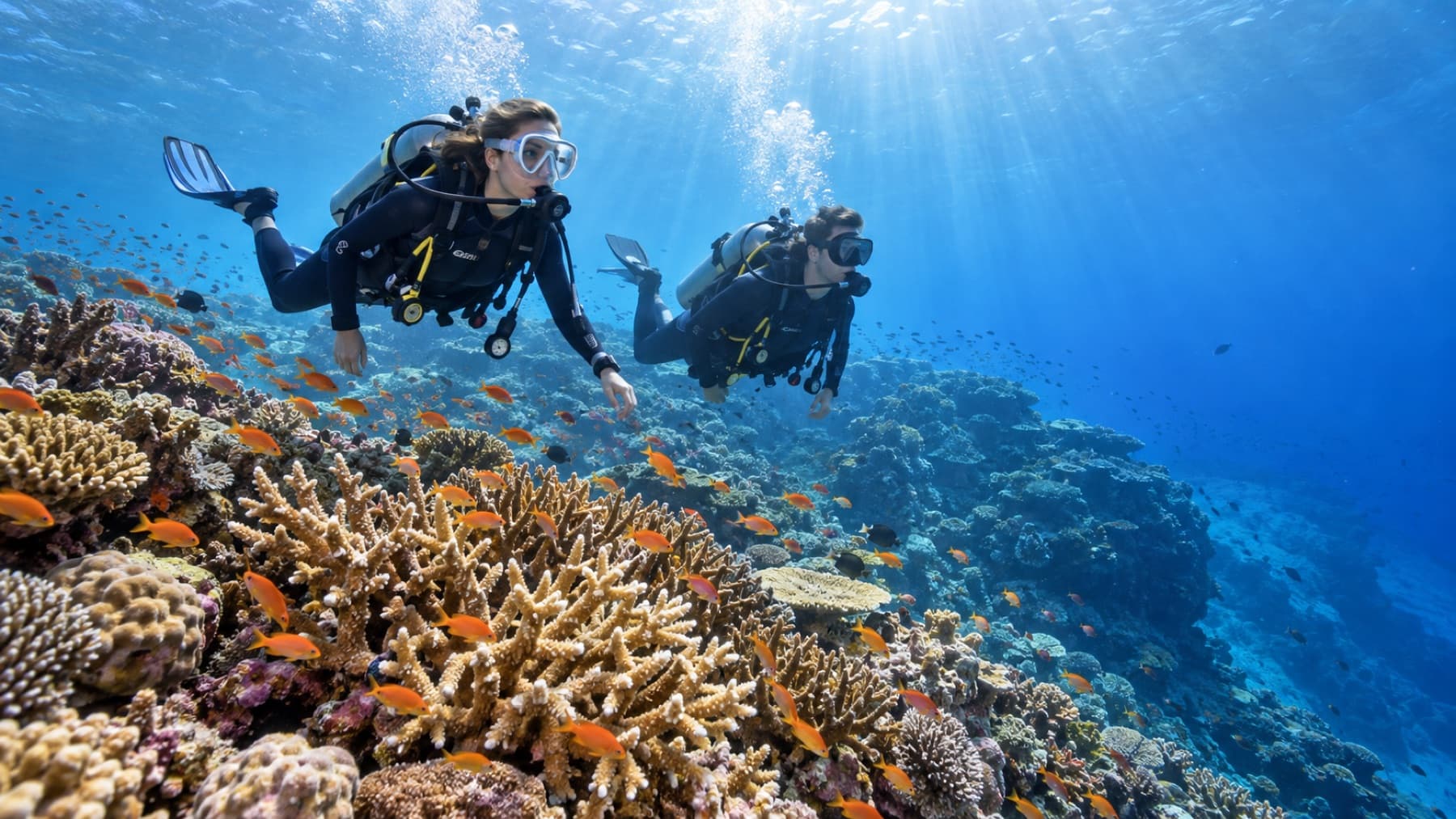 CairnsDwarf minke whale season opens on the northern Ribbon Reefs, accessed by permitted liveaboards.
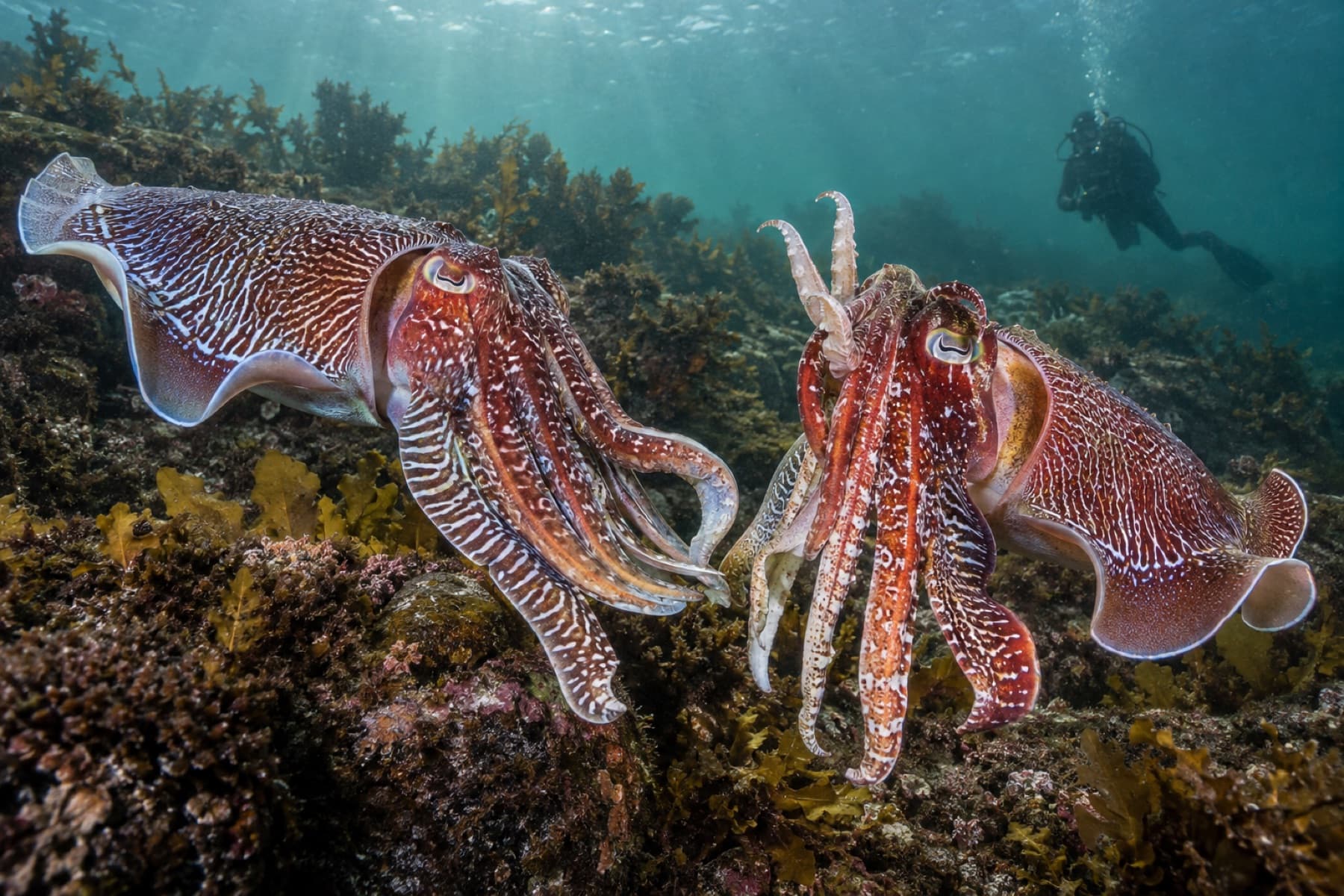
 WhyallaCuttlefish aggregation building toward peak numbers.Rainbow Beach & Wolf RockPregnant female grey nurse sharks at Wolf Rock.
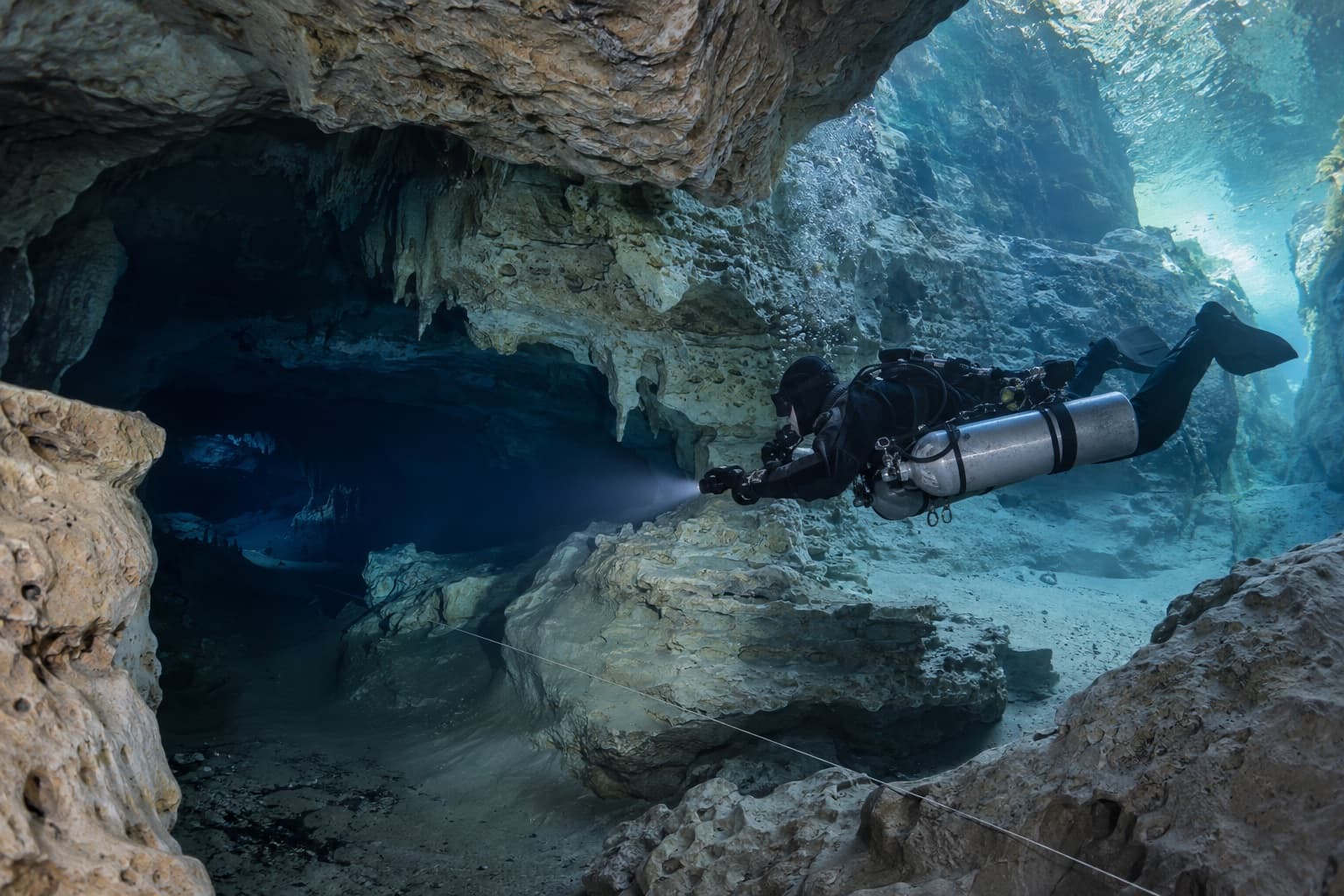
 Tasman Peninsula & Eaglehawk NeckWinter clarity at its best on the dolerite walls and sea caves.
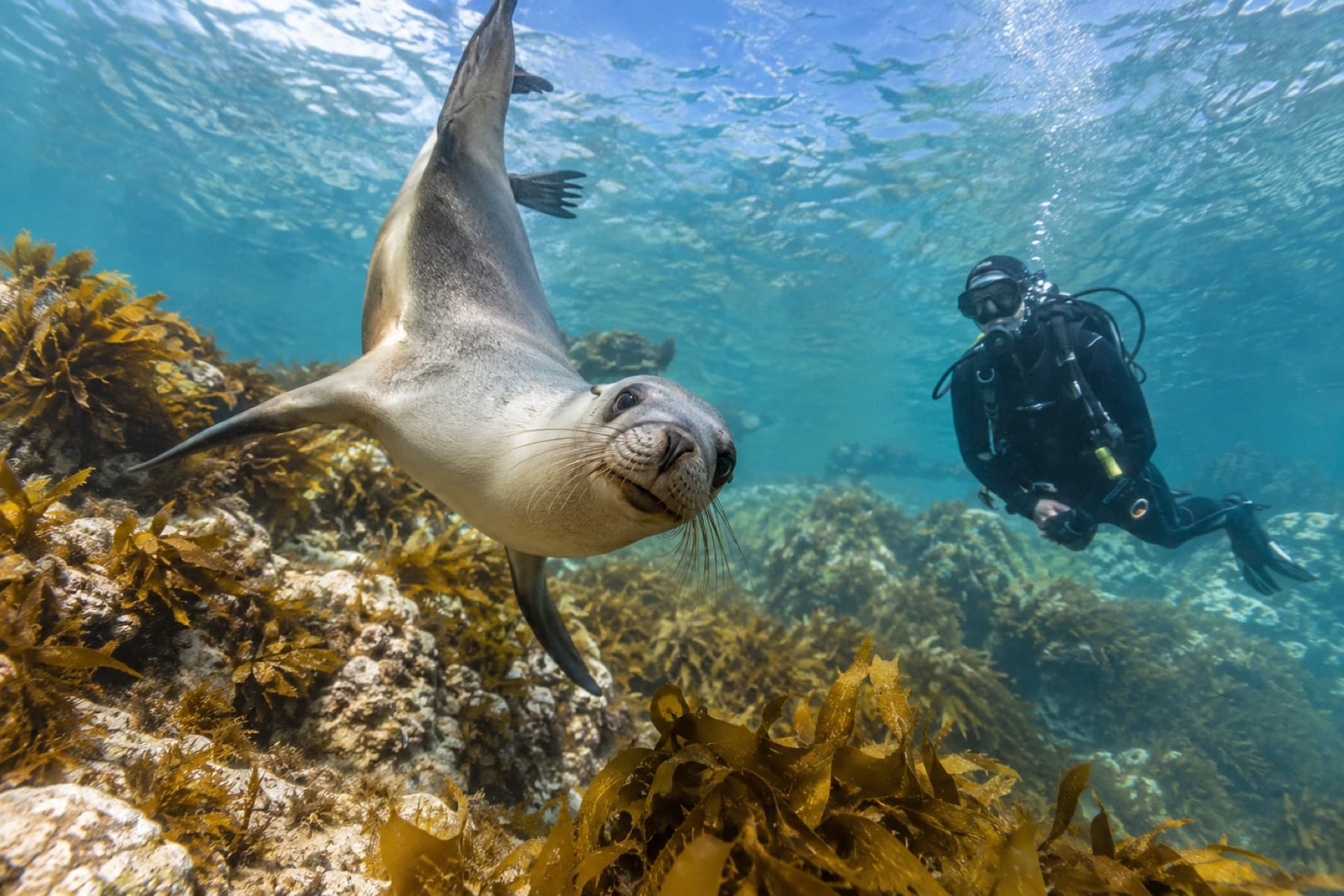 Australian & New Zealand Fur SealsFast, acrobatic and endlessly curious — the highlight of Montague Island, Jervis Bay and Port Phillip.
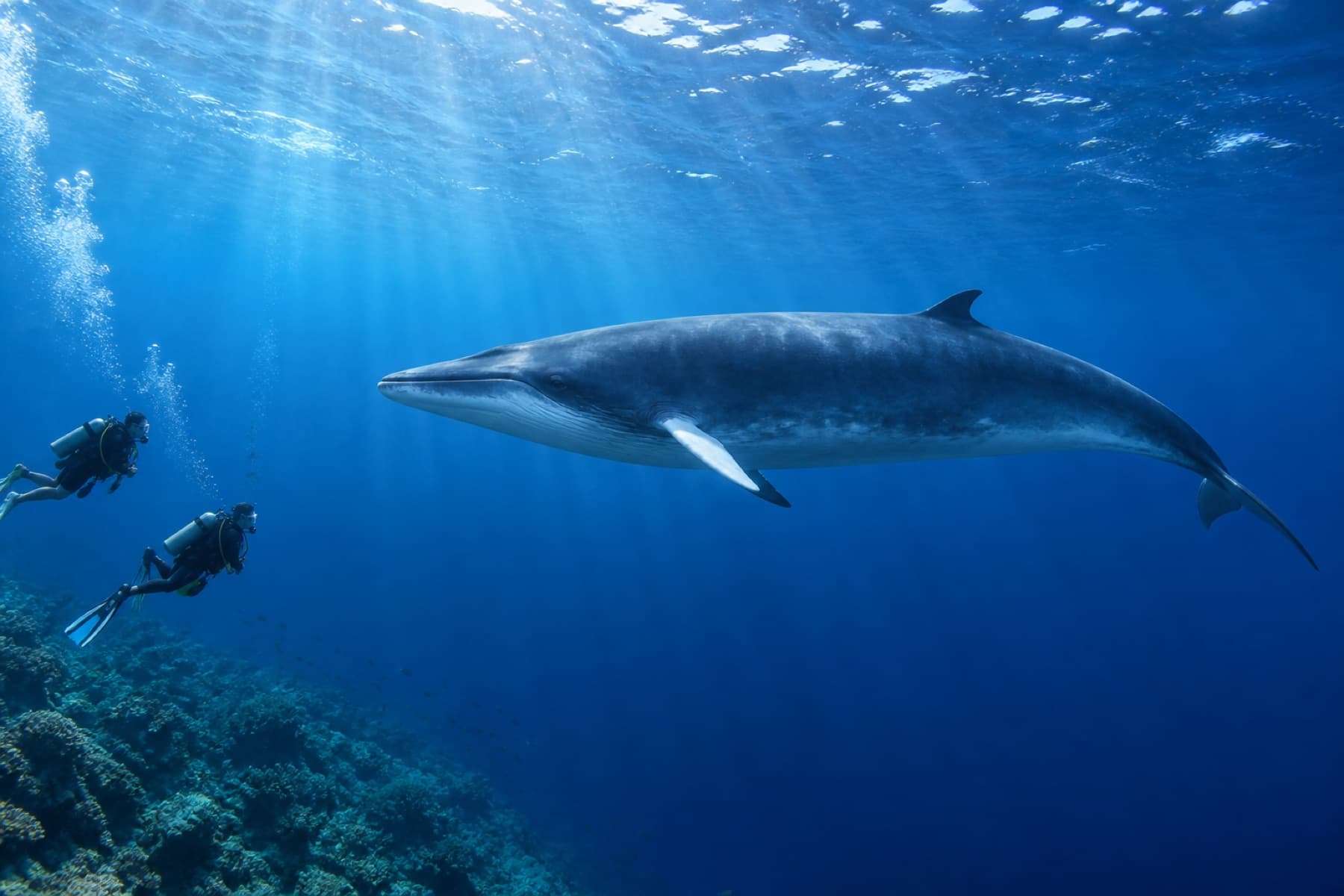 Dwarf Minke WhaleCurious whales that approach snorkellers on the northern Ribbon Reefs each winter — a genuinely rare permitted interaction.Giant Australian CuttlefishThe world's largest cuttlefish, gathering in tens of thousands at Whyalla each winter.
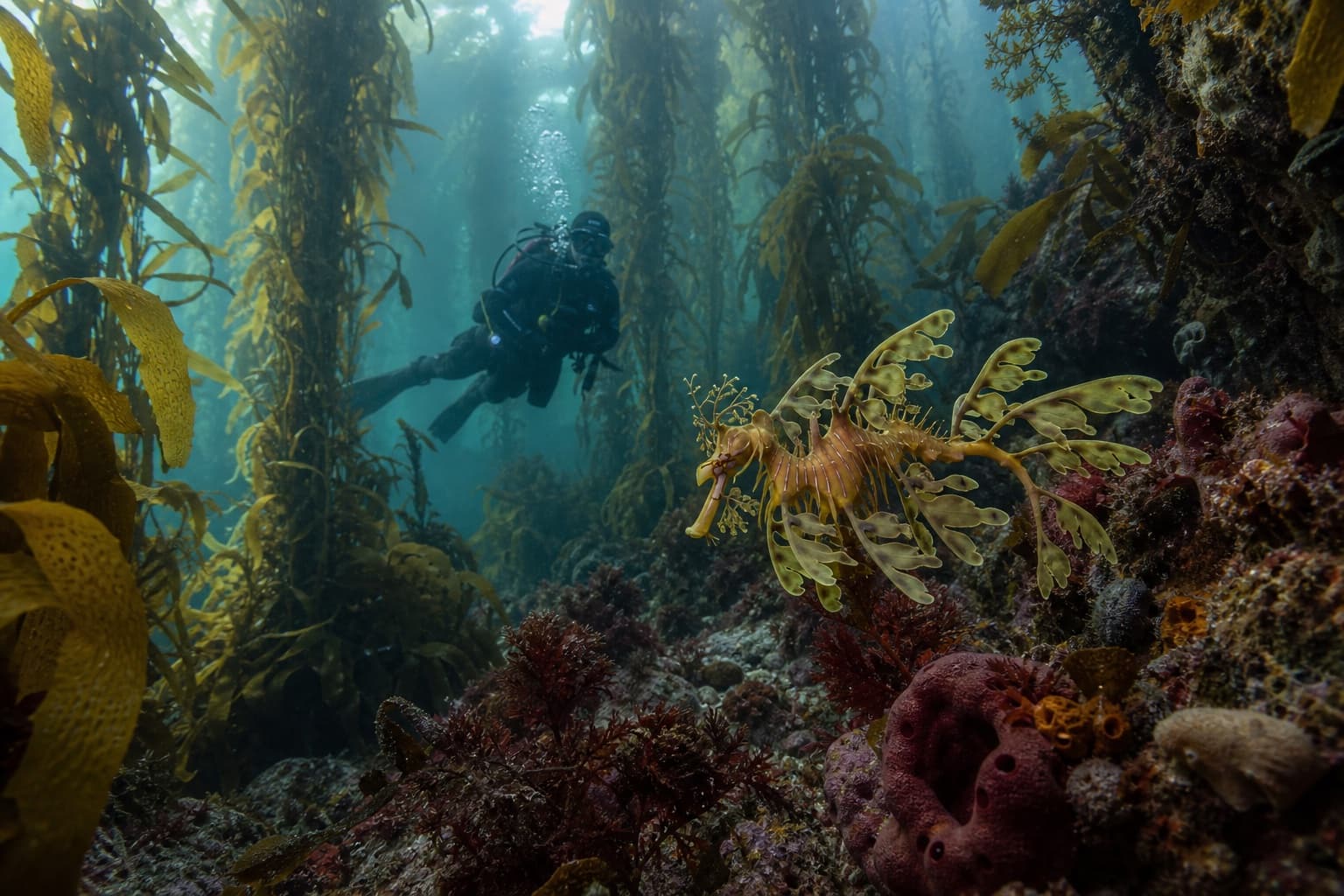
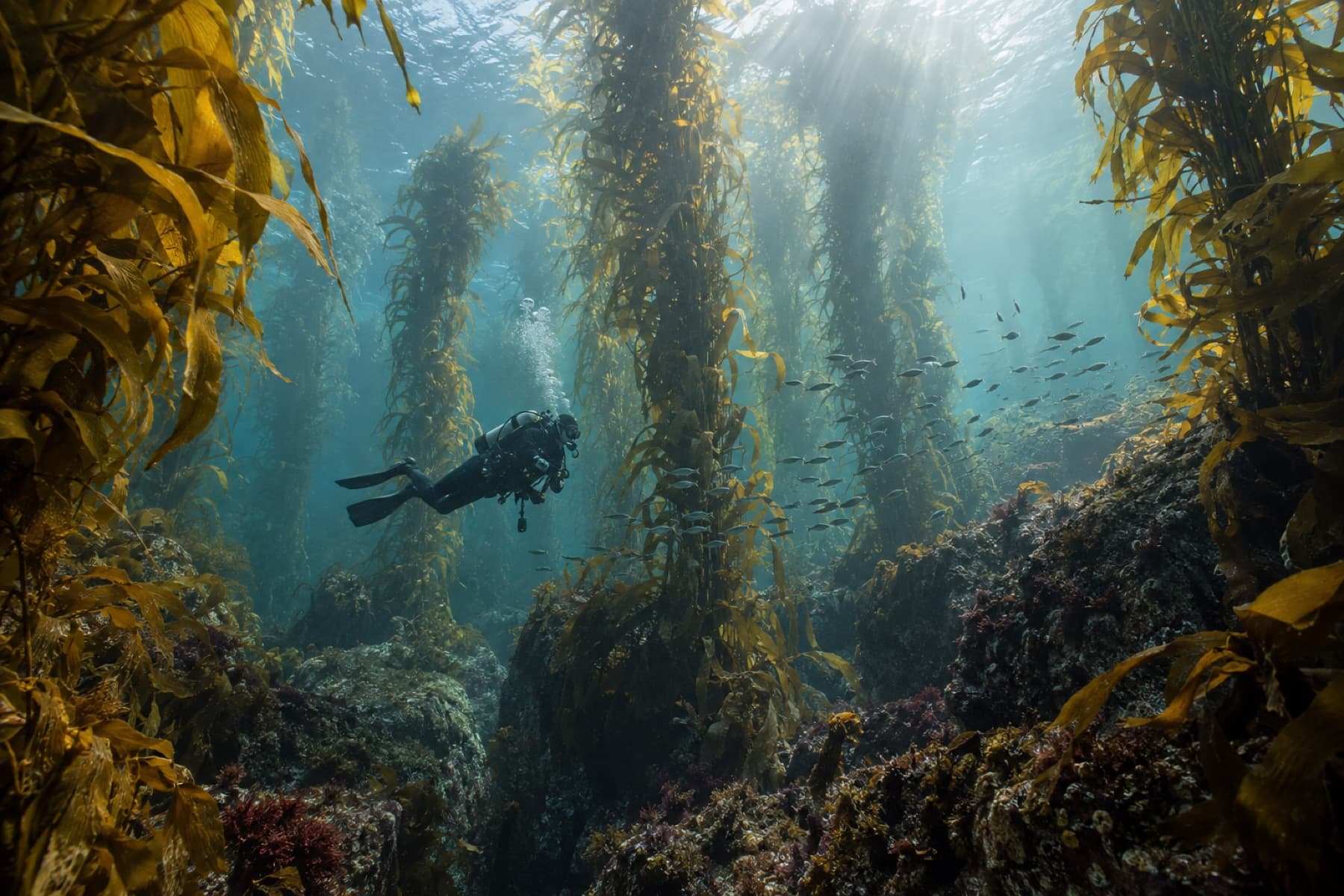 Giant Kelp ForestTasmania's underwater forests — dramatically diminished, and worth seeing while they remain.
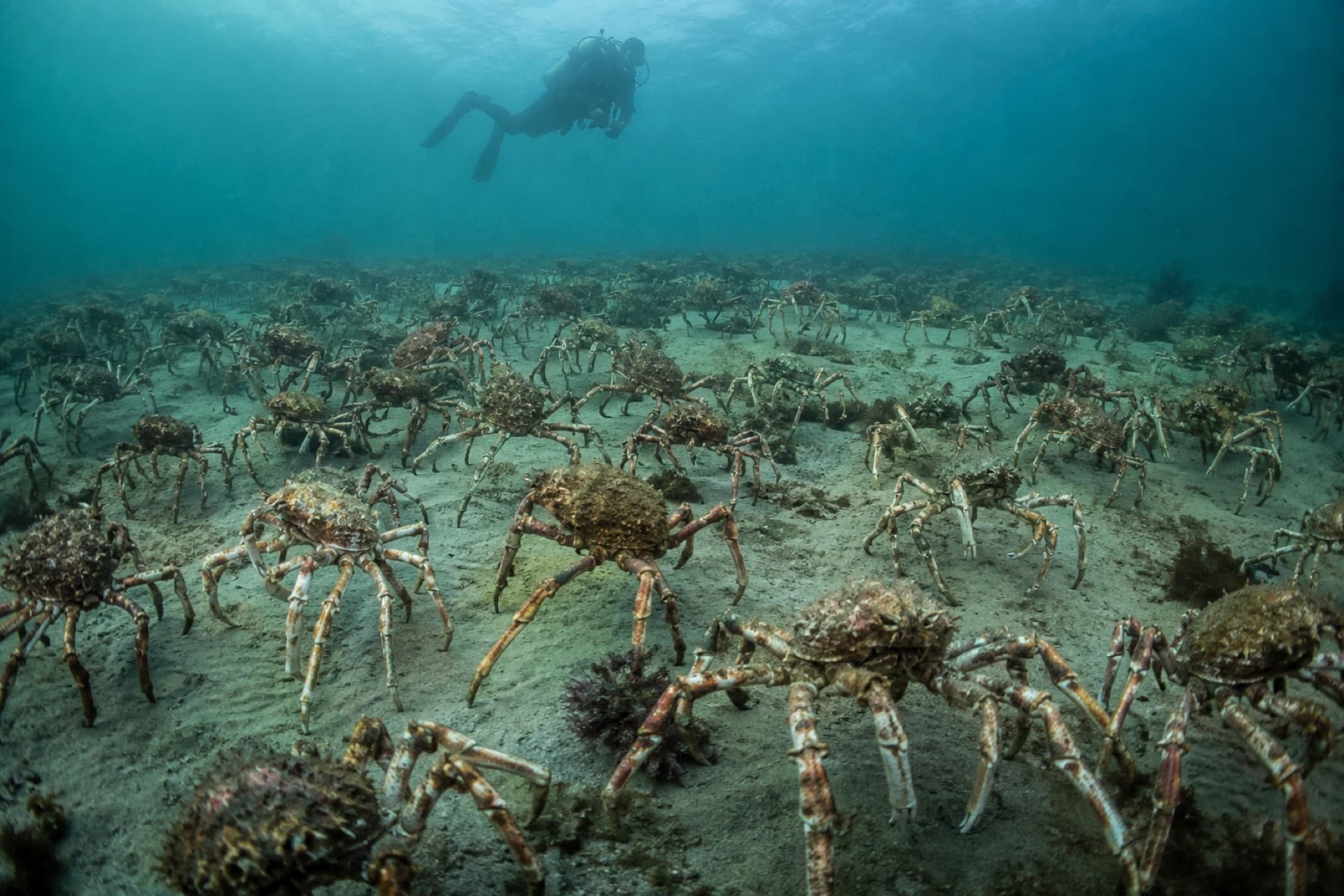 Giant Spider CrabTens of thousands of crabs piling into the shallows of Port Phillip Bay to moult, in one of Victoria's strangest dives.
 Great White SharkEncountered in Australia from a cage at the Neptune Islands — wildlife tourism rather than scuba diving.
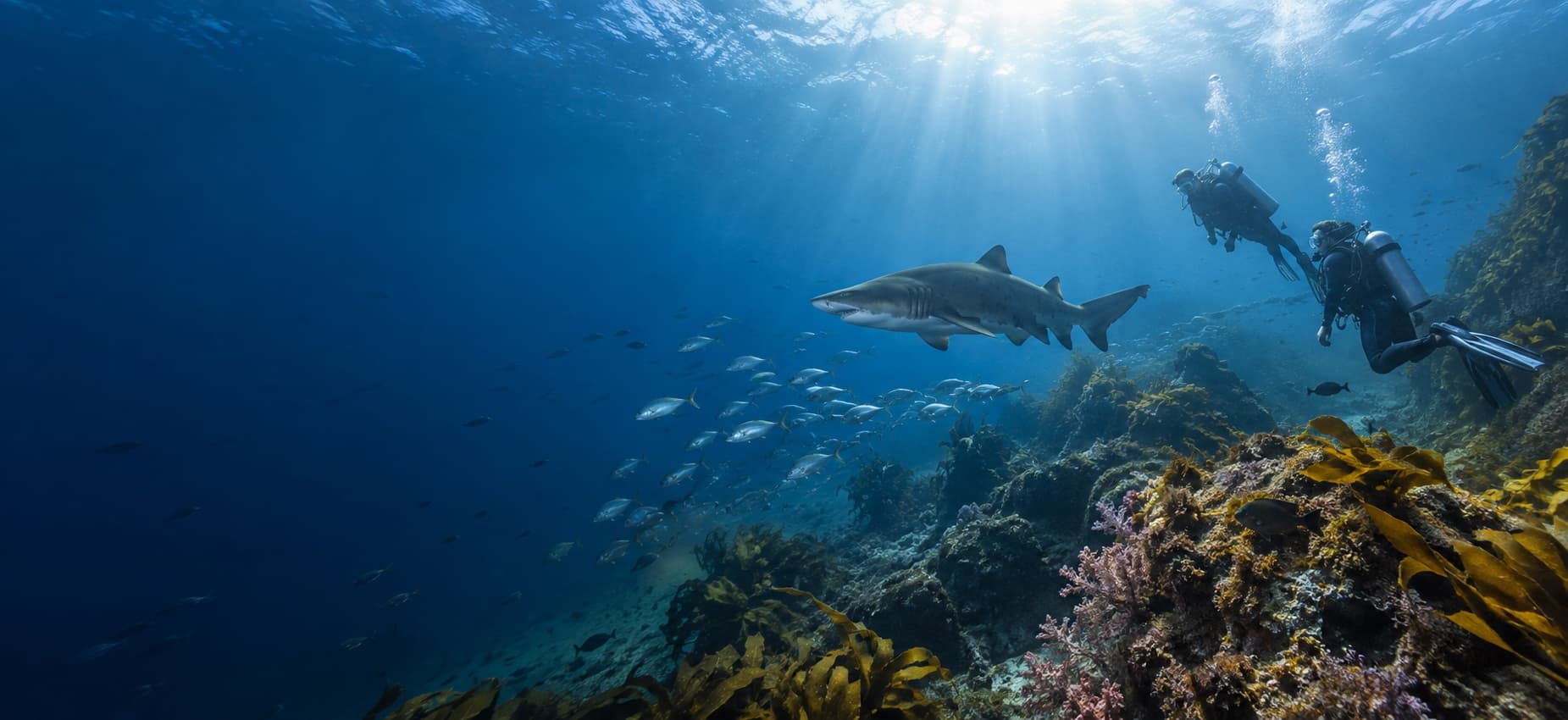
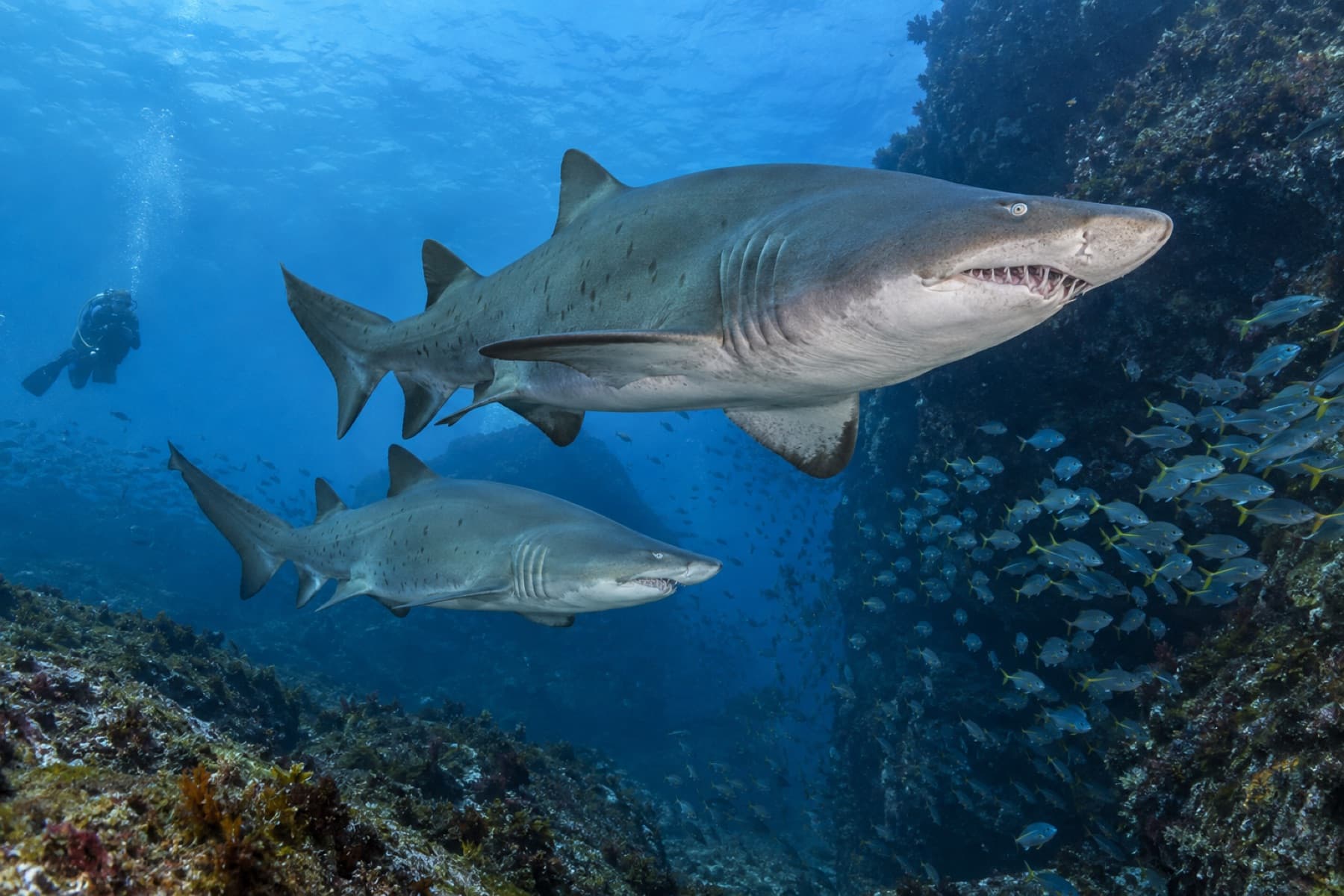 Grey Nurse SharkAustralia's most recognisable dive shark — ragged teeth, entirely harmless, and critically endangered on the east coast.Humpback WhaleHeard far more often than seen — the soundtrack to winter diving on both Australian coasts.
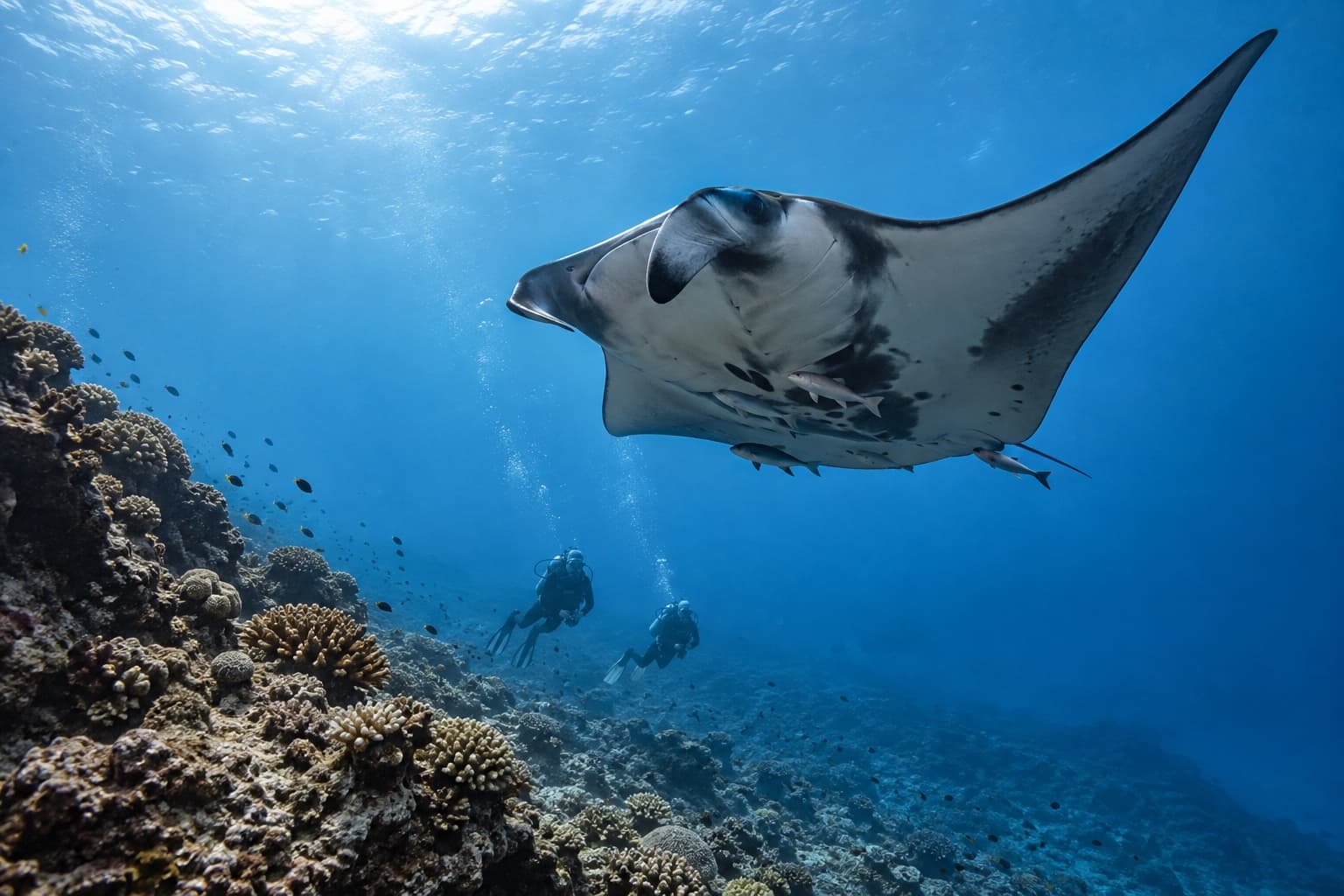 Manta RayReef mantas at cleaning stations — Lady Elliot and Ningaloo are the most reliable encounters in Australia.
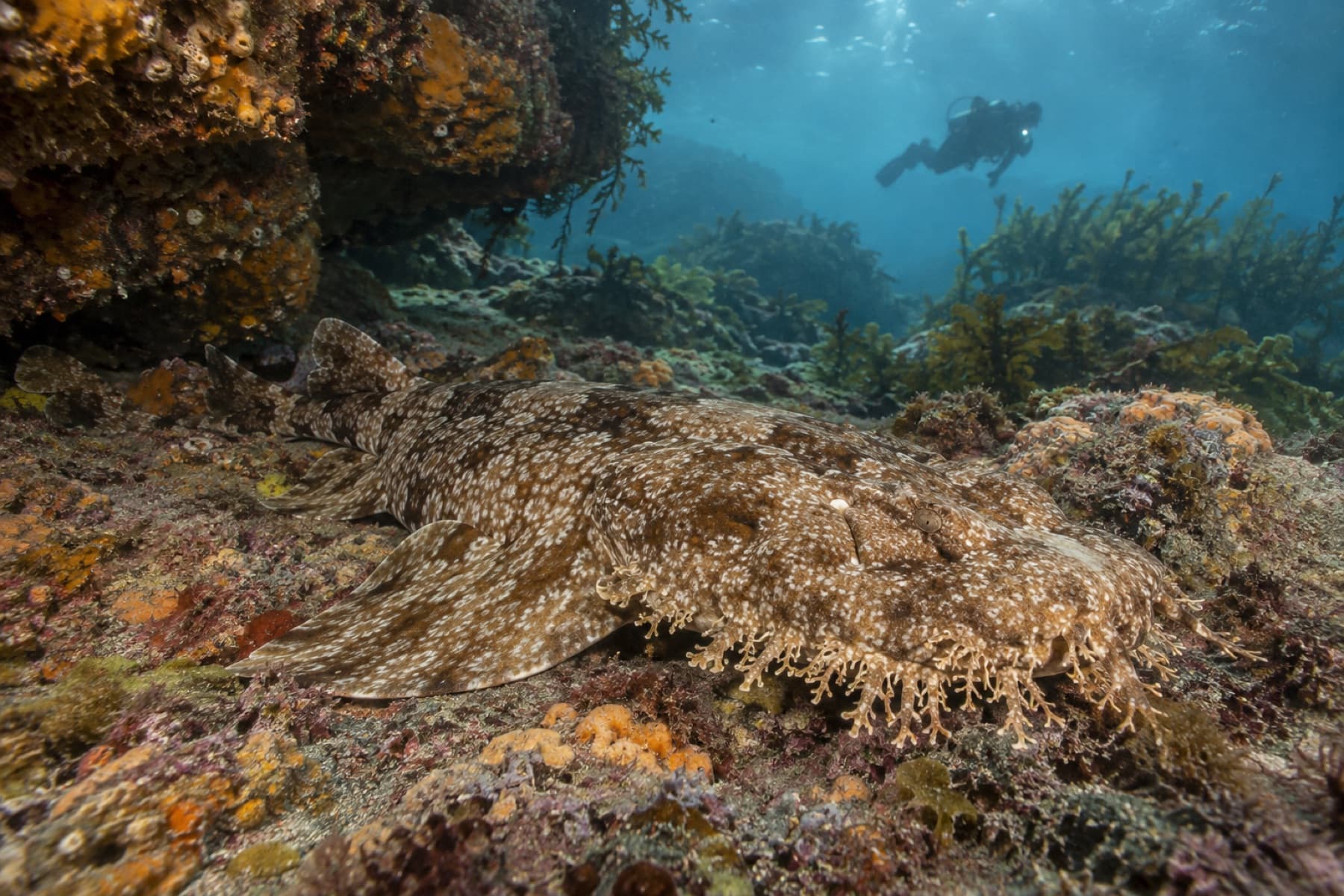
 Port Jackson SharkA small, harmless, harness-marked shark that gathers in southern NSW winters to breed.
 Potato CodEnormous, docile groupers habituated to divers at Cod Hole on the Ribbon Reefs.
 Striped Pyjama SquidA tiny, toxic, absurdly striped cuttlefish that buries itself in sand — Edithburgh's signature find.
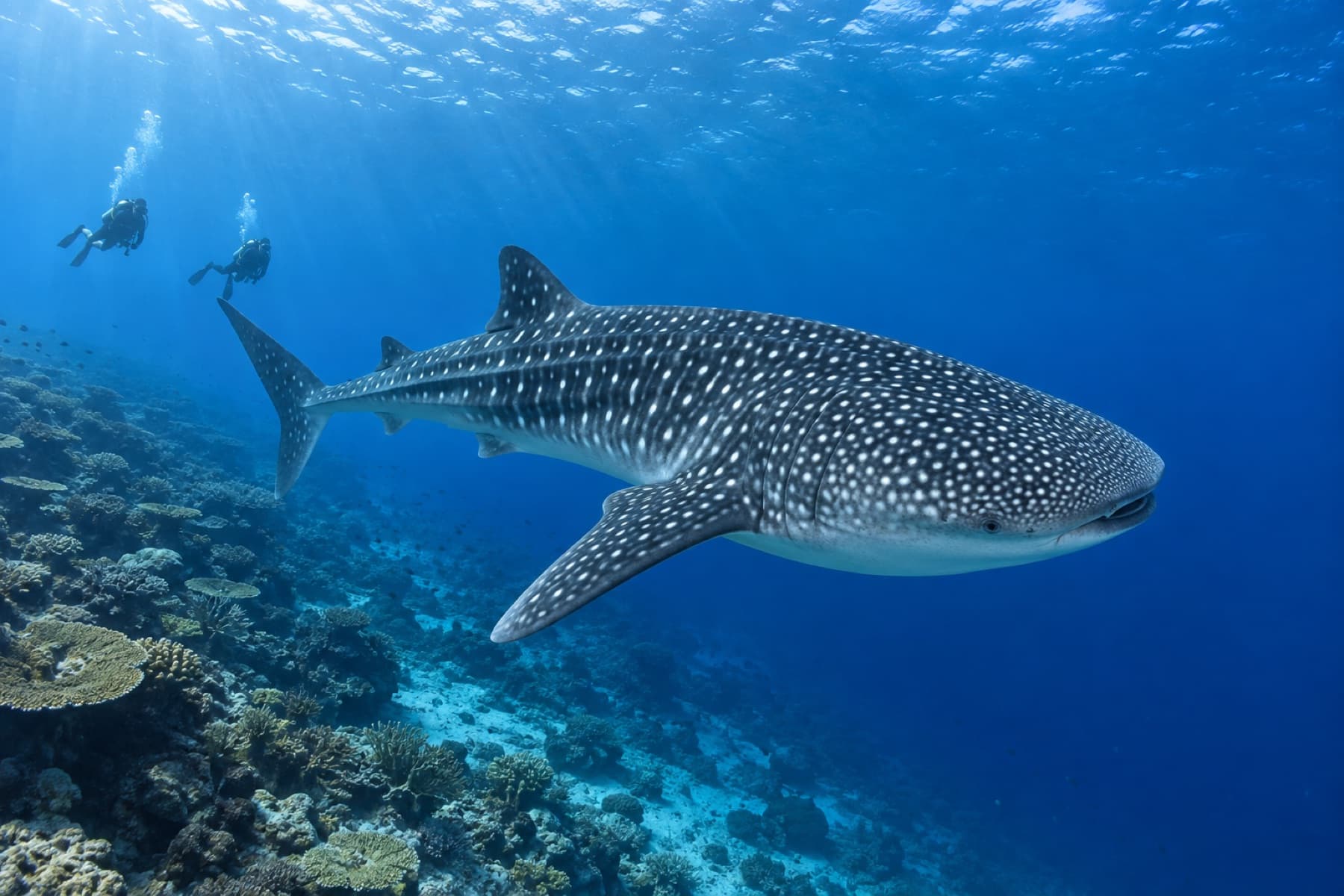 Whale SharkThe world's largest fish, and at Ningaloo an encounter you snorkel with rather than dive.
Also good in June
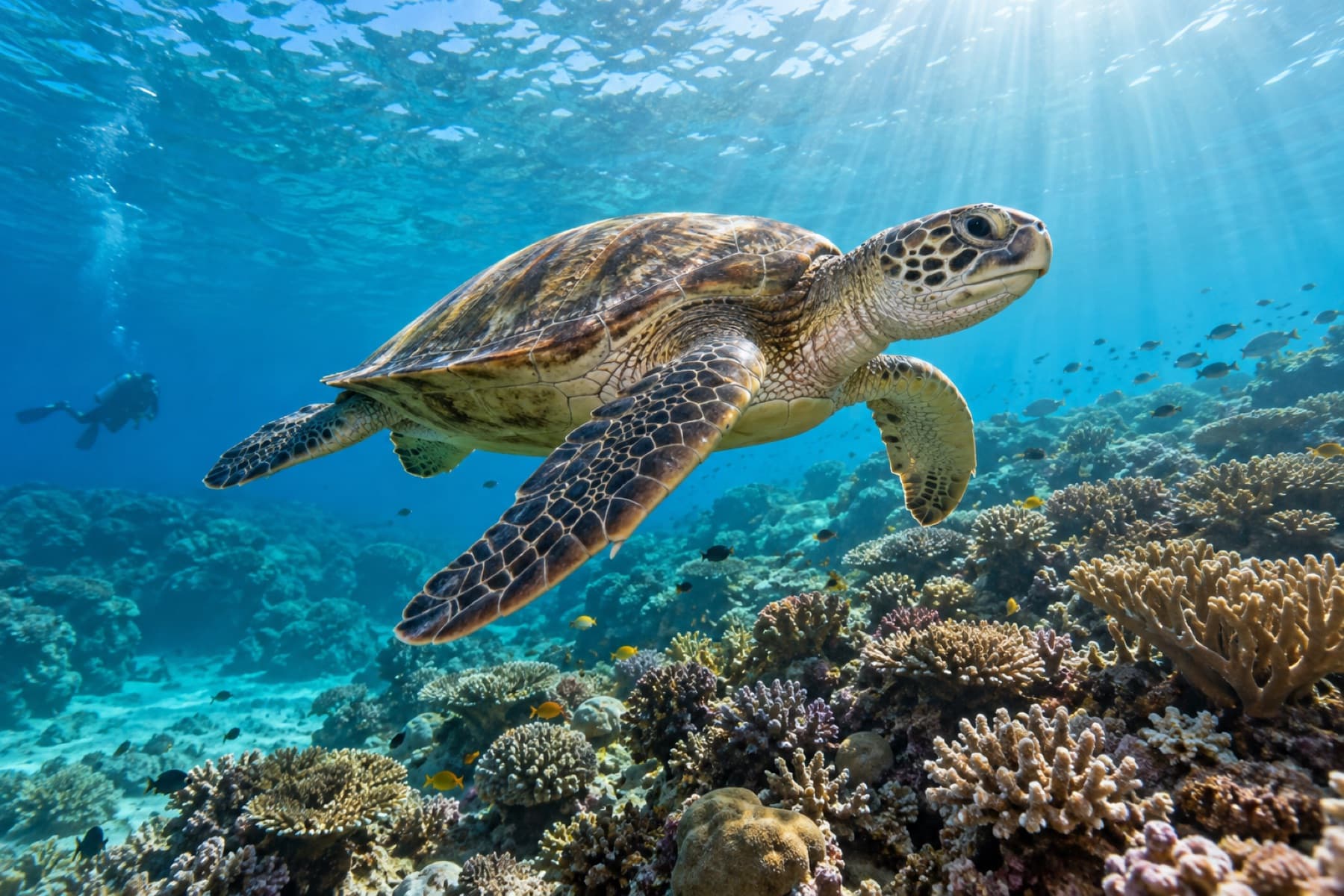
Australian Sea LionEndangered, endemic, and among the most genuinely playful animals a diver can meet.Eastern Blue GroperNew South Wales' state fish — large, inquisitive and often the first thing to greet a Sydney shore diver.Green TurtleThe most commonly encountered turtle on Australian reefs, and a reliable sight at Cook Island and the southern Great Barrier Reef.Leafy SeadragonSouth Australia's emblem and the most elaborately camouflaged fish in the world.Loggerhead TurtleHeavier-headed and less common than the green turtle, with a nationally significant nesting population near Bundaberg.NudibranchsSea slugs of absurd colour and variety — the reason temperate Australian macro diving has a global reputation.Queensland GroperThe largest reef-dwelling bony fish in the world, and a defining feature of the SS Yongala.Seahorses & PipefishCryptic, slow and protected — jetty piles and sponge gardens are where to look.Spotted Eagle RayA spotted, long-tailed ray that flies rather than flaps — often seen in small squadrons over sand.
Worth avoiding in June
- Southern shore diving without adequate exposure protection — water is at or near its coldest.
Australian & New Zealand Fur Seals
J
F
M
A
M
J
J
A
S
O
N
D
possible good peak
Dwarf Minke Whale
J
F
M
A
M
J
J
A
S
O
N
D
possible good peak
Giant Australian Cuttlefish
J
F
M
A
M
J
J
A
S
O
N
D
possible good peak
Giant Kelp Forest
J
F
M
A
M
J
J
A
S
O
N
D
possible good peak